
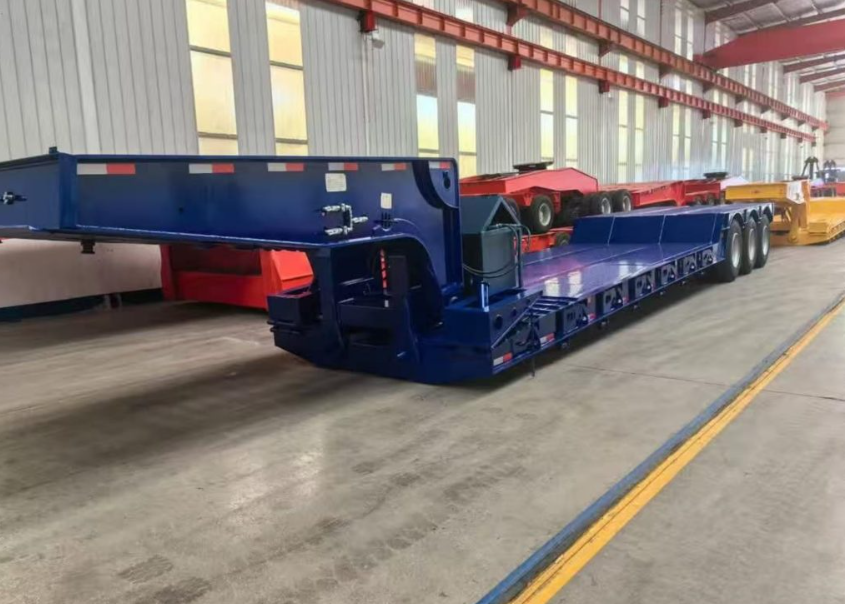
Detachable Gooseneck Lowboy Trailer: Pros, Cons, and Use Cases
A detachable gooseneck lowboy trailer can make heavy equipment transport easier, especially when loading space is limited and machine height matters on the road. This article explains where this layout works best, what advantages it offers in daily use, what trade-offs should be considered, and how to judge whether it fits real fleet operations.

Heavy equipment transport rarely feels difficult when it is described on a product page. The real challenge usually appears later, when the machine is ready before the route is ready, when the loading point is narrow, or when the ground is wet and uneven at the exact moment the move needs to happen. In that kind of situation, the trailer is no longer just a platform with a rated capacity. It becomes part of the loading process, part of the timing of the day, and part of the confidence behind the entire transport plan.
That is exactly why detachable gooseneck lowboy trailers continue to attract attention in construction fleets, road projects, quarry support, machinery delivery, and export-focused operations. A simple description says the neck detaches and the machine can load from the front. That is true, but it is still too basic to explain why this layout matters so much in real work. The real value shows up in how it changes loading rhythm, how it improves height control, how it supports tracked machinery more naturally, and how it reduces small operational friction over and over again.
This version is written for readers who want a clearer answer than a specification list can give. It keeps the page structured and SEO-friendly, but it leans much more into real working scenes, selection logic, loading judgment, and practical product flow. For broader comparison while reading, the most useful BOCA pages are the homepage, the low bed semi trailer category, the detachable gooseneck lowboy trailer page, and the manufacturer page.
Why this layout feels different in real work
In a quiet yard, many heavy-duty trailers can look equally serious. They all seem strong. They all appear capable. However, the difference becomes obvious the moment the job stops being neat. An excavator may need to leave a muddy site before dark. A paver may need to move between active sections before the next traffic window closes. A bulldozer may need to board from a loading point that has just enough room to work, but not enough room for repeated correction. Under those conditions, the trailer stops being a static product and starts becoming part of the pressure of the day.
A detachable gooseneck design changes that pressure right at the beginning. Instead of forcing every move through a conventional rear-loading story, it creates a front-loading path that feels flatter, calmer, and easier to judge. For many self-propelled machines, especially tracked equipment, that difference is obvious almost immediately. The operator sees the line more clearly. The machine approaches the deck more naturally. The crew spends less time fighting the entry angle and more time working through a sequence that feels deliberate.
The second reason this layout feels different is height control. Many transport concerns are decided by loaded height long before they are decided by nominal payload. A machine can be fine by weight and still create route stress because bridges, tunnels, and local road conditions leave very little margin. A lower deck helps create that margin. As a result, the move often feels less fragile before the truck has even started moving.
A simple way to read the value
If the equipment is tall, self-propelled, tracked, or moved often from imperfect loading points, a detachable gooseneck layout usually feels different very quickly because it improves the first difficult step of the whole job: getting the machine onto the trailer with less awkwardness.
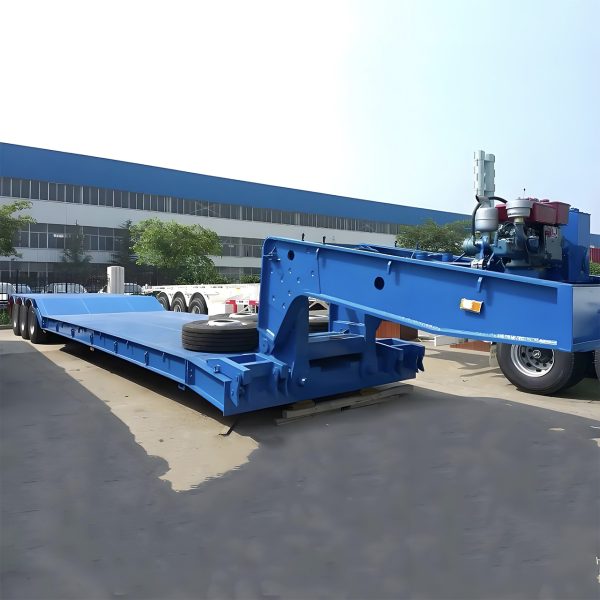
Product highlight: A front-loading lowboy layout that helps heavy machines board more naturally while keeping loaded height lower and transport posture more stable.
Where it works best
Not every fleet needs a detachable design, and that is worth saying clearly. A well-made fixed-neck low-deck trailer can still be the right answer for many assignments. Yet some working patterns keep pulling operations toward detachable gooseneck units because the practical benefits appear too often to ignore. The more frequently those patterns show up, the easier the choice becomes.
Construction jobs with constant movement
Construction transport rarely stays still. One week an excavator is cutting a drainage line. A few days later it has to move to a widening project. The same trailer may then carry a roller or loader into a different site with different space, surface, and timing constraints. In that kind of work, small improvements in loading quality become important because they are repeated all month. A trailer that saves only a little time once can end up saving a great deal of friction over a busy work cycle.
Quarry and aggregate support
Quarry and aggregate operations put more pressure on the entire transport routine. Roads are rougher, dust is constant, and the machinery is usually more demanding. In that environment, a trailer that reduces awkward machine entry and keeps the load lower on the deck becomes attractive very quickly. The goal is not elegance. The goal is repeatability under difficult conditions.
Road equipment moving between live sections
Pavers, rollers, graders, and support machines often move between active work zones where staging space is limited and timing matters. Here, a smoother loading path helps protect more than the transport itself. It helps protect the rhythm of the whole job. That is one reason detachable lowboy layouts remain attractive in road-building work: they reduce disruption where schedules are already tight.
Imported machinery moving inland after arrival
Import operations add another reality. Once a machine reaches a port or terminal, it still needs to move to a dealer yard, contractor base, or project site. The trailer used in that stage must be versatile enough to handle real variation without making every move feel like a custom exercise. A detachable gooseneck lowboy trailer often fits well here because it can cover more realistic situations with less loading friction than a general-purpose platform trailer.
Useful next click
If the goal is to compare detachable models with other low-deck options before making a shortlist, the low bed semi trailer category is the best next page because it places several current BOCA lowboy and lowbed options into one product family view.
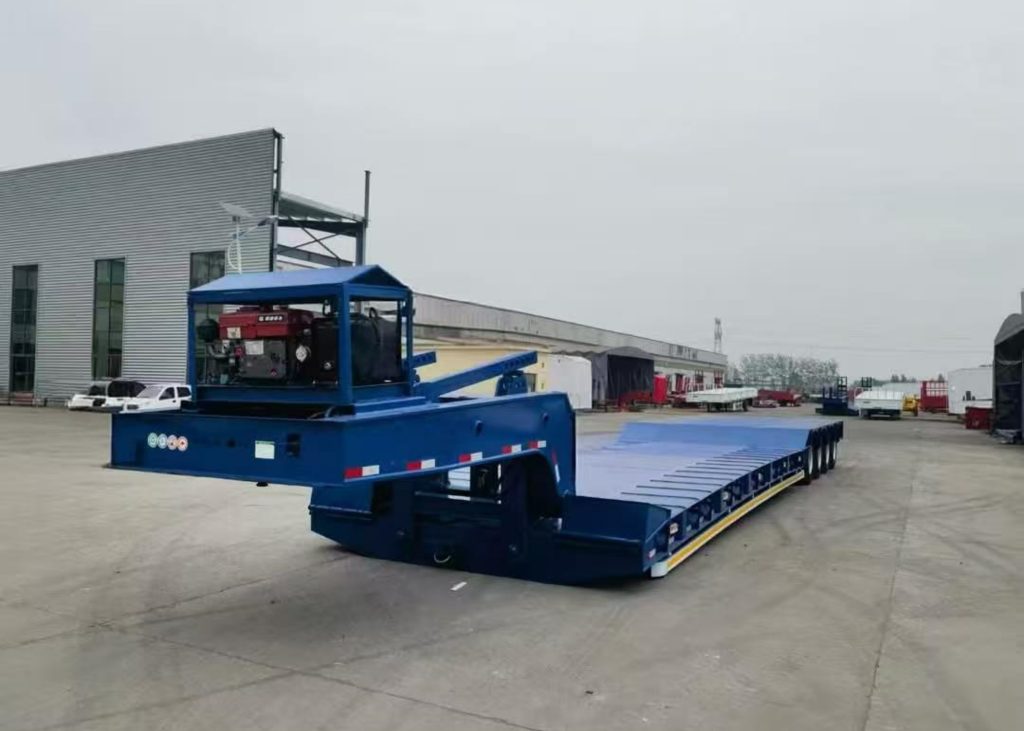
Product highlight: Longer usable deck space and a flatter loading path help reduce hesitation on jobs where both time and space are limited.
What makes this design attractive in daily use
Most readers are not really asking for more parameters. They are asking what will feel better once the trailer starts working. That is the right question. A detachable gooseneck lowboy becomes attractive because several practical advantages show up at once when the trailer enters real use.
Loading usually feels calmer
This is often the first thing crews notice. The machine does not have to attack a steep rear-ramp story in the same way. The approach feels flatter. The line is easier to read. The movement onto the deck feels more controlled. For tracked equipment, that difference can matter a great deal because undercarriage behavior and entry angle influence the entire mood of loading.
Height-sensitive routes become easier to live with
A lower deck is not just a technical advantage. It is a practical one. It gives more room when bridges, underpasses, or local roads leave very little height margin. That margin does not remove the need for route planning, but it can make the whole move feel less fragile and more manageable.
Tracked machinery often shows the benefit fastest
Excavators, bulldozers, and tracked loaders tend to reveal the value of detachable designs very quickly. When the entry path is flatter and more direct, the whole process often looks calmer and feels easier to repeat. That is why this layout remains closely connected to construction, roadwork, and earthmoving support instead of general cargo movement alone.
Repeated moves become less disruptive
One improved loading cycle is useful. Twenty improved loading cycles in a month are much more meaningful. Trailer value is rarely created by one impressive move. It is created by repeated friction reduction. If the trailer keeps making loading smoother and route comfort easier week after week, the value becomes obvious in everyday fleet rhythm.
A quick judgment trick
Picture the most common machine after a long workday, loading from a less-than-perfect surface. If the move seems like it would benefit from a flatter, more natural entry and a lower transport stance, the detachable layout is probably solving a real problem instead of an imagined one.
How to judge whether it is the right fit
Strong trailer decisions usually begin with the machine profile, not with the most dramatic photo in the category. Weight matters, of course. Still, weight alone never tells the whole story. Height matters. Width matters. Attachment position matters. The way the machine behaves while loading matters too. A machine may fit by tonnage and still create a poor transport experience because the deck is wrong, the route is sensitive, or the loading behavior remains awkward.
- Check the machine in real transport condition, not just catalog condition.
- Think about loaded height, not only payload.
- Read the route as honestly as the machine.
- Choose for the move that repeats most often, not the most dramatic one.
- Think about serviceability after delivery as part of the buying decision.
This is also where it helps to look beyond one product page. For readers who are already thinking in terms of deck size, axle layout, support, and configuration rather than only basic browsing, the manufacturer page is a more natural next step because it shifts the conversation from model interest into sourcing and configuration logic.
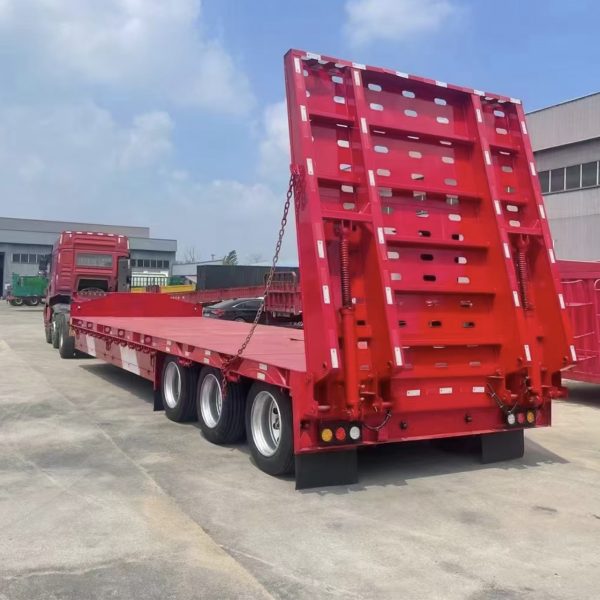
Product highlight: A practical mid-range option for regular equipment transport when the job needs strong daily versatility and simpler operating logic.
Use habits that make the trailer work better
A better trailer still depends on a better loading routine. That matters especially with detachable systems because they reward calm repetition more than hurried improvisation. The goal is not to complicate the job. The goal is to make the loading process consistent enough that the trailer feels easy to trust every time it is used.
Start by reading the ground before anything else. A strong trailer can still feel frustrating if the approach surface is soft, broken, sloped, or crowded. Then treat the deck as a placement zone, not just a parking zone. The machine should stop where it sits best, not merely where it first fits. Finally, keep one loading sequence and repeat it. Reliability grows from habits that crews can follow consistently.
A useful habit for uptime
Calm loading is part of maintenance. Clean connection areas are part of maintenance. Repeatable crew habits are part of maintenance too. A detachable system usually performs best when all three work together.
Trade-offs and what to watch more carefully
A trustworthy article should also say where this layout can disappoint if chosen carelessly. The first trade-off is cost. A detachable design usually involves more structure, more system detail, and more inspection responsibility than a simpler fixed-neck trailer. If the operation rarely benefits from front loading or lower approach angles, the extra capability may not earn its keep.
The second trade-off is complexity. More interfaces and more hydraulic dependence mean more things deserve attention. That does not make the trailer unreliable. It simply means the trailer rewards disciplined habits more clearly. A fleet that already values repeatable loading procedure usually adapts well. A fleet that relies on informal methods may find the design less forgiving than expected.
Another common mistake is choosing around one dramatic memory. A team remembers one especially difficult move and then builds the whole buying decision around that moment. In practice, the better trailer choice is usually the one that fits the move that repeats most often, not the one that looks best in the most extreme scenario.
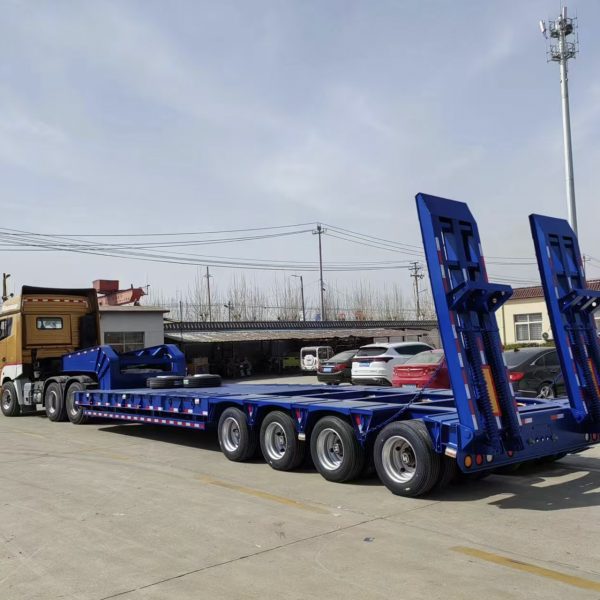
Product highlight: A stronger heavy-duty option for projects that need more axle support, more deck authority, and a more serious transport stance.
Final take
A detachable gooseneck lowboy trailer makes the most sense when the work regularly involves tall, heavy, self-propelled machinery that benefits from front loading and a lower carrying position. Its strongest advantages are not abstract. They show up in the actual feel of the move: smoother machine entry, easier height management, a calmer loading process, and a more settled transport posture.
At the same time, the design is not automatically right for every fleet. It asks for a little more care, a little more method, and a little more honesty during selection. That is why the best buying decision is rarely the most dramatic one. It is the one that fits the machine mix, route conditions, and weekly working rhythm most closely.
Extended reading
Compare more current BOCA low-deck options in the low bed semi trailer category.
Review broader sourcing and production context on the manufacturer page.
Explore additional trailer families from the BOCA homepage.
For a quote request or a more detailed configuration discussion, BOCA lists direct contact through WhatsApp at +86-17274039217 and by email at info@bocaautomobile.com. That is the most natural next step for readers who already know what machines they need to move and want to discuss deck layout, axle structure, and export-ready support.
FAQ
Is a 40ft low-deck trailer always enough for excavators and bulldozers?
Not always. Length matters, but it does not tell the whole story. A machine may fit by length and still create problems once height, weight placement, attachment position, and loading behavior are considered together. The better question is whether the machine sits low, balanced, and easy to secure on the route that matters most.
When does a 3 axle lowboy make more sense than a 4 axle version?
A three-axle layout often makes sense when the machinery mix sits in a practical middle range and the goal is strong daily versatility. A four-axle layout becomes more attractive when machine size, route demands, or distribution needs push the work into a heavier-duty zone. The better choice depends on the move that repeats most often.
What price level is common for a detachable gooseneck lowboy trailer for sale?
Published online prices can provide a useful starting point, but final project cost usually depends on deck size, axle layout, suspension, hydraulic configuration, and destination details. It is more useful to compare like-for-like setups and request a quotation based on actual machine requirements than to treat a single listed price as the full answer.
How should capacity be judged for excavators, rollers, and loaders?
Capacity should be judged together with deck layout, axle support, machine height, attachment weight, and actual load behavior on the trailer. Operating weight is only part of the picture. The better decision reads the full transport condition instead of relying on one number alone.
Is detachable always better than a fixed-neck low-deck trailer?
No. Detachable is better when front loading, lower approach angle, and repeated machinery movement create real value in the operation. A fixed-neck low-deck trailer may still be the smarter answer where routes are simple, loading conditions are easy, and the work does not benefit enough from added system complexity.
Which BOCA page should be visited first after reading this article?
For product comparison, the low bed semi trailer category is the best first stop because it shows the broader range in one place. After that, the detachable product page is the natural next click for readers focused on front-loading designs. For factory background and sourcing discussion, the manufacturer page is the stronger follow-up.