
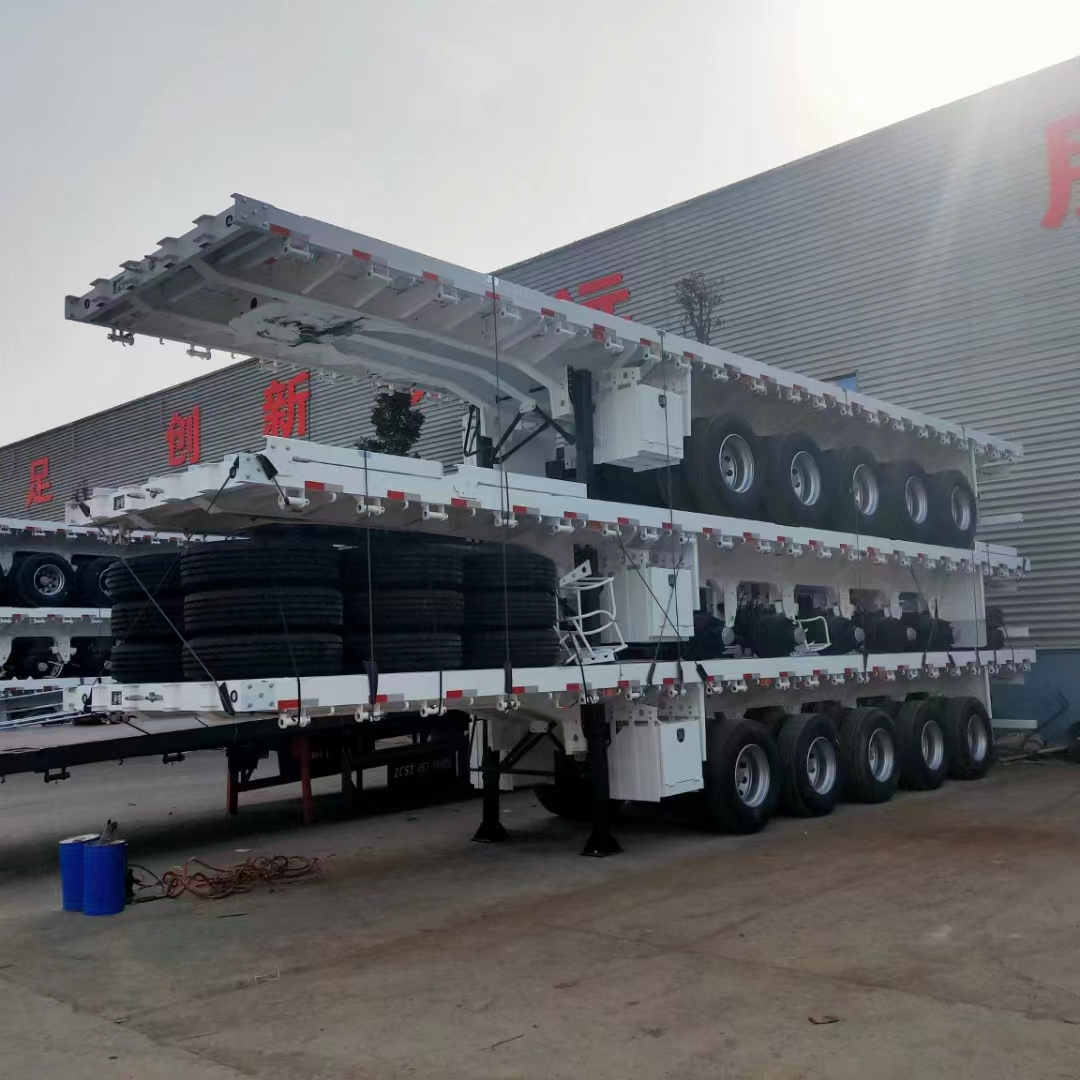
Flatbed Semi Trailer Price Guide: 40 FT, 45 Foot & Heavy Duty Models

A flatbed semi trailer may look simple at first glance, but factory price changes quickly once the real job becomes clear. Long steel, machinery, palletized cargo, container-related work, and rough road access all ask different things from the same trailer. That is why buyers comparing flatbed semi trailer price should look beyond a single number and focus on deck length, axle layout, structure, and loading method.
In practical buying decisions, a 40 ft flatbed semi trailer often suits mixed export freight, a 45 foot flatbed trailer becomes more attractive for long cargo, and a heavy duty flatbed trailer makes more sense when concentrated loads and harder routes appear again and again. This guide is built to help readers compare those directions, understand what affects factory cost, and move more quickly from browsing to the right product page.
What Affects Flatbed Semi Trailer Price?
When buyers search for flatbed semi trailer price, the biggest mistake is assuming all open-deck trailers are close enough to compare on one line. In reality, factory price changes because the job changes. A trailer built for compact general freight is very different from one designed for long steel, container work, machinery transport, or severe-duty road conditions.
The most important cost difference usually starts with structure. Main beam strength, crossmember support, and axle layout all influence how the trailer behaves under repeated service. Two models may look similar in photos while one is clearly better suited to concentrated loads, forklift traffic, or rough industrial access.
A useful price comparison is not “Which trailer is cheapest?” It is “Which trailer is closest to the real cargo, route, and loading pattern of the work?”
Deck length changes both usability and factory cost
A shorter platform can be practical for simpler work and tighter routes, but once long cargo appears more often, deck length stops being a convenience and starts becoming a requirement. That is where buyers begin comparing a 40 ft flatbed semi trailer with a 45 foot flatbed trailer or even an extendable flatbed trailer.
Axle layout shapes stability and duty level
A 3 axle flatbed trailer often becomes the default buying reference because it balances capacity, stability, and general export practicality. It is frequently the working middle ground for buyers who need one trailer to support more than one transport scenario.
Suspension and hardware should follow real road conditions
Suspension choice, tie-down hardware, container locks, and optional accessories can all shift factory price. These items are worth paying for when they improve repeated work, but less useful when they only make a quotation look more complete.
The best factory quote usually comes after the buyer explains cargo type, route condition, and loading method, not after asking for a general trailer price alone.
Which Flatbed Trailer Fits Your Cargo?
The right flatbed semi trailer for sale depends on what keeps showing up in the loading plan. Mixed industrial freight, long cargo, project cargo, and severe-duty work do not ask for the same trailer. That is why the most useful buying path is to compare the main product directions one by one instead of staying at the category level too long.
The four BOCA models below cover the most common purchase decisions: a balanced 40 ft three-axle deck, a longer 45 foot flatbed trailer, an extendable flatbed trailer for variable-length cargo, and a heavy duty flatbed trailer for harder service conditions.
40 FT 3 Axle Flatbed Semi Trailer
For many buyers, this is the most practical starting point. A 40 ft flatbed semi trailer works well for mixed export cargo, open industrial freight, and operations that need broad usability without moving into a more specialized layout too early. It often becomes the reference model because it feels balanced rather than limited.
This type of 3 axle flatbed trailer is especially attractive when the workload includes general cargo, building materials, machinery-related transport, and occasional container-compatible planning. It is often the model buyers compare first when searching for flatbed semi trailer for sale with factory price in mind.
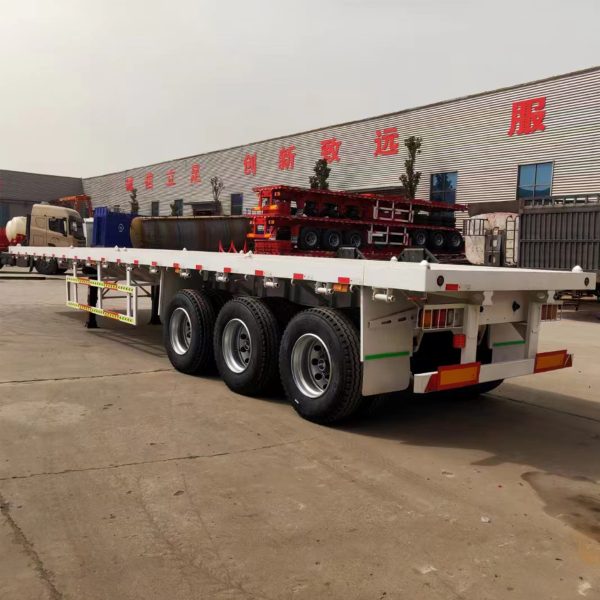
Mixed cargo, general freight, open industrial transport, and buyers who want a strong all-around flatbed trailer.
It matches a wide range of buyer intent, from flatbed semi trailer price to 3 axle flatbed trailer and flatbed semi trailer for sale.
45 Foot Flatbed Trailer
A 45 foot flatbed trailer becomes more attractive when long cargo is no longer occasional. Steel sections, timber bundles, pipe, fabricated parts, and longer industrial materials sit more naturally on a longer deck. In those situations, the value is not only more space. It is easier loading, cleaner placement, and fewer compromises in cargo securement.
Buyers comparing 40 ft and 45 foot flatbed trailer options should ask a simple question: does the operation keep turning a standard deck into an “almost enough” solution? If the answer is yes, the longer platform often makes the next buying decision easier.
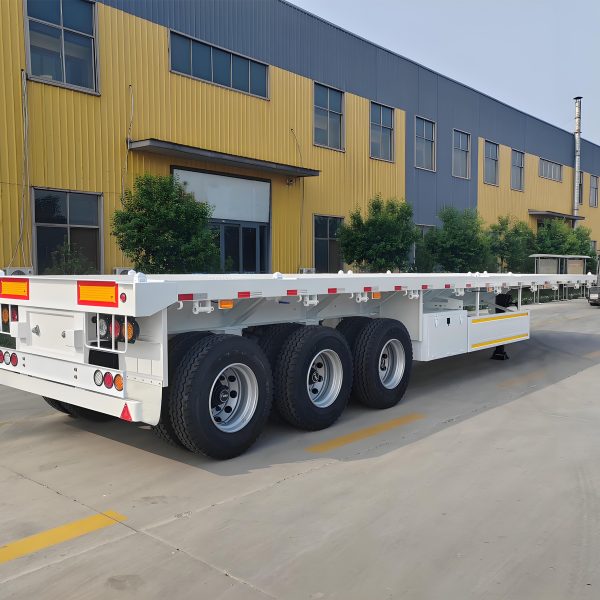
A longer deck should not be chosen just because it sounds bigger. It should be chosen because the cargo repeatedly asks for it.
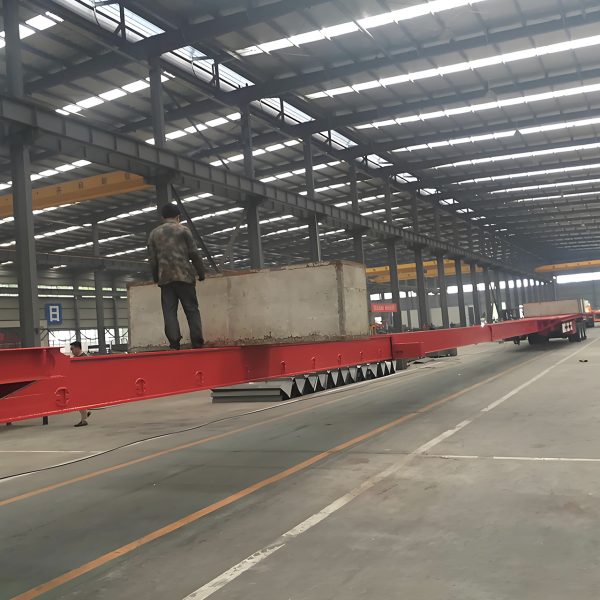
Extendable Flatbed Trailer
An extendable flatbed trailer is the better choice when cargo length changes from project to project and a fixed deck keeps forcing compromise. This is especially relevant for project cargo, long structural components, industrial sections, and specialized transport where a standard platform is not always enough.
Buyers looking for flexible transport capacity often search for an extendable flatbed trailer when they need a solution that can adapt instead of locking the fleet into one deck length. This type of trailer is more specialized, but it can create real value where cargo variety is part of the business model.
Heavy Duty Flatbed Trailer
A heavy duty flatbed trailer makes the most sense when the real issue is not length but severity of work. Concentrated loads, rough site roads, frequent machinery transport, and repeated hard-use conditions can shorten the working life of a lighter trailer much faster than expected. In those cases, a stronger platform becomes a more honest long-term choice.
For buyers comparing factory price, the key question is whether the operation is simply carrying cargo or repeatedly stressing the trailer. If it is the second case, a heavy duty flatbed trailer is often easier to justify from both service life and working confidence.
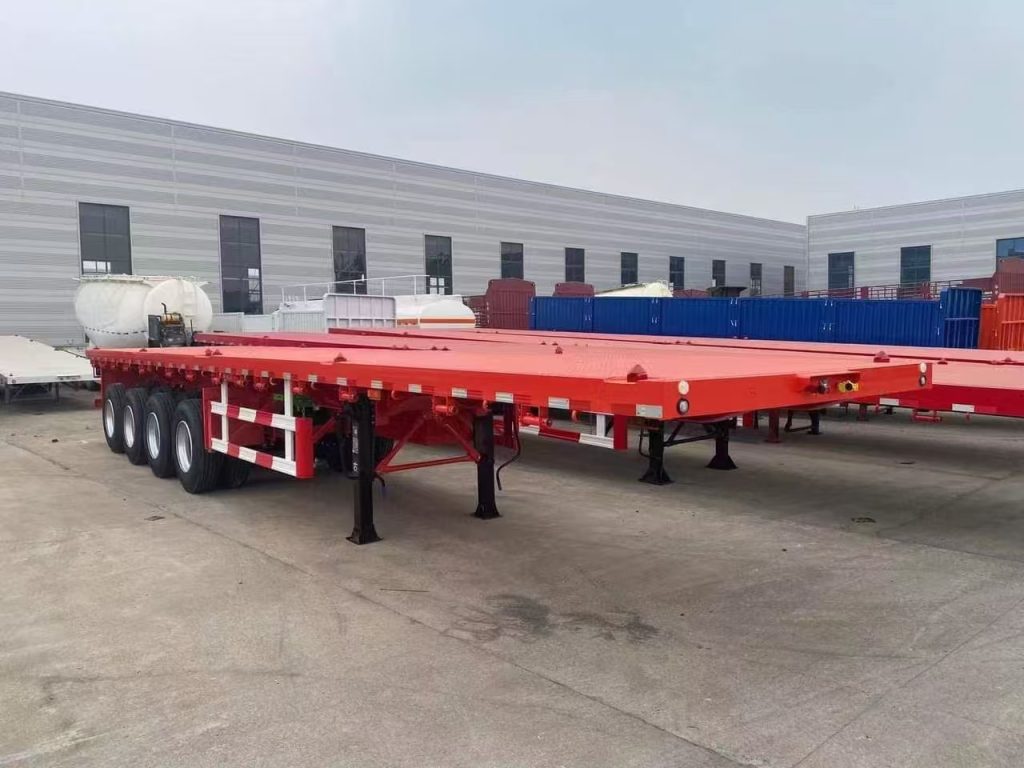
Heavy-duty specification should be bought as a response to repeated work intensity, not as a generic upgrade added without a clear service reason.
How to Choose the Right Flatbed Semi Trailer
The fastest way to choose the right model is to start from the recurring workload instead of the rare exception. Buyers who define the cargo type, loading pattern, route condition, and preferred deck direction early usually get a much cleaner quote from the manufacturer.
Start with the cargo that appears most often
General mixed freight, long cargo, project components, and concentrated machinery loads do not belong to the same buying conversation. The trailer should fit the work that repeats, not the one unusual shipment everyone remembers.
Let the road condition influence structure
Highway-biased routes, industrial delivery, and rough site access all place different stress on the trailer. That is why suspension, beam confidence, and heavy-duty direction should follow real route conditions, not only catalog preference.
Choose only the options that change daily work
Container locks, tie-down hardware, anti-slip deck sections, toolboxes, and other accessories should support the loading routine. The best configuration is not the longest option list. It is the one that improves real transport efficiency.
If you want a fast factory recommendation, send these details first: cargo type, deck length preference, loading method, destination country, and road condition.
Request Factory Price from BOCA Vehicle
BOCA Vehicle is a flatbed trailer manufacturer serving buyers who need practical export-ready models, including 3 axle flatbed trailer designs, 45 foot flatbed trailer options, extendable flatbed trailer configurations, and heavy duty flatbed trailer solutions. Instead of asking for a general number, send the real workload details and get a more relevant factory quote.
If you are still comparing models and want a faster final direction, one more look at the flatbed semi trailer lineup usually makes the choice clearer. It helps separate standard platforms from long-deck, extendable, and heavy-duty options before the final inquiry is sent.
Request Flatbed Semi Trailer Factory Price
Looking for a flatbed semi trailer for sale? Send your cargo type, preferred deck length, loading method, route condition, and destination port. BOCA Vehicle can recommend the right 40 ft, 45 foot, extendable, or heavy duty flatbed trailer for your transport work.
Contact page: Contact the manufacturer
Email: info@bocaautomobile.com
FAQ
What affects flatbed semi trailer price the most?
The biggest factors are deck length, main beam strength, axle configuration, suspension, loading method, and whether the trailer is intended for general freight, long cargo, machinery, or severe-duty work.
Is a 40 ft flatbed semi trailer a good all-around choice?
Yes. For many buyers, a 40 ft 3 axle flatbed trailer is the most practical middle ground because it works well for mixed cargo, export freight, and open industrial transport without becoming too specialized.
When should I choose a 45 foot flatbed trailer?
A 45 foot flatbed trailer makes more sense when long steel, pipe, timber, or fabricated cargo keeps turning a standard deck into an almost-enough solution. The extra length helps loading and securement feel cleaner.
Who should buy an extendable flatbed trailer?
Buyers handling project cargo or variable-length freight should consider an extendable flatbed trailer. It is especially useful when different jobs require different loading lengths and a fixed deck keeps causing compromise.
When is a heavy duty flatbed trailer worth it?
It is worth it when concentrated loads, rough routes, machinery transport, and repeated hard-use service would wear down a lighter trailer too quickly. In those cases, stronger structure supports longer-term reliability.
What should I send when asking for a factory quote?
Send the cargo type, preferred deck length, loading method, route condition, destination country or port, and any special use requirement. That gives the manufacturer enough information to recommend the right trailer direction.