
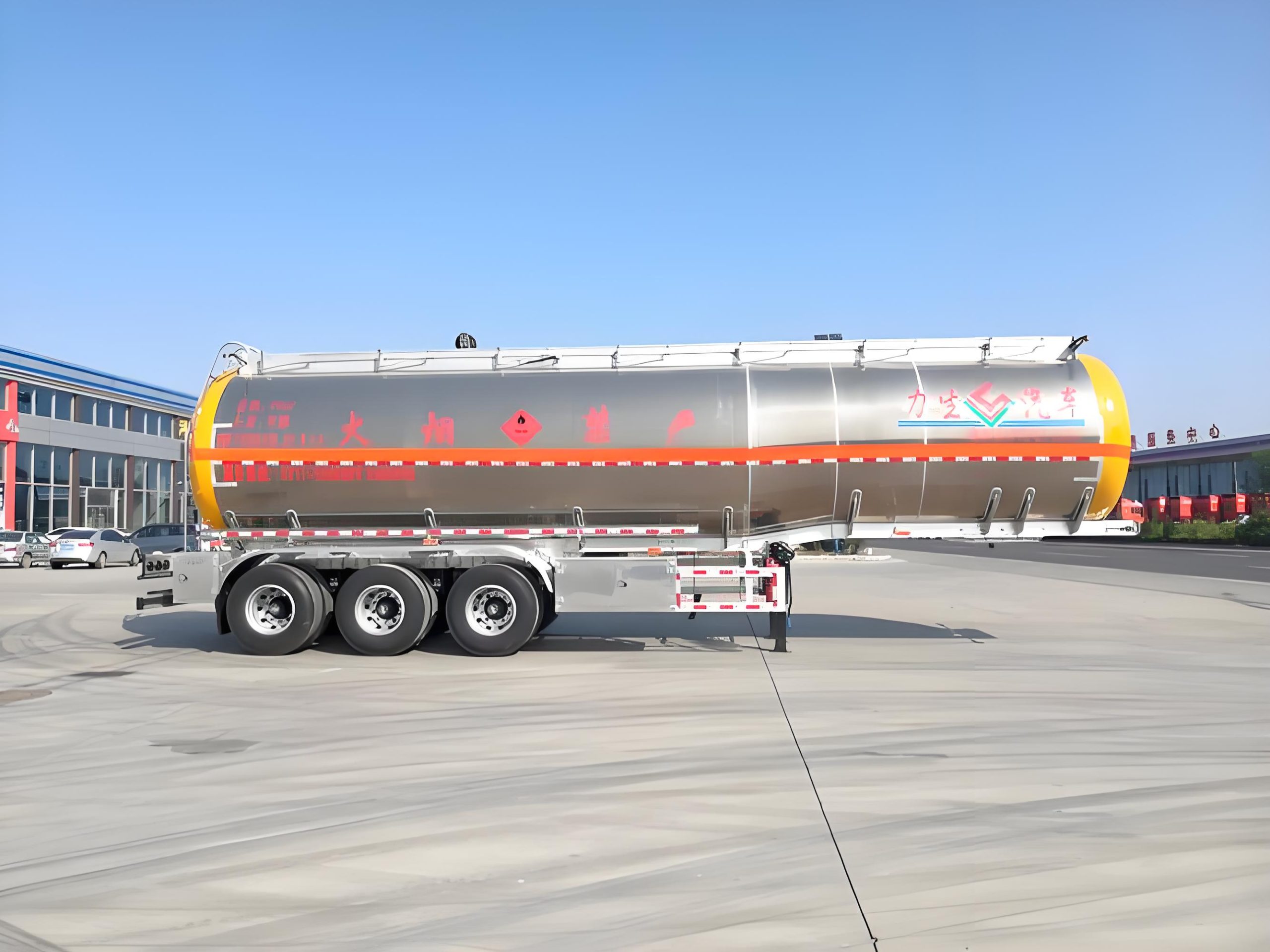
The Complete Manufacturing Process of fuel tank semi trailer

Overview
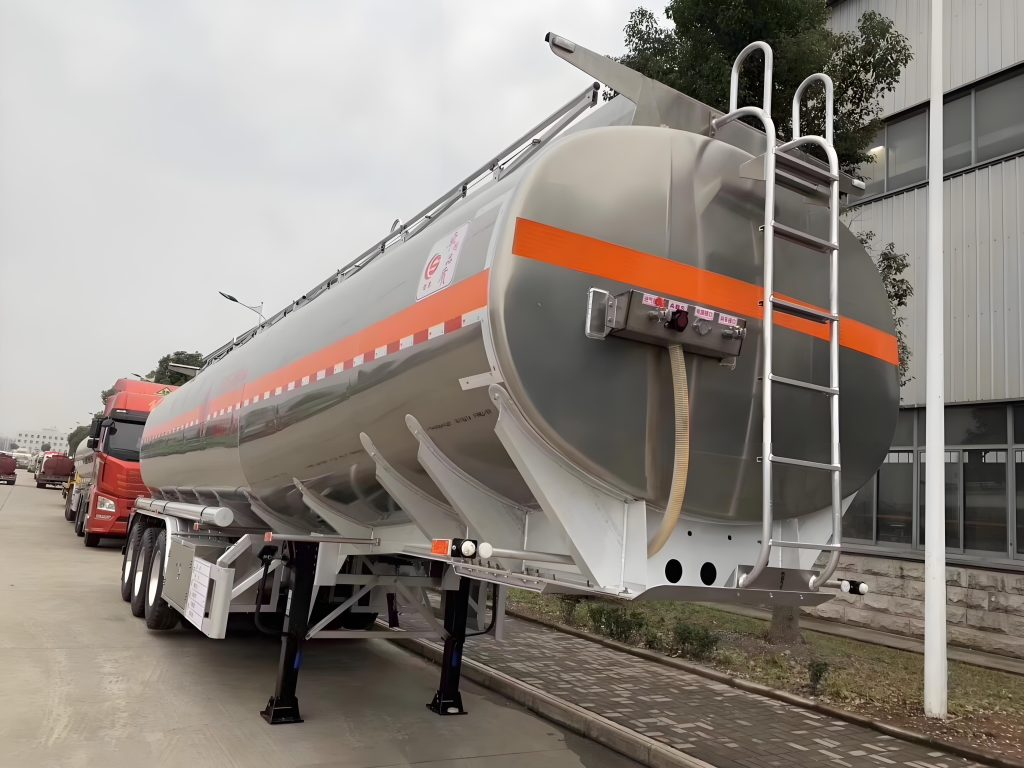
Tank semi trailer play a crucial role in global petroleum logistics, ensuring the safe and efficient transport of gasoline, diesel, aviation fuel, ethanol, and other flammable liquids. For buyers, understanding the complete fuel tank semi trailer manufacturing process helps assess quality, identify reliable suppliers, and make better purchasing decisions.
This guide details every step of the manufacturing process—from raw material selection to final road testing—giving you a clear understanding of how high-quality fuel tank semi trailer are made.
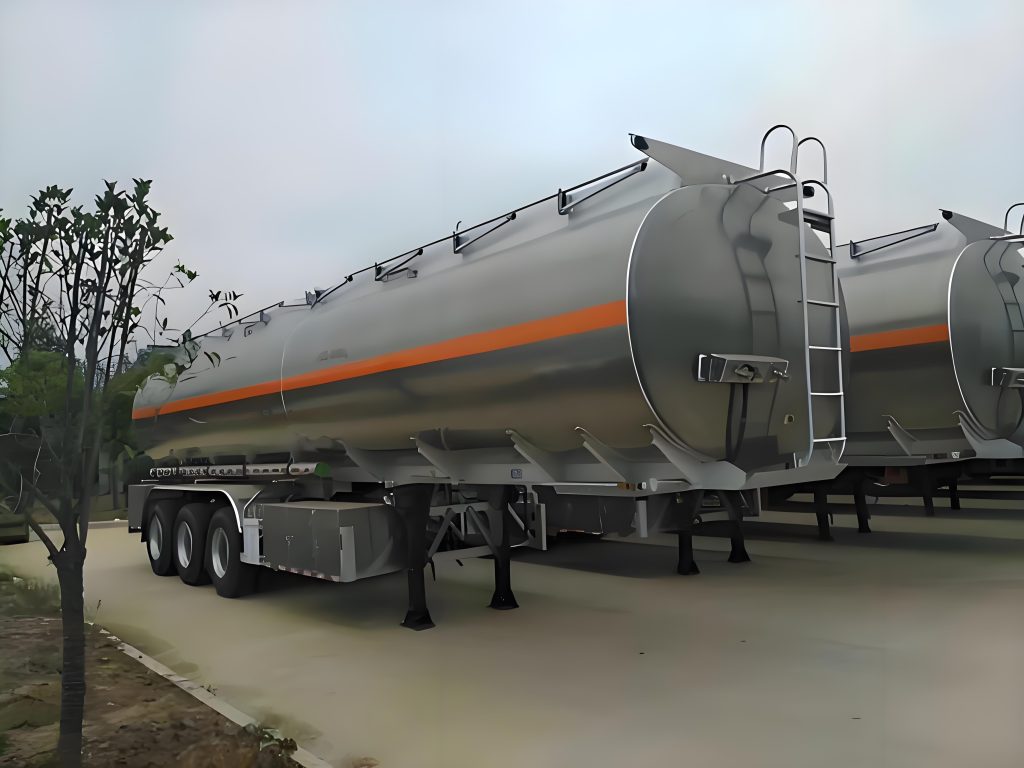
Raw Material Selection: The Foundation of Quality
The manufacturing process begins with rigorous material selection. fuel tank semi trailer must be robust, corrosion-resistant, and explosion-proof; therefore, manufacturers choose:
1.1 Tank Body Materials
Carbon Steel tank semi trailer (Q345 / Q235)
Suitable for standard diesel and gasoline transport; cost-effective.
Aluminum Alloy tank semi trailer (5083/5454)
Lightweight, corrosion-resistant, and reduces fuel consumption—ideal for long-haul transport.
Stainless Steel tanker semi trailer (316L/304)
Used for aviation fuel or high-purity liquids; offers excellent corrosion resistance.
1.2 Structural Materials
High-strength steel is used for the chassis.
Abrasion-resistant plates are used for reinforced areas.
Certified welding materials conforming to ADR/ASME standards.
Quality inspections are conducted before fuel tank semi trailer manufacturing, including mechanical strength testing, chemical composition checks, and flatness measurements.
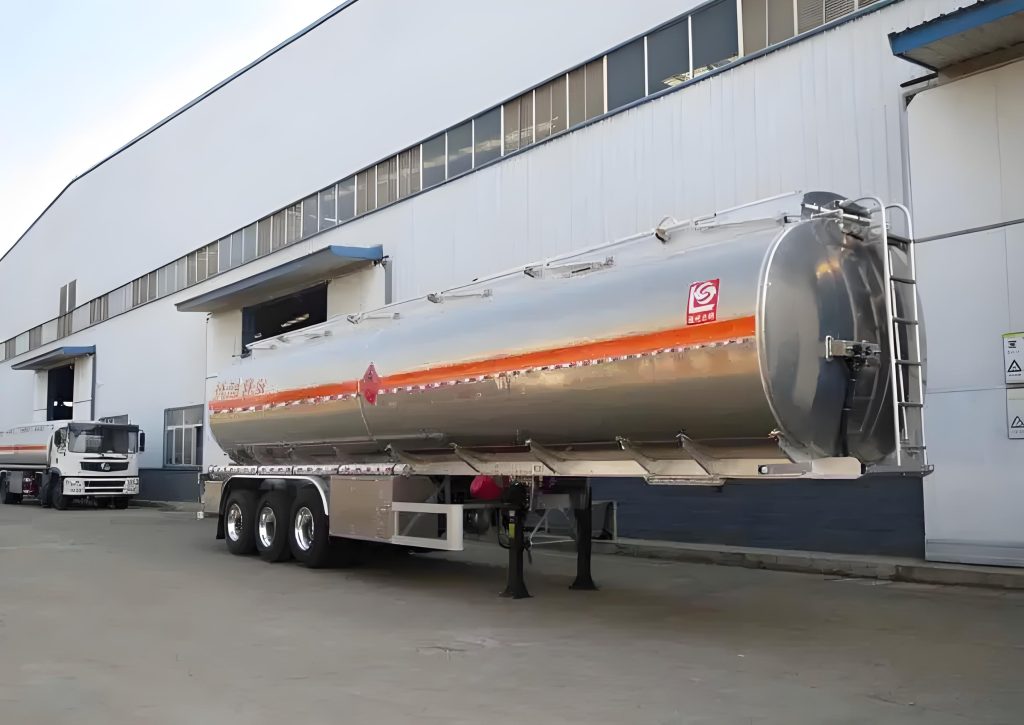
CNC Cutting and Sheet Metal Forming
2.1 CNC Plasma or Laser Cutting
Large steel or aluminum plates are cut into tank shells according to 3D engineering drawings. CNC machining ensures:
High precision
Smooth edges
Minimized material waste
2.2 Tank Body Rolling
Slabs are rolled into cylindrical shapes using heavy-duty plate rolling machines. Skilled operators adjust:
Rolling angle
Sheet thickness
Cross-sectional roundness. Precision at this stage determines the uniformity of the tank body.
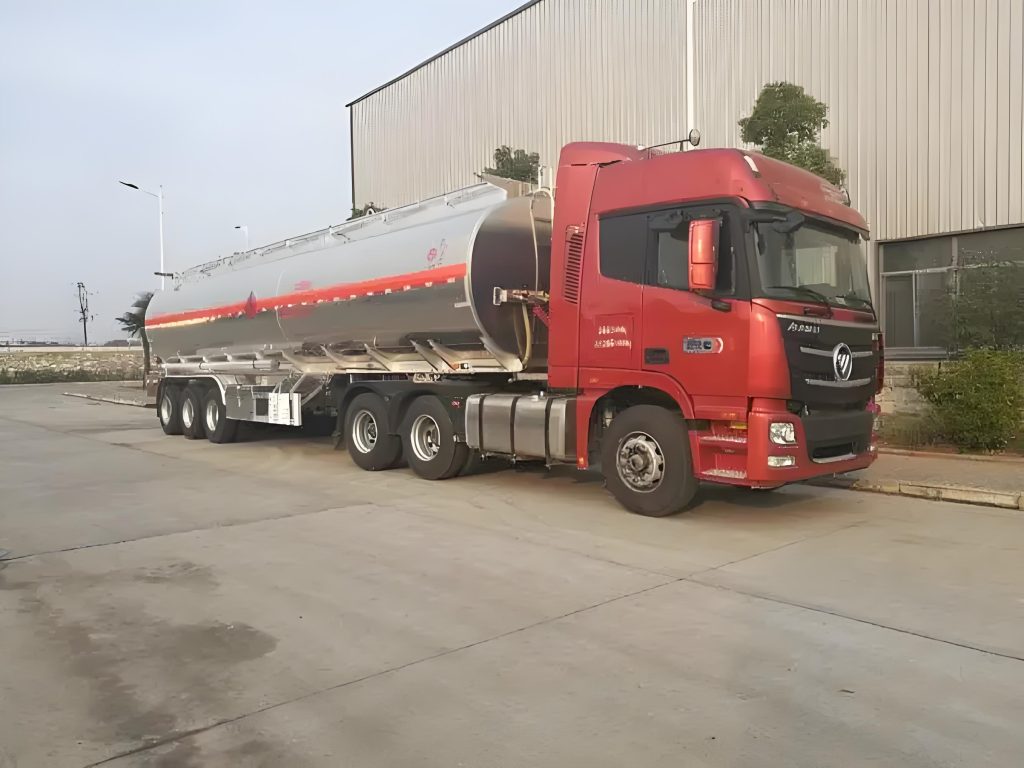
Fuel tank semi trailer Tanks Body Assembly and Welding
3.1 Spot Welding
Each cylindrical section is positioned and spot-welded to maintain alignment.
3.2 Fully Automated Welding
Manufacturers use:
Longitudinal seam welding machine
Circumferential seam welding machine
Automated welding offers the following advantages:
Straight welds
Deep penetration
Continuous force
Zero porosity
3.3 Internal Baffle Installation
The fuel tank semi trailer for sale is equipped with baffles to reduce liquid sloshing. Each baffle:
Is laser-cut
Contains pressure balancing holes
Welded to the inner tank wall
This improves stability during braking and cornering.
Corrosion Protection and Surface Pretreatment
Depending on Tank Material:
4.1 Carbon Steel tanker trailer
Sandblasting
Advanced epoxy primer
Polyurethane topcoat
Mechanical polishing
Optional protective film
No internal coating required
4.3 Stainless Steel tanker trailer
Pickling and passivation
Smooth internal welds
Mirror polishing for food-grade or aviation fuel
Surface finish significantly impacts corrosion resistance and long-term durability.
Fuel tank semi trailer Chassis Manufacturing
The chassis is manufactured concurrently with the tank assembly.
5.1 Beam Construction
Uses of the fuel tanker chassis:
Q550/Q460 high-strength steel
I-beam welded structure
Automatic submerged arc welding
5.2 Suspension System
Manufacturers select according to customer requirements:
Mechanical suspension (leaf springs)
Air suspension (lighter and more stable)
Single-point suspension (suitable for heavy-duty areas)
5.3 Axles and Tires
Most oil tanker semi traileruse:
Two-thirds axle length
12R22.5 or 385/65R22.5 tires
Anti-lock braking system/Electronic brake distribution system
Fule tank semi trailer Chassis Integration
After the tank and chassis are manufactured, they are assembled together using:
Reinforced saddle supports
High-strength bolts
Flexible shock-absorbing pads
Proper alignment ensures:
Balanced weight distribution
Reduced pressure points
Smooth long-distance operation
Fuel System Component Installation
A fuel tanker semi trailer includes many specialized components:
7.1 Manhole
Aluminum or stainless steel
Pressure/vacuum valve with explosion-proof vents
7.2 Bottom Valves
Emergency shut-off valves prevent leaks in accidents.
7.3 Loading and Unloading System
Bottom loading system (EU standard)
Gravity or pump-assisted unloading
Optional flow meters or gauges
7.4 Compartments
Typical fuel oil tank trailer typically have 3 to 7 cargo compartments to accommodate different fuels simultaneously.
7.5 Safety Accessories
Fire extinguisher box
Anti-static grounding
Overflow prevention walkway
Aluminum handrails
Emergency shut-off switch
Electrical System Installation
Diesel fuel tank trailer require certified explosion-proof electrical systems:
LED taillights
Side marker lights
Waterproof wiring harness
Anti-lock braking system/electronic brake force distribution system control unit
All electrical components comply with ADR or DOT standards.
Quality Control and Non-Destructive Testing (NDT)
Each fuel tank semi trailer undergoes rigorous inspection before entering the market:
9.1 Welding Inspection
X-ray (RT) inspection
Ultrasonic testing (UT)
Pressure testing of weld quality
9.2 Hydraulic or Pneumatic Testing
Pressure the tank to detect:
Leakage events
Weld cracks
Deformation
9.3 Hydrostatic Testing
Ensure no leaks in:
Manhole covers
Seams
Valve
Compartments
9.4 Chassis Alignment Check
Ensure smooth traction and even load distribution.
Final Assembly and Road Testing
After passing all quality control procedures, the trailer will undergo:
Brake performance testing
Steering response testing
Load simulation
High-speed road testing
Emergency braking testing
Only upon approval will the trailer receive:
Vehicle Identification Number
Factory Certificate
Export Documents
Fuel tank semi trailer Packaging and Delivery
Fuel tanker trailer manufacturers application:
Protective wax
Plastic packaging
Rust-preventive spray
Tire pressure calibration
Fuel tanker trailers are either:
Roll-on/Roll-off
Transported by bulk carrier
Loaded as a container (small tanker optional)
Conclusion
The manufacture of fuel tanker semi trailer is a complex and multi-stage process requiring sophisticated engineering, certified materials, and rigorous testing. From sheet metal cutting to welding, corrosion protection, assembly, and road testing, every step impacts safety, performance, and service life.
Understanding this process helps buyers:
Identify trustworthy manufacturers
Identify quality differences
Make better purchasing decisions
Ensure long-term operational safety