
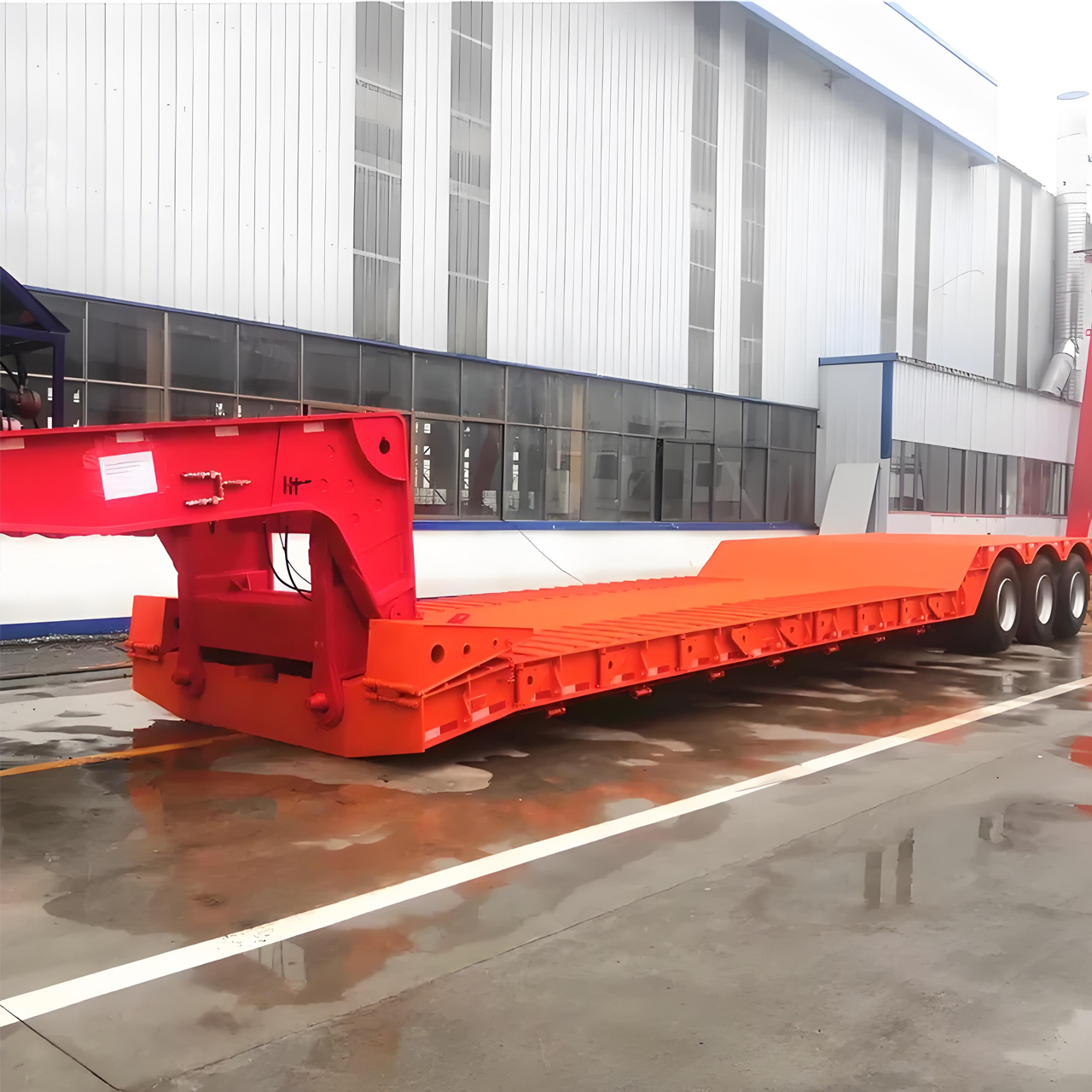
Lowbed Trailer vs Low boy Semi Trailer:Key Differences

Overview
In the heavy-duty transport industry, the terms “low bed semi trailer” and “low boy semi trailer” are often used interchangeably. Although both types of heavy duty semi-trailers are designed for transporting large equipment, they differ significantly in structure, performance, loading methods, and applicable scenarios. Understanding these differences will help equipment owners, logistics companies, and contractors choose the most suitable semi-trailer for their operational needs.
This guide details the key differences, technical specifications, advantages, disadvantages, and practical applications of each trailer type.
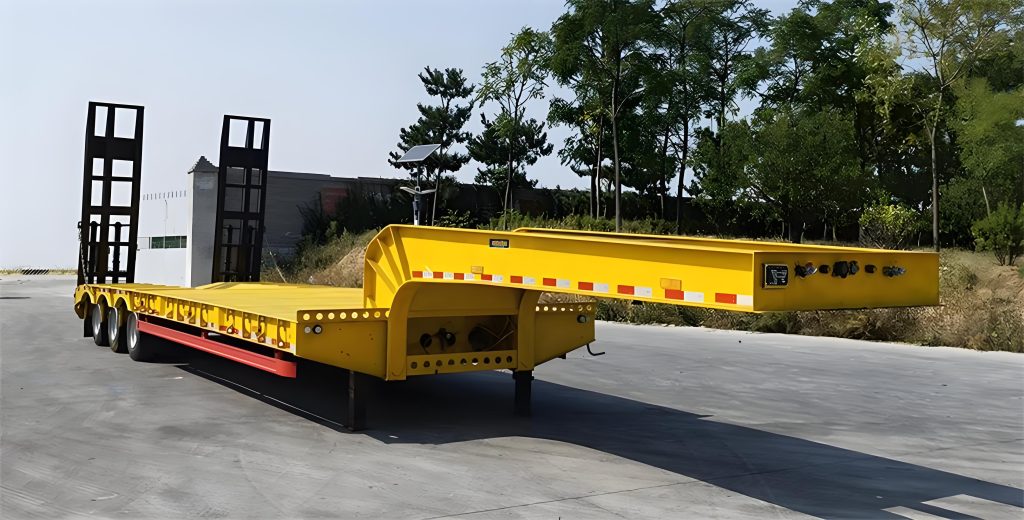
Understanding the Two lowloader semi trailer Types
1.1 What is a low bed semi trailer?
https://bocavehicle.com/product-category/china-flatbed-semi-trailer/Low bed semi trailer for sale has a lower platform than a standard flatbed semi trailer, enabling the transport of tall and heavy equipment. This type of vehicle is very popular in construction, mining, and engineering logistics.
Typical Features:
Large rear loading ramp
Long, ground-mounted design
A variety of configurations available from 2 to 7 axles
Designed for a load range of 30 to 120 tons
Low-floor trailers primarily emphasize load capacity and stability.
1.2 What is a low boy semi trailer?
Lowboy semi trailer are characterized by their detachable front gooseneck structure, a design that allows machinery to be loaded onto the front of the lowboy trailer semi.
Typical features:
Removable hydraulic or mechanical gooseneck
Lower front loading angle
Ideal for equipment that cannot climb slopes.
Ideal for transporting extremely large cargo.
Low boy semi trailer prioritize ease of loading and high maneuverability.
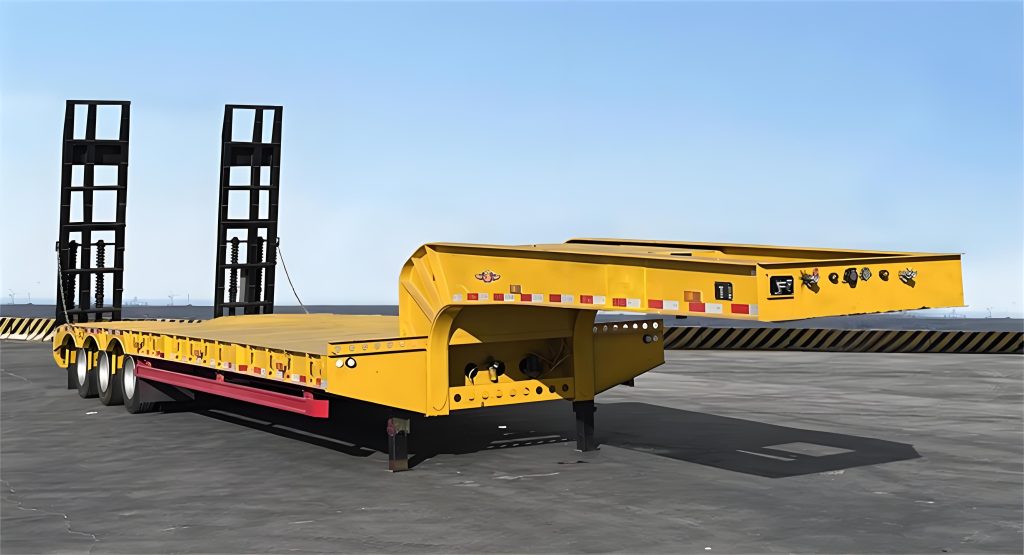
Structural differences between low boy semi trailer and low bed semi trailers
Although they may look similar, their structures are quite different.
2.1 Deck height and level design
| Feature | Low bed Semi Trailer | Low boy Semi Trailer |
| Deck Height | 850–1,200 mm | 500–900 mm (lower) |
| Deck Shape | Usually a long drop deck | Two-drop design (front & rear) |
| Height Clearance | Good | Excellent |
Low boy trailers generally offer lower deck height, meaning more clearance for tall machines.
2.2 Loading Method
| Loading Style | Lowbed Semi Trailer | Lowboy Semi Trailer |
| Rear Ramps | ✔ Yes | Optional |
| Front Loading | ✘ No | ✔ Yes (main advantage) |
| Hydraulic Gooseneck | Optional | Very Common |
If your equipment cannot climb steep slopes (such as drilling rigs or road rollers), then using a low flatbed semi trailer is generally a better option.
2.3 Gooseneck Construction
Low Flatbed Trailer
Fixed Gooseneck
Simpler/Less Complex
Reduced Production Costs
Suitable for All Types of Machinery
Low Flatbed Trailer
Removable/Hydraulic RGN
Allows Front Loading
Ideal for Heavy-Duty or Non-Propelled Equipment
Higher Cost but Greater Flexibility
Low boy semi trailer Performance Comparison
3.1 Cargo Capacity
Both semi trailer low loader can be optimized for high capacity requirements.
| Trailer Type | Typical Capacity |
| Low bed semi-trailer | 30–120 tons |
| Lowboy trailer semi | 40–150 tons |
Low deck semi trailer are typically able to carry heavier loads, especially in multi-axle configurations.
3.2 Flexibility and Road Adaptability
Low-floor trailers
Good maneuverability
Stability on uneven terrain
Easier to maintain
Low profile semi trailer
Can withstand heavier loads more stably
Lower center of gravity improves vehicle handling
Ideal for long-haul transport
3.3 Equipment Compatibility
Best equipment for low profile semi trailer
Excavators
Loaders
Bulldozers
Rollers
Large tractors
Best equipment for low boy semi trailer
Extra-large industrial equipment
Drilling machines
Crushers
Extra-large transformers
Stacker cranes
Equipment that cannot climb slopes
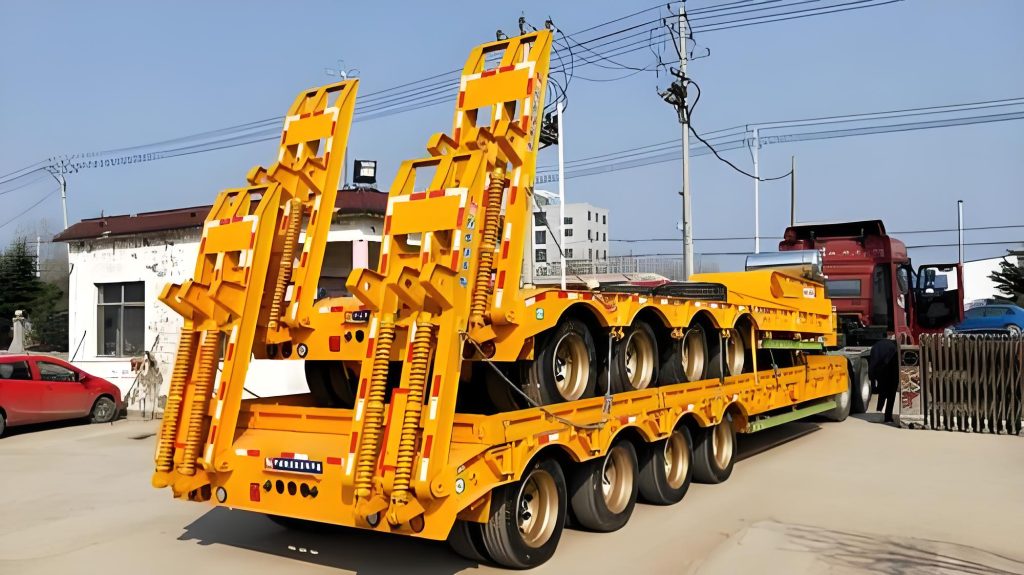
Heavy haul lowboy trailer Cost Differences
4.1 Purchase Price
| Trailer Type | Price Range (FOB China) |
| Low bed Semi Trailer | $8,000 – $22,000 |
| Low boy Semi Trailer | $20,000 – $50,000+ |
Reasons for the higher price of low boy semi trailers:
Hydraulic gooseneck design
More steel reinforcement
Complex engineering
Higher load capacty
Advantages of low boy semi trailer
Lower cost
Longer loading platform
Easy maintenance
Suitable for construction equipment
Easier maintenance at remote work sites
Low profile semi trailer are ideal for companies that require ample loading platform space and cost-effective heavy-duty transport solutions.
Advantages of semi truck lowboy trailer
Extremely low chassis height
Suitable for equipment exceeding height limits
Front-loading, suitable for stationary equipment
Excellent stability under extreme loads
Flexible axle and suspension configurations
Lowboy truck and trailer are a more suitable choice when height restrictions and heavy weight are major concerns.
Which low deck semi trailer should you choose?
Choose a low boy semi trailer if:
Your equipment can climb slopes.
Budget is an important factor.
You provide standard construction equipment.
You need a long platform and ample platform space.
If you require a low bed semi trailer in the following situations:
You are transporting extremely large machinery.
You need front-loading capability.
Your equipment cannot climb slopes.
You typically transport cargo weighing over 80 to 100 tons.
You want to lower the center of gravity as much as possible.
Lateral Comparison Table
| Category | Lowbed Semi Trailer | Lowboy Semi Trailer |
| Deck Height | Low | Very Low |
| Loading Method | Rear ramps | Detachable gooseneck (front) |
| Best For | Excavators, graders, loaders | Drilling rigs, generators, crushers |
| Cost | Lower | Higher |
| Capacity | High | Very High |
| Stability | Strong | Excellent |
| Road Clearance | Medium | High |
| Complexity | Simple | Complex |
| Applications | Construction & mining | Oversized industrial equipment |
Practical Application Areas
Applications of Low boy semi trailer:
Highway construction vehicle fleets
Quarry and mining transportation
Agricultural machinery operation/movement
Earthmoving engineering
Applications of Low bed semi trailer for sale:
Oilfield equipment transportation
Heavy industry relocation
Wind power project components
Transportation of oversized equipment
Conclusion
While both semi trailer low bed and low boy semi-trailers are designed for heavy machinery transportation, they meet different operational needs.
Low bed semi-trailer are a versatile and cost-effective option for construction fleets, while lowboy semi-trailers offer unparalleled height, front loading aisle, and excellent stability, making them particularly suitable for transporting oversized cargo.
Choosing the right model depends on:
Cargo height
Cargo weight
Loading environment
Budget
Suspension and axle requirements
Choosing the right low deck semi trailer can improve efficiency, ensure safety, and reduce long-term transportation costs.