

Lowbed Trailer — Guide for Heavy Equipment Transport

Introduction
Around the world, industrial, construction, and mining companies face the common challenge of transporting heavy and oversized machinery across complex terrain. In regions such as Africa, Southeast Asia, the Middle East, South America, and Central Asia, infrastructure development often requires robust and flexible transportation solutions. China lowbed trailer have become one of the most reliable vehicles for transporting large construction machinery, mining equipment, industrial modules, and agricultural vehicles, enabling safe and efficient transportation.
Lowbed semi trailer are widely used in the logistics and transportation industries due to their versatility and high load-bearing capacity. Specifically designed for transporting oversized, overweight, and bulk cargo, they are indispensable equipment in construction, mining, and industrial logistics operations.
Lowbed Trailer Video
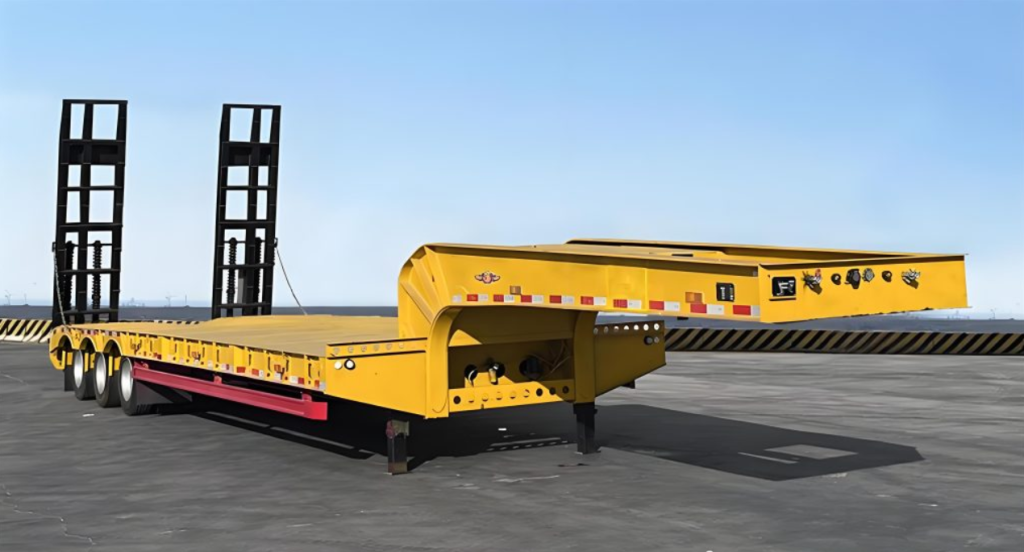
This type of trailer can transport a wide variety of goods, including steel products, building materials, cement, coal, timber, and even certain types of industrial chemicals and machinery. Thanks to its low-floor design and high-load-bearing structure, it is ideal for long-distance transport of heavy and bulky goods, ensuring stability and safety throughout the journey.
A key factor to consider when selecting a suitable heavy duty lowbed trailer is its load-bearing capacity. Understanding the weight and dimensions of the cargo you are transporting helps ensure the trailer matches your operational needs, thereby improving transport efficiency while ensuring safety and compliance with regulations.
This guide covers everything from technical specifications, load capacity, multi-axle configurations, industry applications, specific market considerations, to maintenance tips for 2025 and beyond.
What is a lowbed Trailer?
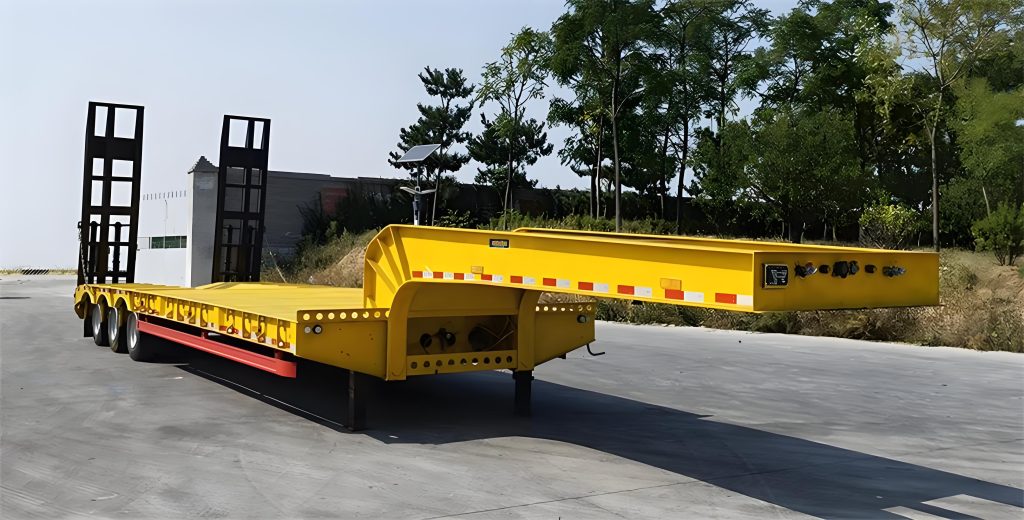
Lowbed trailers are specifically designed for transporting large and heavy equipment, such as construction machinery, agricultural machinery, and other large industrial equipment. Their design focuses on providing maximum stability and load-bearing capacity, making them a key solution for heavy logistics operations.
These trailers are typically constructed from high-strength steel with a yield strength of 700 MPa or higher, ensuring excellent structural rigidity and long-term durability, even under extreme load conditions. This robust material foundation allows the trailers to safely carry large and heavy loads and resist deformation during repeated use.
One of the key design advantages of lowbed semi trailer is their reduced platform height. The lower platform lowers the overall center of gravity, significantly improving stability during transport. Combined with a reinforced frame structure, this design minimizes the risk of tipping over or cargo shifting, making it particularly suitable for transporting tall or heavy equipment.
Compared to standard flatbed semi trailer, lowbed trailers offer superior performance in transporting oversized cargo. Their specialized structure simplifies loading and enhances safety, making them a preferred choice for industries requiring reliable heavy equipment transport.
Advantages of Lowbed Truck Trailers:
| Key Advantage | Description |
|---|---|
| Lower center of gravity | Improves overall vehicle stability and reduces the risk of tipping during transport. |
| Easier loading process | The low deck height allows convenient loading of large, tall, or wheeled equipment. |
| Enhanced transportation safety | Performs more reliably on highways, uneven roads, and challenging terrain conditions. |
| Better suitability for heavy cargo | Designed specifically for oversized and heavy machinery transport. |
For regions like Africa and Southeast Asia, where road conditions can vary greatly, lowbed trailer for sale are essential for reliable and safe transportation.
Factors Affecting the Bearing Capacity of Lowbed Trailer
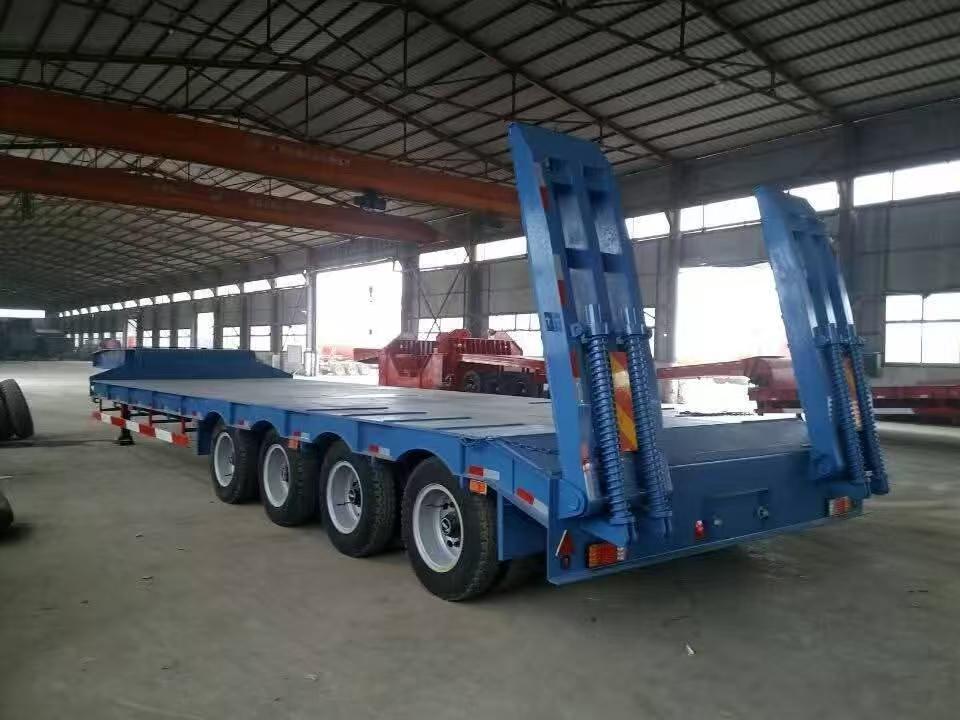
The load bearing capacity of a low bed semi trailer is influenced by several key structural and design factors. Understanding these elements is crucial for selecting the appropriate trailer to meet diverse transportation requirements.
Chassis Materials
The materials used for the trailer chassis directly determine its strength and durability.
High-Strength Steel (e.g., T700 Steel):
Renowned for its exceptional tensile strength, impact resistance, and wear resistance. It is capable of withstanding immense pressure and heavy loads, making it the preferred material for transporting heavy machinery and oversized cargo.
Aluminum Alloy:
Lightweight and corrosion-resistant, but typically utilized for transporting lighter cargo. Due to its lower load-bearing strength compared to high-strength steel, it is not suitable for heavy-duty transport applications.
Axle Configuration
The number and arrangement of axles play a pivotal role in determining load distribution and the overall load-bearing capacity.
| Axle Configuration | Price Arrange | Typical Load Capacity | Application |
|---|---|---|---|
| 2 axle trailer | $10,000 – $15,000 | Up to ~50 tons | Medium-duty transport, shorter distances |
| 3 axle trailer | $16,000 – $19,000 | ~60–70 tons | Balanced performance for general heavy transport |
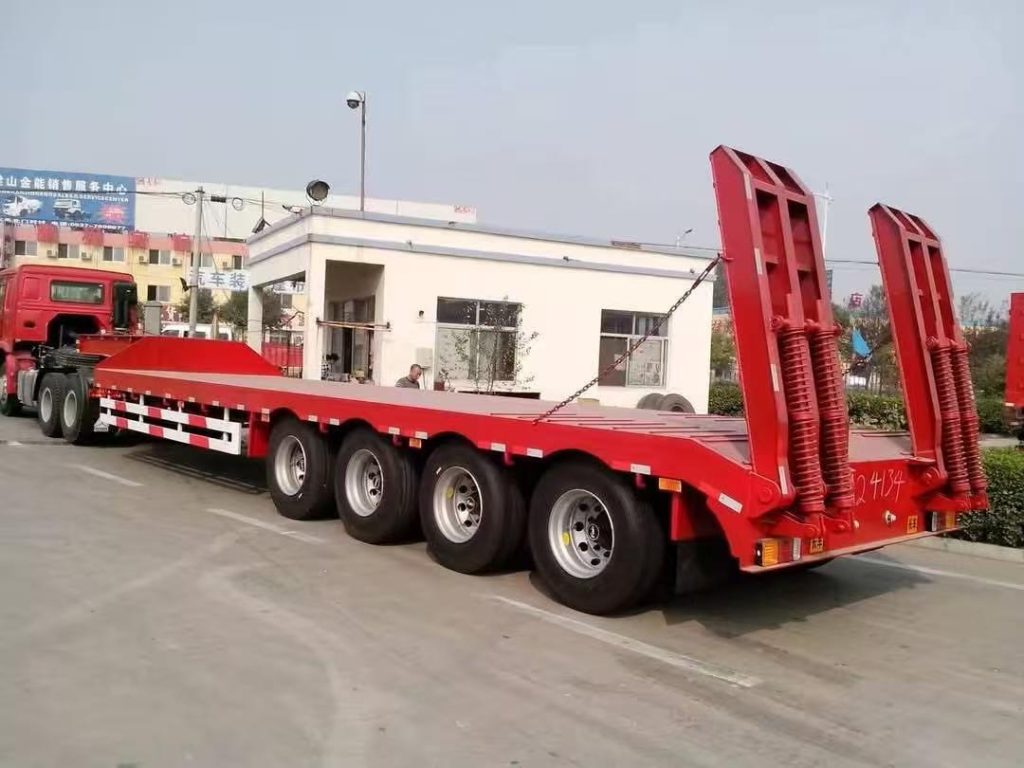
| 4 axle trailer | $16,000 – $20,000 | Up to ~80 tons | Heavy-duty and oversized cargo transport |
Loading Platform Dimensions
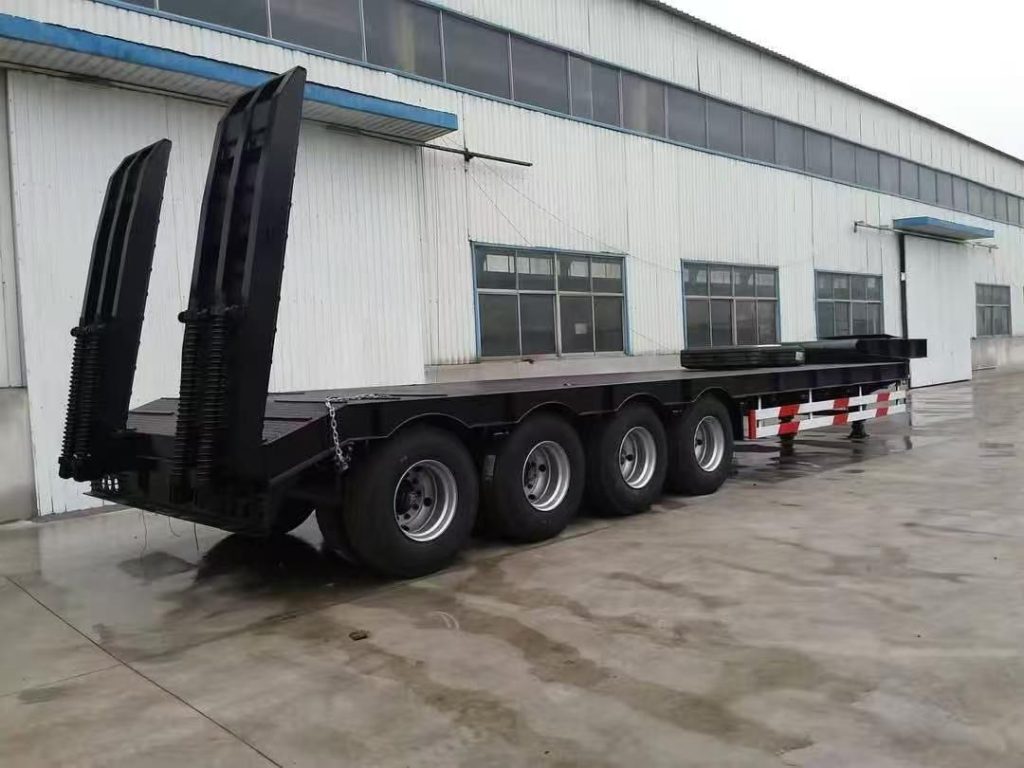
The size of the loading platform is one of the important factors affecting capacity and ease of use.
Longer platforms can carry large machinery or transport multiple items.
Wider platforms are suitable for transporting oversized or non-standard equipment.
A well-designed platform ensures more even weight distribution and provides safer transport conditions.
Common Capacity of Low Bed Semi Trailers
The load carrying capacity of a low bed trailer is closely tied to its axle configuration and structural design. Boca offers a range of models with standard load capacities to meet diverse requirements for transporting cargo ranging from medium to heavy weights.
Customized Heavy Duty Solutions
In addition to standard configurations, Boca offers custom-built lowbed trailers with load capacities starting at 100 tons—and even higher. These solutions are designed to meet the specific requirements of complex or oversized transport projects.
Customization options may include:
Increasing the number of axles to ensure more uniform load distribution
Reinforcing the main frame to enhance structural strength
Selecting premium axle brands—such as Fuwa—or products from other internationally renowned manufacturers
Adjusting platform dimensions to suit cargo size and specific application needs
Quality and Application Flexibility
All trailers are manufactured using high-quality materials and advanced production processes to ensure stability, safety, and a long service life. Each configuration can be customized to suit actual operating conditions, enabling clients to achieve optimal performance across industries such as construction, mining, logistics, and heavy equipment transport.
Key Features of lowbed Trailers
Low Deck Height
Typically between 22 and 36 inches (550 to 900 mm). Ensuring large machinery remains within regulated transport height limits at all times.
Reducing the risk of tipping and improving transport stability.
2.2 Multi-Axle Configurations
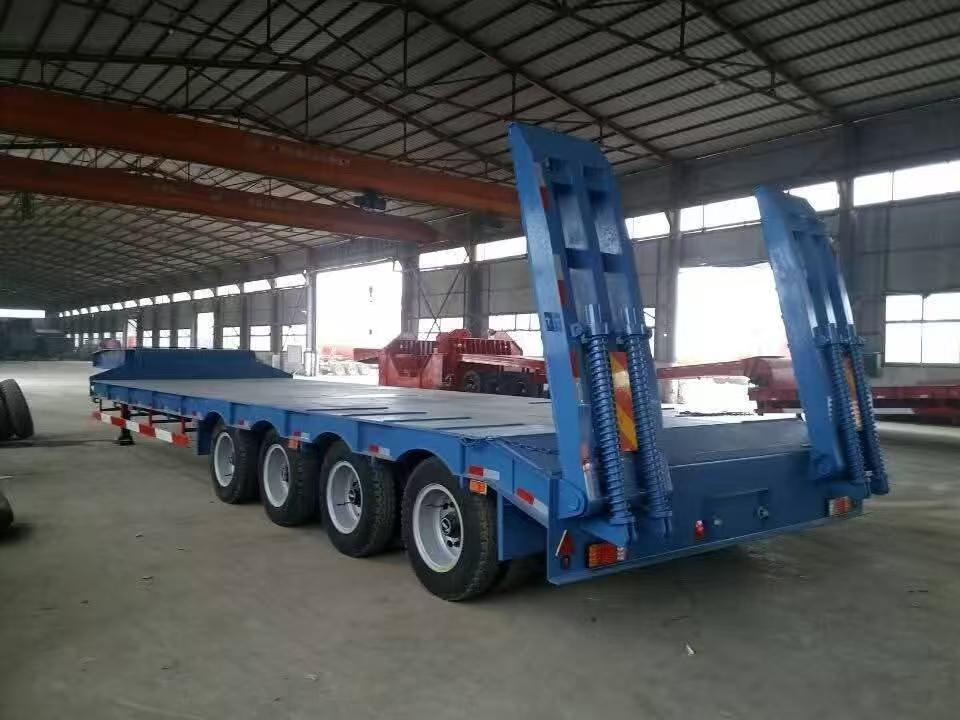
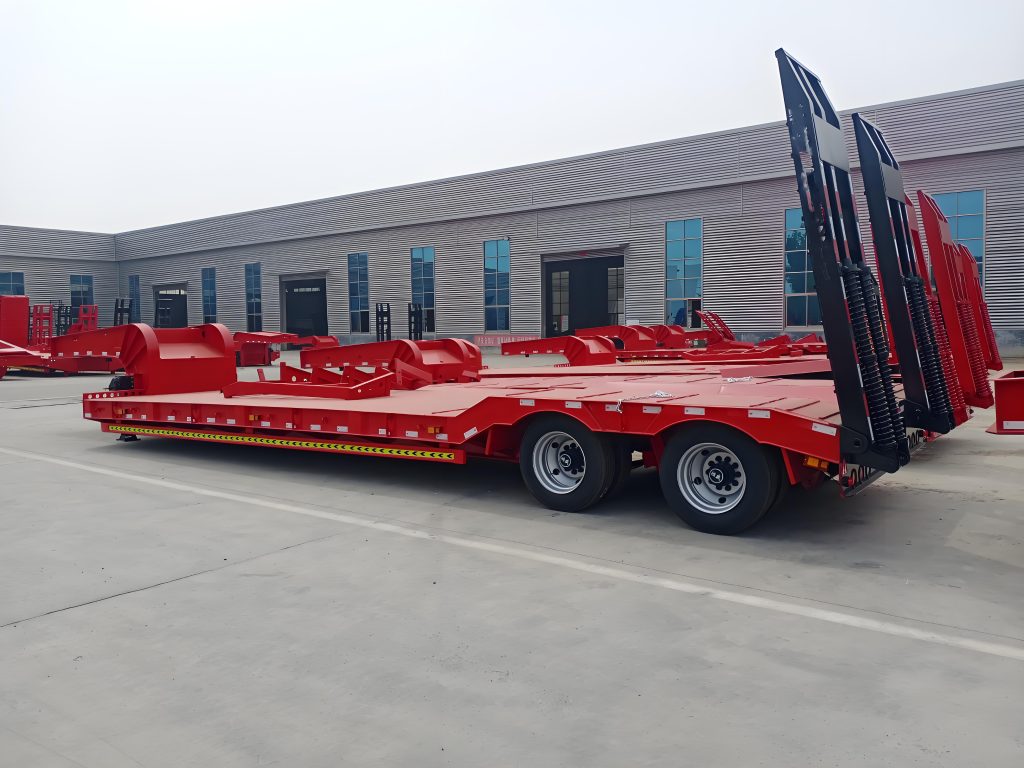
2 axle lowbed semi trailer: Suitable for light to medium machinery (20 to 35 tons)
3 axle lowbed semi trailer: Commonly used for medium-sized construction equipment (40 to 60 tons)
4 axle lowbed semi trailer: Heavy-duty transport vehicles (60 to 90 tons)
5 axle lowbed semi trailer: For ultra-heavy industrial loads (100 to 150 tons and above)
Multi-axle designs are crucial in countries with varying road standards, as they distribute weight evenly and reduce road wear.
Lowbed trailer suspension Options
Mechanical suspension: Robust and durable, suitable for rough roads in Africa and Central Asia.
Air suspension systems: Provide a smooth ride, protecting expensive equipment from damage during long-distance transport.
Hydraulic suspension: Adjustable, suitable for overweight or modular loads.
Deck Width and Length
Standard deck width: 2.5 to 3.2 meters
Extendable decks for large machinery or industrial modules.
Customizable truck lowbed trailer lengths for specialized equipment such as drilling rigs, wind turbine components, or cranes.
Advantages of lowbed Trailer in Global Markets
Africa
Roads may be uneven or poorly maintained.
China lowbed trailers with robust mechanical suspension systems can safely transport heavy construction and mining equipment.
Multi-axle heavy lowbed trailer reduce road damage and distribute weight evenly, suitable for long-distance transport.
Southeast Asia
Densely populated urban areas require highly maneuverable trailers.
Semi lowbed trailers can transport oversized cargo without requiring special permits.
Ideal for transporting paving stones, excavators, and wheel loaders in congested areas.
Middle East
Large construction projects and oil and gas projects require reliable heavy transport solutions.
Detachable lowbed semi trailer designs can be used to load mining trucks, generators, and pipeline modules. The low ground clearance ensures safe driving on highways and desert roads.
South America
Road conditions vary, from paved highways to rugged mountain roads.
Lowbed semi trailer facilitate the transportation of mining equipment and agricultural machinery.
Multi-axle configurations improve stability when driving on uneven surfaces.
Central Asia and countries along the Belt and Road Initiative
Infrastructure projects along the Belt and Road Initiative require high load capacity and long-distance transportation capabilities.
China lowbed trailers can efficiently load large construction components, cranes, and industrial equipment.

Types of lowbed Trailer
Lowbed semi trailers come in various configurations to meet a wide range of heavy-haul transportation needs. Each type is specifically designed to accommodate distinct cargo characteristics, loading methods, and operating environments.
Fixed Gooseneck Lowbed Trailer
This fixed gooseneck low bed trailer represents the most common and standard configuration for transporting heavy equipment.
It features a fixed front gooseneck structure, ensuring stable towing performance.suitable for transporting standard construction machinery and mining equipment.widely utilized in infrastructure projects where loading conditions are relatively stable.optimal balance between cost-effectiveness, durability, and operational efficiency.
This type is ideally suited for users who require consistent performance in routine heavy-haul tasks and do not face complex loading requirements.
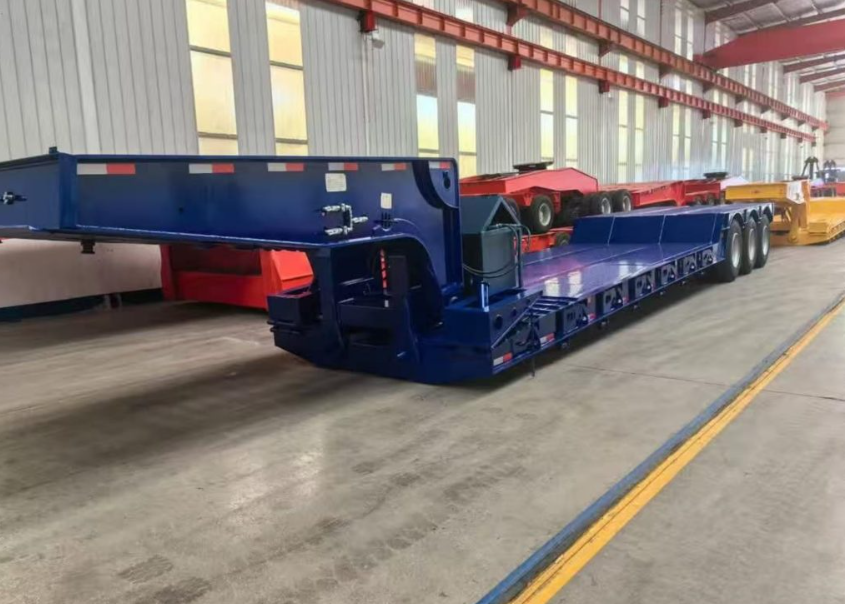
Detachable Lowboy Trailer (Removeable Gooseneck )
This detachable gooseneck lowbed trailer features a removable front section, allowing equipment to be loaded directly onto the trailer from the front.
Tracked or wheeled machinery can be driven directly onto the platform.
This eliminates or minimizes the need for external ramps or cranes for loading.Enhances loading efficiency, making it particularly suitable for use in remote or undeveloped regions.Frequently employed in mining sites and rugged off-road construction environments.
This design is especially well-suited for scenarios involving limited loading resources or harsh operating conditions.
Extendable Low Bed Trailer
This extendable lowbed trailer features an adjustable frame that allows the length of the trailer bed to be adapted according to the dimensions of the cargo.telescopic structure enables flexible length adjustment.suitable for transporting oversized cargo, such as wind turbine blades, bridge girders, and large industrial modules.
Enhances adaptability for handling non-standard or exceptionally long cargo.Helps reduce the need for multiple transport trips.
This type of trailer is widely utilized in major infrastructure and energy projects.
Multi-Axle Heavy Duty Low Bed Trailer
This multi axle heavy-duty lowbed trailer is specifically engineered for extreme load scenarios and the transport of oversized cargo.
Equipped with multiple axles capable of evenly distributing extremely heavy loads.
Designed for transporting ultra-heavy machinery, large-scale industrial equipment, and complex engineering components.
Offers maximum stability and safety under high-load conditions.
Widely deployed in major infrastructure and energy projects across Africa, the Middle East, and countries along the “Belt and Road” initiative.
Within the lowbed trailer category, this type boasts the highest load-carrying capacity and the most robust structural reinforcement.
Application For The Lowbed Trailer
Lowbed semi-trailers are widely utilized across various heavy industrial sectors due to their robust load-bearing capacity, low center of gravity, and ability to transport oversized equipment safely and efficiently.
Construction Industry
Low-bed transporters play a pivotal role in construction and civil engineering projects.
Frequently used to transport heavy machinery such as excavators, bulldozers, and road rollers.
Essential for the development of infrastructure projects, including roads, bridges, and urban construction.
In regions such as Southeast Asia and the Middle East—where construction sites are often congested—trailers featuring tight turning radii and reinforced suspension systems are prioritized to enhance maneuverability and stability.
Mining Industry
The mining sector relies heavily on low-bed transporters for the movement of large and heavy equipment.
Used to transport mining loaders, drilling rigs, and massive excavation machinery.
Requires high load-bearing capacity and a low profile chassis design to ensure the safe transport of oversized machinery.
Multi axle configurations are particularly crucial for maintaining stability on the rugged, unpaved mining roads often found in regions such as Africa and South America.
Oil and Gas Industry
Lowbed flatbed trailers are indispensable for transporting critical equipment used in energy extraction and processing operations.
Commonly used for modular pumping systems, generators, compressors, and pipeline sections.
Frequently deployed in remote desert environments in the Middle East, as well as in offshore support logistics.
The detachable gooseneck design significantly simplifies the loading and unloading of heavy industrial components.
General Industrial Sector
In manufacturing and heavy industrial fields, low-bed trailers are extensively utilized for equipment relocation and logistical support.
Suitable for transporting heavy presses, turbines, steel processing machinery, and modular industrial units.
Often employed within factories, shipyards, and steelworks during equipment installation or relocation processes.
Ensures the safe and stable transport of high-value industrial machinery.
Agricultural Sector
Lowbed trailers also support modern agricultural mechanization and large-scale agricultural production activities.
They are used for transporting tractors, combine harvesters, and irrigation systems.particularly important in regions such as South America and Central Asia, where large-scale agriculture is developing rapidly.
They enable the safe and efficient long-distance transport of high-value agricultural equipment.
Key Factors for Choosing the Right LowBed Trailer
Choosing the right lowbed semi-trailer requires careful evaluation of a range of key technical and operational factors. These factors directly impact transport safety, efficiency, and overall cost-effectiveness.
Loading Capacity
Low bed trailers are primarily used to transport heavy and oversized cargo, which often demands extremely high structural strength.
The trailer must be able to safely bear the full weight of the cargo without deformation or instability.
For heavy machinery such as excavators, transformers, or industrial modules, higher load capacity is crucial.
Customers should always match the trailer’s capacity to the actual weight of the cargo and future transport needs.
Appropriately selected load capacity ensures safe transport and extends the trailer’s lifespan.
Loading Platform Size
The size of the loading platform determines the types and sizes of cargo that can be transported.
Longer platforms are suitable for large machinery or multi-section equipment. Wider platforms are suitable for oversized or non-standard industrial goods. Incorrect platform selection can lead to inefficient loading or transportation limitations. Before selecting a trailer, carefully measure the dimensions of the cargo and ensure it is fully compatible with the platform design.
Stability and Safety Performance
Stability is a key factor in ensuring safe transportation, especially under heavy loads.
A reinforced chassis increases structural rigidity and reduces the risk of deformation during transport. A lower center of gravity enhances stability and reduces the likelihood of tipping over. Safety accessories such as braking systems, warning devices, and fire extinguishers further improve operational safety. A well-designed trailer can significantly reduce risks during transportation, especially on long distances or rough roads.
Chassis Ground Clearance and Off-Road Capability
Lowbed trailer often operate in complex environments, making chassis adaptability an important consideration.
The trailer must be able to traverse rough roads, construction sites, and uneven terrain.
Height margin is crucial when navigating tunnels, bridges, or restricted road sections.
A well-designed chassis ensures smooth operation under diverse geographical and infrastructure conditions.
How to Choose the Right Lowbed Trailer Supplier
Choosing a reliable low bed trailer supplier is just as important as choosing the trailer itself. A qualified supplier can guarantee product quality, provide long-term support, and ensure overall operational reliability. Before making a decision, carefully evaluate the following factors:
Company Experience and History
A supplier with a long history of operation in the lowbed trailer manufacturing field usually signifies strong technical capabilities and a stable production system.
Extensive industry experience reflects mature design and engineering expertise.
Established manufacturers are more likely to have well-developed production processes and quality control systems.
Strong R&D capabilities help ensure continuous product improvement and innovation.
Choosing an experienced supplier can reduce risk and ensure more reliable product performance.
Company Reputation and Market Feedback
In the trailer industry, reputation is an important indicator of integrity and product quality.
A reputable company typically serves a wider global customer base.
Positive market feedback indicates consistent product quality and service reliability.
Reputable suppliers are more likely to strictly adhere to contracts and fulfill commitments.
They also prioritize long-term relationships with customers rather than one-off sales transactions.
A good reputation is usually closely associated with higher product consistency and higher customer satisfaction.
Technical Support and After-Sales Service
After-sales service is crucial, especially for customers using lowbed trailers for the first time.
Professional technical guidance helps ensure the correct use and maintenance of the trailer.
Fast response times reduce downtime due to operational problems.
Supply of spare parts and repair support enhance the long-term value of the equipment.
Training and documentation help operators better understand the equipment’s performance.
Reliable after-sales service ensures the trailer operates efficiently throughout its entire lifespan.
Maintenance Tips for lowbed semi trailer
Proper maintenance of lowbed semi-trailers is crucial to ensuring their long-term performance, safety, and reliability. Regular inspections and timely maintenance help reduce the risk of failure and extend the equipment’s lifespan.
Regular Inspection of Critical Components
Frequent inspection of critical components helps identify potential problems early.
Inspect axle wear, alignment, and structural integrity.Inspect tire pressure, tread condition, and uneven wear.Inspect the suspension system to ensure stable load-bearing capacity.
Early detection of faults helps avoid costly repairs and downtime.
Lubrication of Mechanical and Hydraulic Systems
Proper lubrication is essential for maintaining smooth equipment operation and reducing friction.
Apply lubricant to moving joints, steering knuckles, and couplings.
Maintain the hydraulic system to ensure stable lifting operation.
Regular lubrication reduces wear and improves overall efficiency.
Deck and Structural Condition Inspection
This loading platform is a critical structural area that requires regular inspection.
Inspect surfaces for cracks, deformation, or corrosion.
Inspect welds and frame connections for signs of fatigue.
Clean and maintain deck surfaces to prevent long-term damage.
A well-maintained structure ensures secure cargo support and extends its service life.
Braking and Electrical System Testing
Before operation, the safety systems must be in optimal working condition.
Test braking performance to ensure the vehicle has sensitive braking and stopping capabilities.
Check the lighting system, indicator lights, and wiring connections.
Ensure reflectors are clean and functional for nighttime driving.
These checks are especially important for long-haul and highway transport.
Proper Load Distribution
Correct loading methods are crucial for the trailer’s stability and safety.
Ensure cargo weight is evenly distributed across all axles.
Avoid overloading one side or any part of the vehicle.
Use appropriate securing methods to prevent movement during transport. Balanced load distribution improves driving stability and reduces the burden on tires and axles.
Lowbed Semi Trailer Market Trends
The global low bed semi-trailer market is rapidly growing, driven by infrastructure expansion, industrial development, and increasing demand for efficient heavy-duty transport. Several key trends are shaping this industry:
Demand Growth in Belt and Road Regions
Demand for heavy-duty lowbed trailers is showing strong and sustained growth in countries along the Belt and Road Initiative.
Large-scale infrastructure and energy projects are driving demand for equipment transport.
Cross-border logistics requires more durable and feature-rich trailer solutions.
Increasing construction and mining activities are driving the widespread use of trailers in emerging markets.
Growth of Hydraulically Detachable Trailers
Hydraulically detachable (detachable gooseneck) lowbed trailers are becoming increasingly popular, especially in remote and complex environments.
Widely used in mining and construction sites with limited loading equipment.
Enables machinery to drive directly onto the trailer for rapid loading.
Improves operational efficiency in remote and undeveloped areas.
This type is gradually becoming the preferred solution for transporting heavy equipment in complex terrain conditions.
Transition to Lightweight, High-Strength Materials
Manufacturers are increasingly adopting advanced materials to improve product performance and efficiency.
High-strength steel reduces the overall weight of trailers while maintaining their durability. Lower gross weight increases cargo capacity and fuel efficiency. Enhanced corrosion resistance extends service life and reduces maintenance costs. This trend contributes to both economic efficiency and environmental benefits.
Modular and Scalable Trailer Design
Flexibility in trailer configuration is becoming an important development trend. Extendable platforms can transport oversized or irregularly shaped cargo. Modular structures can meet different loading requirements within a single system. Ideal for the international transport of large industrial equipment and infrastructure components. This adaptability is particularly important for global logistics and project-based transport.
Conclusion
For industries operating in Africa, Southeast Asia, the Middle East, South America, and Central Asia, china lowbed semi trailer offer an unparalleled solution for transporting heavy, oversized, or extra-large equipment, enabling safe and efficient transportation. Their low deck height, multi-axle configuration, detachable or extendable options, and robust construction make them the preferred choice for construction, mining, oil and gas, industrial, and agricultural applications.
Investing in a high-quality semi lowbed trailer ensures:
Compliance with axle load and height restrictions
Safe and stable transportation of machinery and equipment
Reduced maintenance costs
Improved operational efficiency
Whether for short-distance urban travel in Southeast Asia or long-distance industrial transport in Central Asia and Africa, lowbed semi trailer are a reliable partner in modern heavy equipment logistics.
FAQ – Lowbed Trailer
What is a lowbed trailer used for?
A lowbed trailer is used to transport heavy and oversized equipment such as excavators, bulldozers, and construction machinery.
What is the advantage of a lowbed trailer?
Its ultra-low deck height allows it to carry tall and heavy cargo safely with better stability and lower center of gravity.
How many tons can a lowbed trailer carry?
Most lowbed trailers can carry from 20 tons up to 120+ tons depending on axle configuration.
What types of lowbed trailers are available?
Common types include fixed gooseneck, detachable gooseneck, and extendable lowbed trailers.
How is heavy equipment loaded onto a lowbed trailer?
Equipment is loaded using rear ramps or by lowering a detachable gooseneck for direct drive-on loading.
What industries use lowbed trailers?
They are widely used in construction, mining, infrastructure projects, and heavy machinery transport.