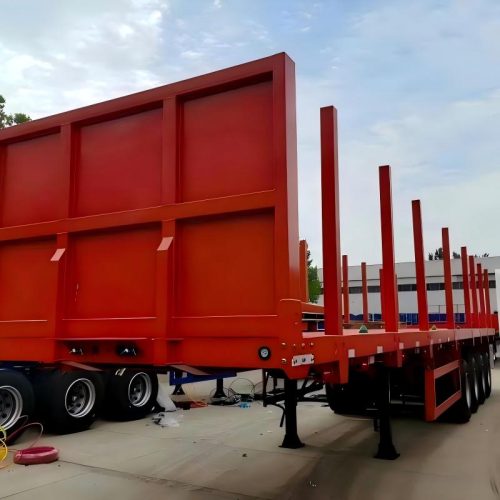
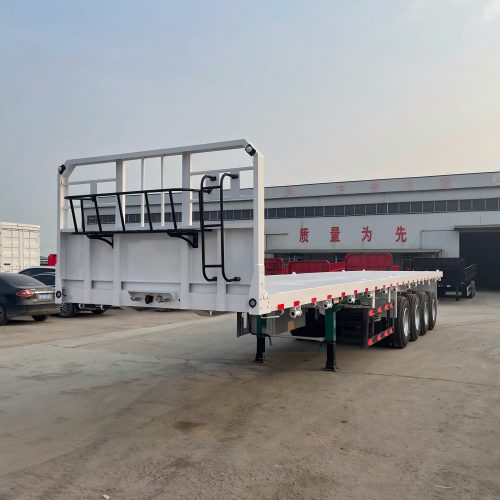
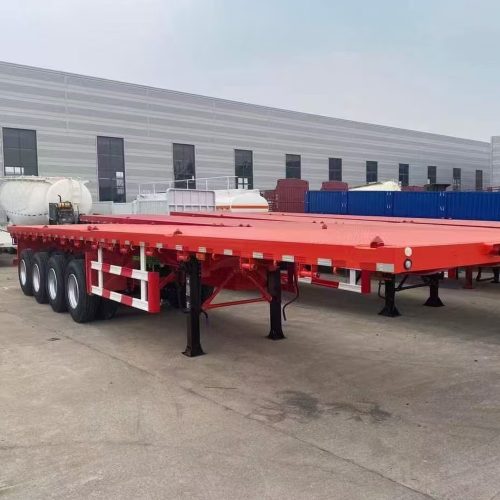
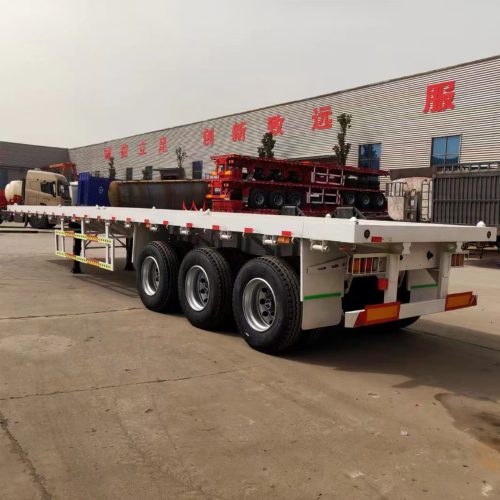
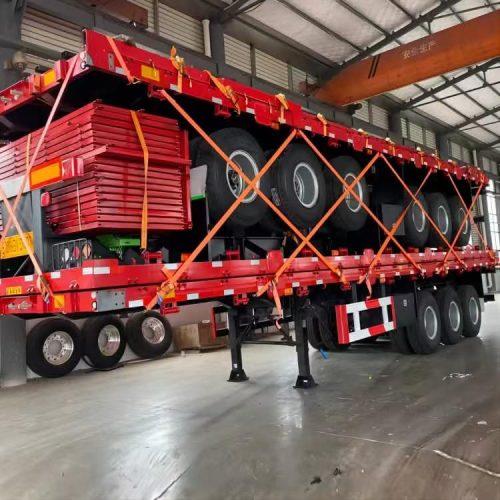
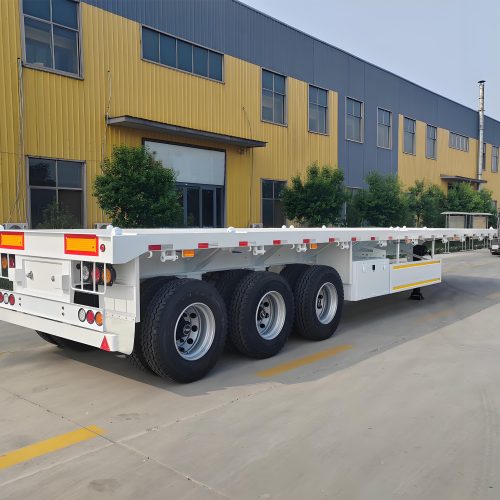
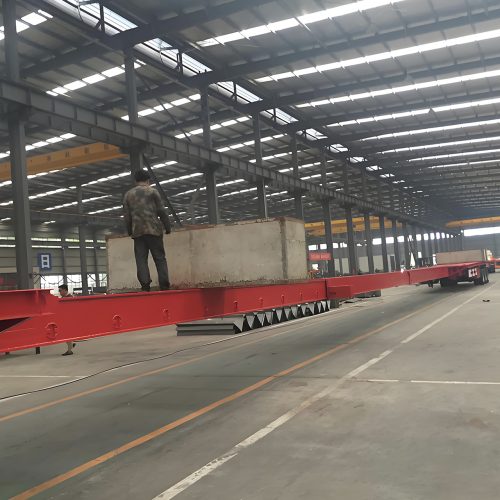
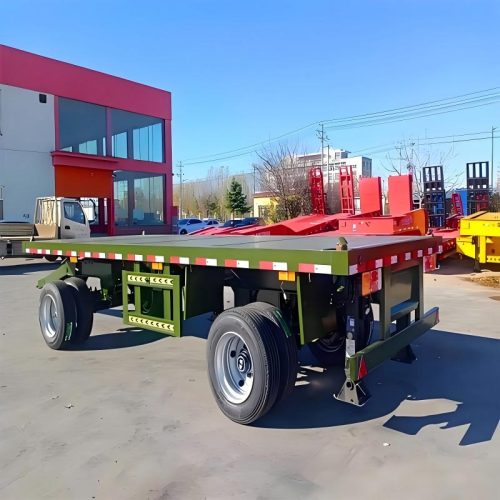
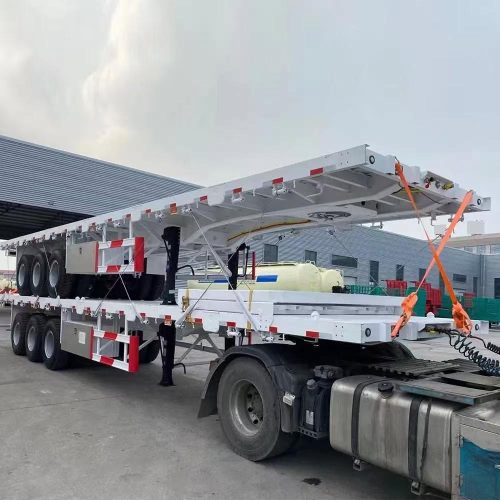
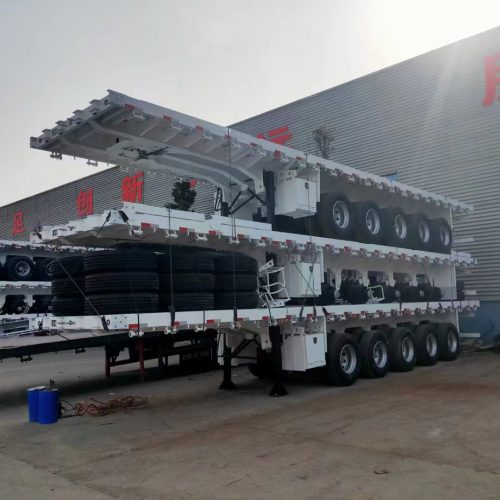
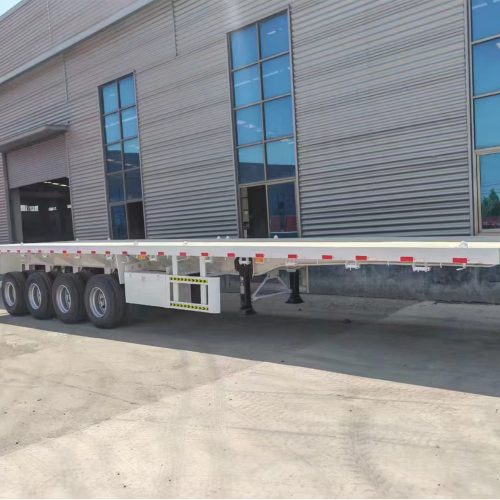
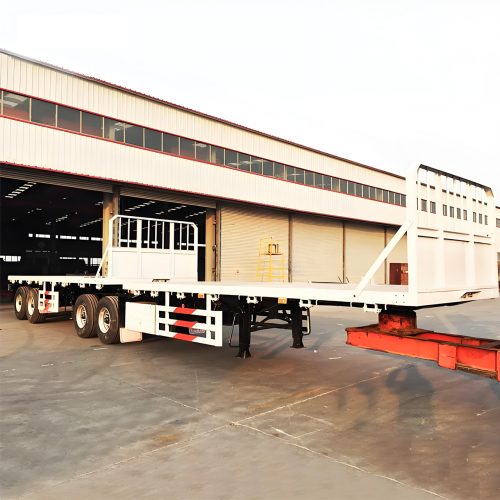
Flatbed Semi Trailer Overview
Looking for a flatbed semi trailer that can handle container transport, steel materials, machinery, timber, pipes, and oversized construction cargo? Boca Auto supplies export-ready flatbed semi trailers for buyers who need a strong open platform, flexible loading access, and dependable frame performance across long-haul road conditions.
A flatbed semi trailer is useful because it does not limit cargo by side walls or roof height. Cranes, forklifts, and side loaders can load from multiple directions, which helps ports, construction contractors, mining suppliers, and logistics companies move irregular cargo faster.
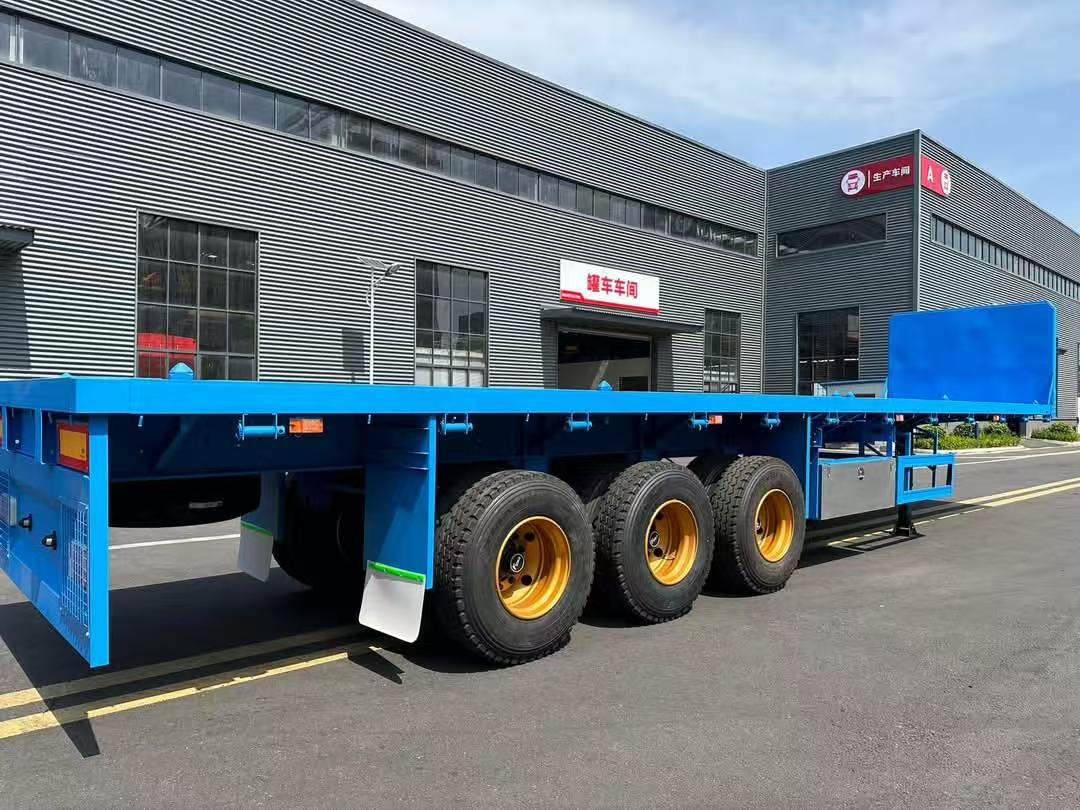
This page explains the main flatbed semi trailer types, axle choices, deck structures, load capacity ranges, and practical selection points. Trailer specifications can still be customized by cargo weight, road condition, container size, and local transport regulations.
What Is a Flatbed Semi Trailer?
A flatbed semi trailer is an open-deck trailer designed for cargo that needs flexible loading, side access, or top lifting. Unlike enclosed trailers, it does not have fixed side walls or a roof. This makes it suitable for containers, steel coils, rebar, construction machinery, timber, pipes, and other cargo that may be too wide, too long, or too irregular for a standard box trailer.
For buyers working in ports, construction yards, mining sites, and logistics fleets, the biggest advantage is loading freedom. Workers can load the trailer from the side, rear, or top, depending on the site equipment. This makes a flatbed semi trailer especially practical when cargo changes from one project to another.
Key Characteristics of a Flatbed Semi Trailer
A good flatbed semi trailer should not only look strong in photos. Buyers should check whether the main beam, cross beam spacing, deck plate, twist lock position, suspension, axle configuration, and welding quality match the cargo they plan to move.
Open platform for containers, machinery, steel and bulk cargo; flexible side loading and top loading by crane or forklift; strong main beam design for long-distance transport; optional twist locks for 20ft and 40ft container use; axle and suspension options for different road conditions.
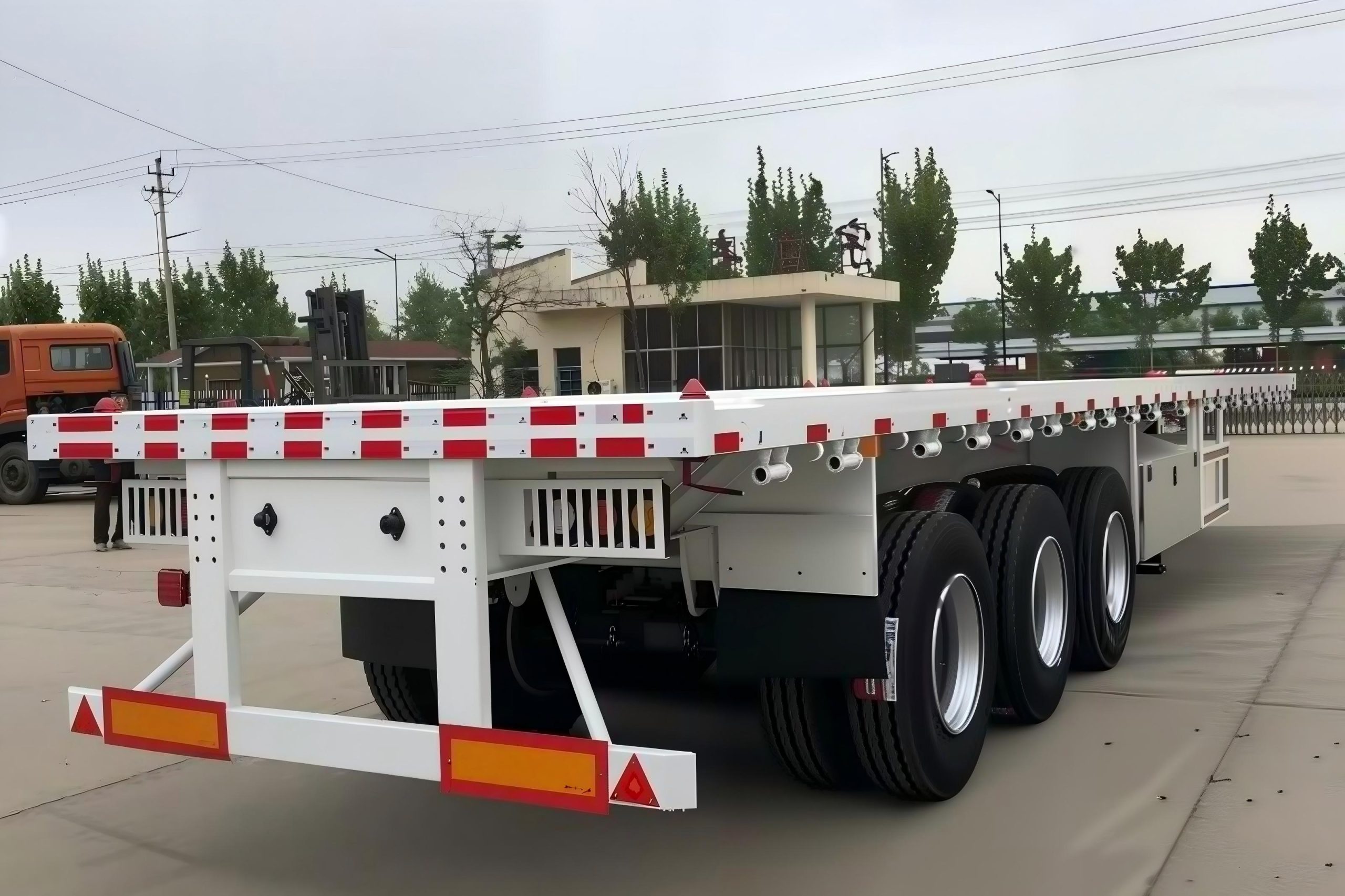
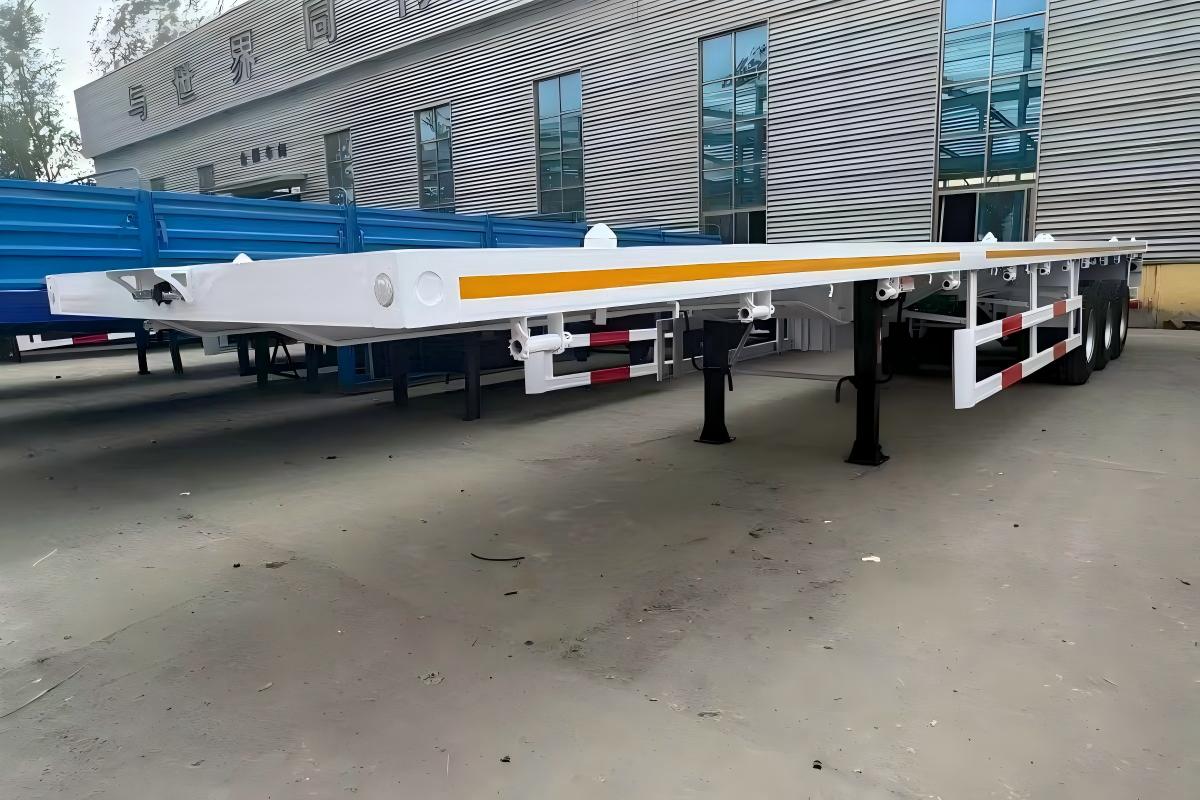
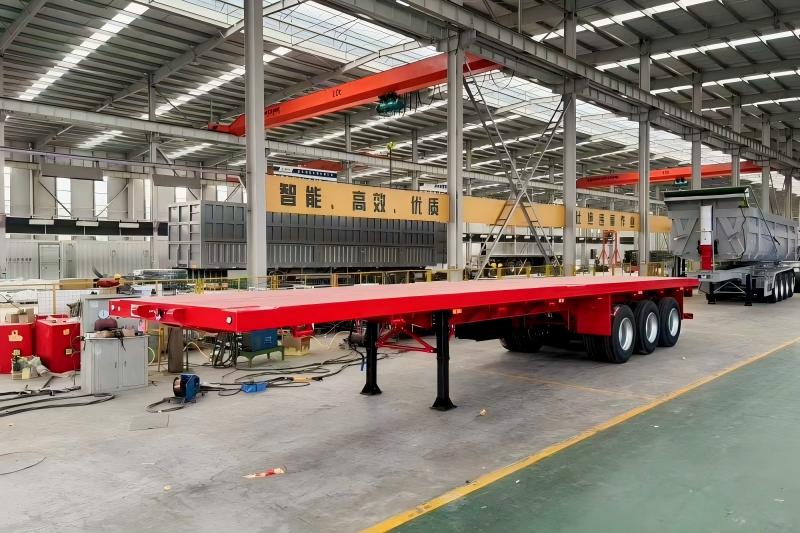
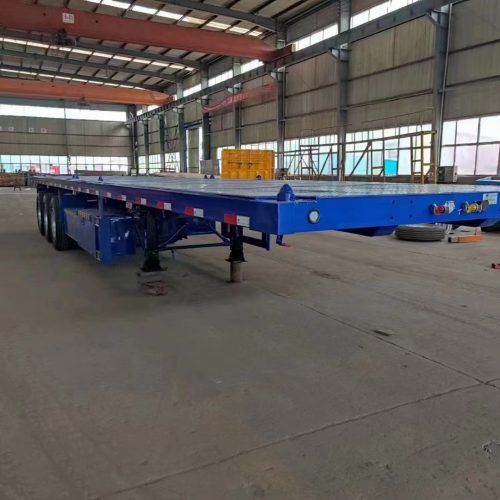
20 ft flatbed semi trailer are compact and suitable for short-haul transport or industrial use.
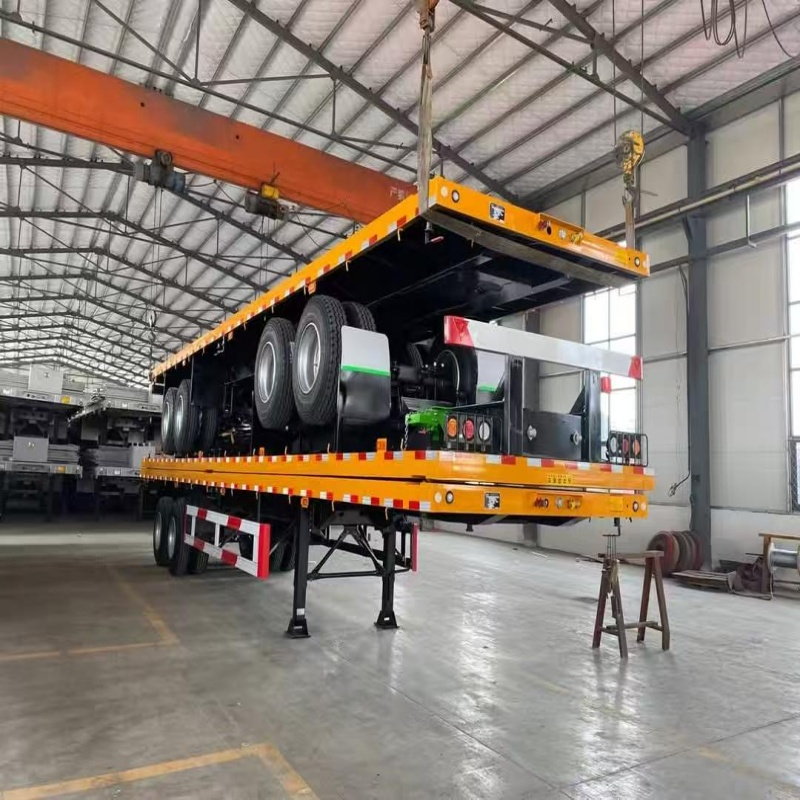
20 foot flatbed trailer
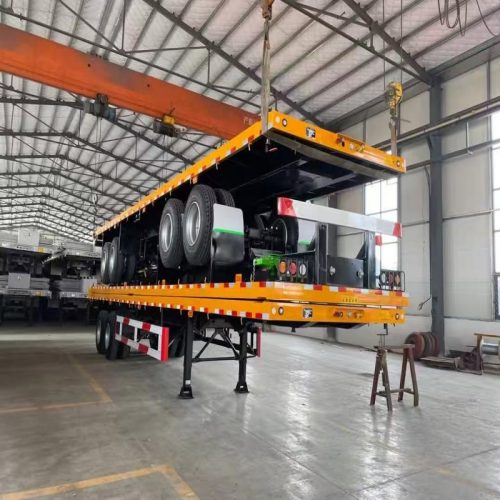
40 ft flatbed semi trailer are widely used globally for transporting goods such as machinery, pipes, steel coils, and building materials.
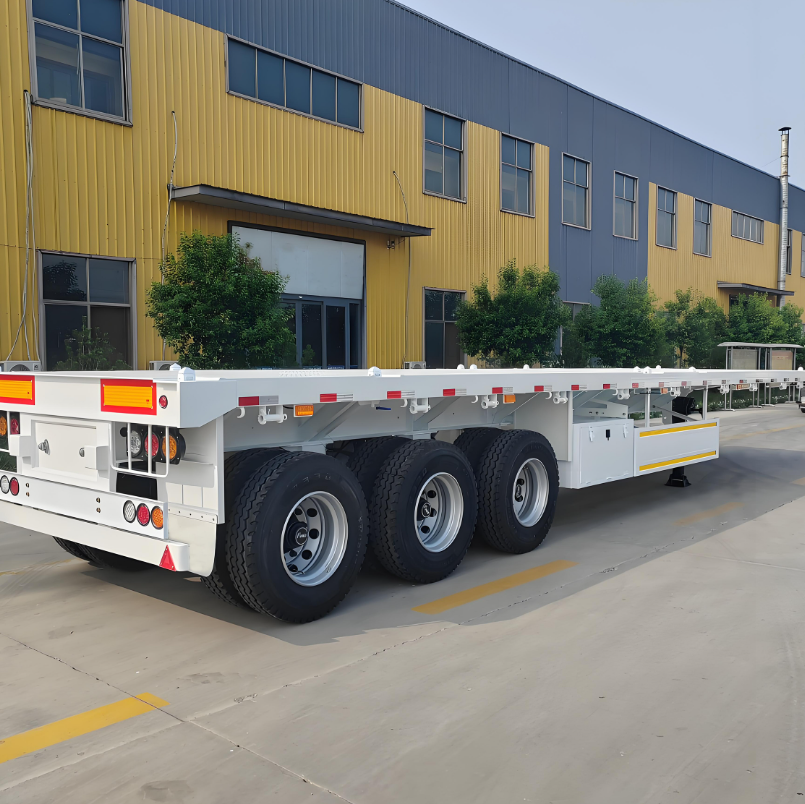
40 foot flatbed trailer
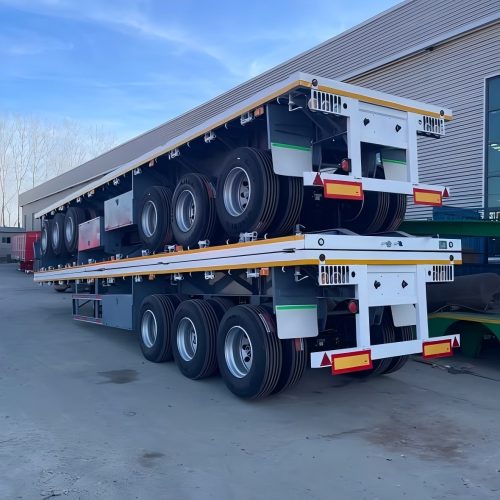
45 foot flatbed semi trailer are widely used in North America to transport larger volumes of cargo and improve operational efficiency.
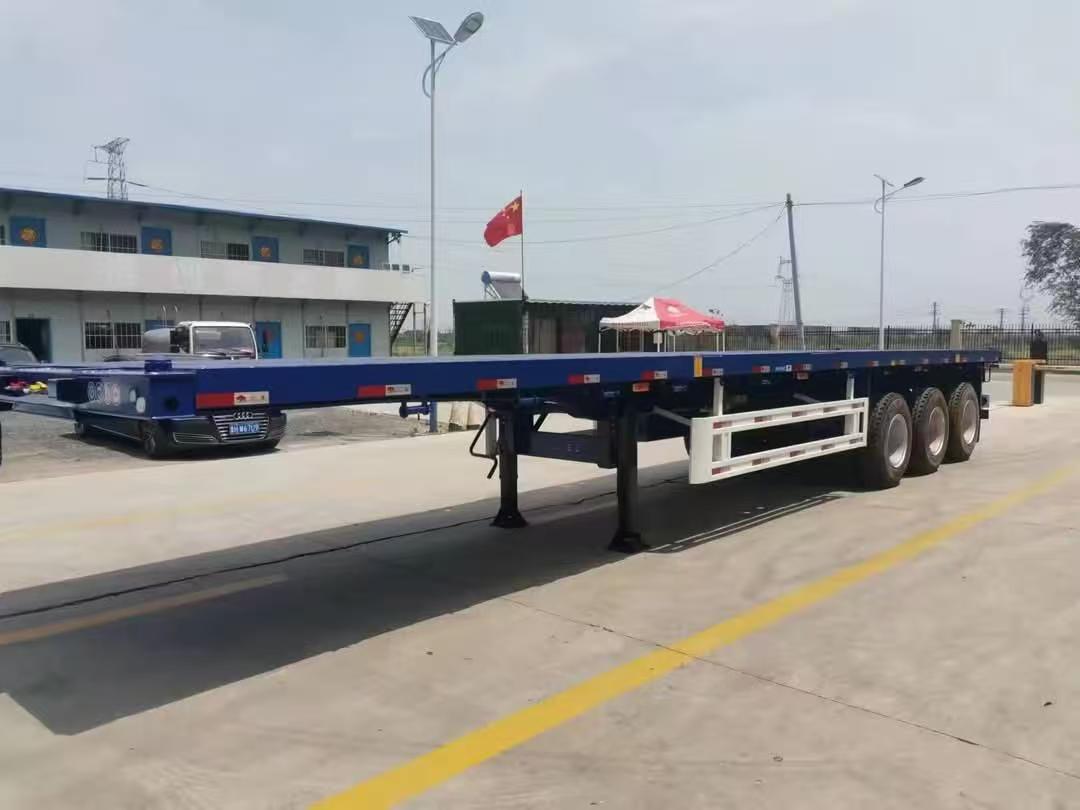
3 axle 45 foot flatbed trailer
These different length configurations ensure that customers can choose the appropriate vehicle type based on road regulations, cargo size, and fleet requirements.
Main Applications of Flatbed Semi Trailers
The reason many international buyers choose a flatbed semi trailer is simple: one trailer can serve several transport jobs. It can carry standard containers today, steel bars tomorrow, and heavy construction materials on the next project. For fleets that need flexibility, this reduces the need to buy too many specialized trailers.
- 20ft and 40ft container transportation
- Steel pipe, rebar, plate and coil transport
- Construction machinery and site equipment transfer
- Timber, cement bags, pallets and industrial cargo
- Port, warehouse, mining and infrastructure projects
Structural Components of a Flatbed Semi Trailer
When comparing a flatbed semi trailer for sale, do not only compare the price. Two trailers may look similar from the outside, but the frame structure, steel thickness, cross member design, and suspension choice can make a big difference after months of heavy use.
The main beam carries most of the load stress. The cross beams help spread cargo pressure across the deck. The suspension and axle system decide how stable the trailer feels on rough roads. The deck plate and twist locks affect daily loading safety, especially when carrying containers or mixed cargo.
Understanding the flatbed semi truck trailer structure helps operators select the appropriate model.
1. Main Beam (Primary Load-Bearing Structure)
The main beam is the core component of the trailer, typically made of Q345B or T700 high-strength steel. Its features include:
- Upper flange (12-16 mm), middle web (6-8 mm), lower flange (14-18 mm)
- Robot-welded I-beams to ensure consistent strength
- Gooseneck reinforcement to prevent cracking
- Optimized stress distribution to withstand heavy loads
A stronger main beam directly extends the semi truck flatbed trailer service life and increases its load-bearing capacity.
2. Side Beams
Side beams are designed to enhance structural rigidity and support lateral forces. They typically feature:
- 16# or 18# I-beams
- Strap loops spaced every 500 to 800 mm
- Rope hooks for straps and chains
These components ensure that pipes, pallets, and machinery are securely secured during long-distance transport.
3. Crossbeams
Crossbeams connect the side rails and support the deck. They are typically spaced 400 mm apart for balanced weight distribution. Advantages include:
- Preventing deck sagging
- Improving frame stability
- Withstanding concentrated loads from machinery. Heavy-duty models use thicker crossbeams.
4. Deck / Floor Structure
Flat decks are made from a variety of materials:
- Diamond steel plates: non-slip, strong and durable
- Solid wood flooring: flexible and durable
- Aluminum alloy: lightweight, corrosion resistant
Thickness varies from 3 mm to 6 mm depending on the application. A rust-resistant primer + topcoat ensures long-term durability.
5. Axles and Suspension System
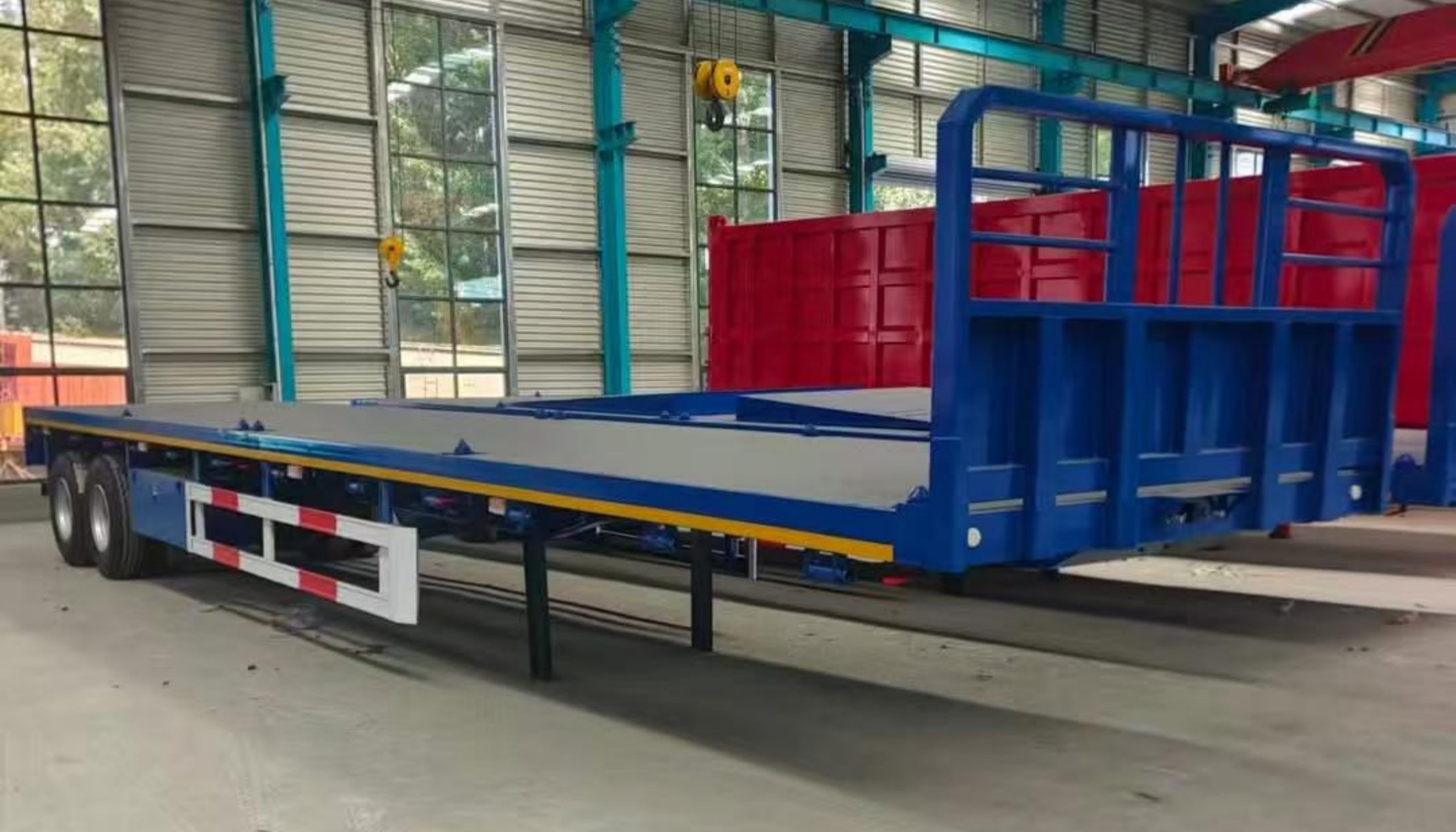
2 axle flatbed semi trailer (light-duty)
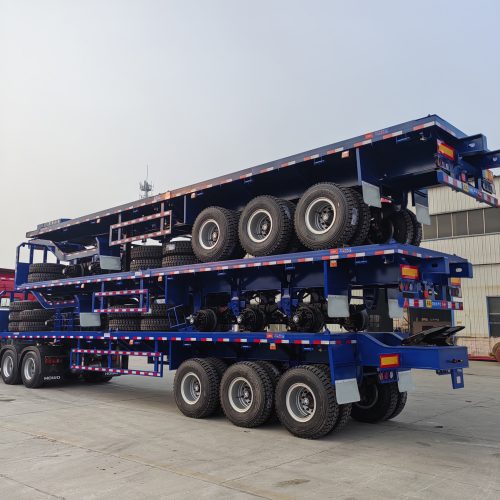
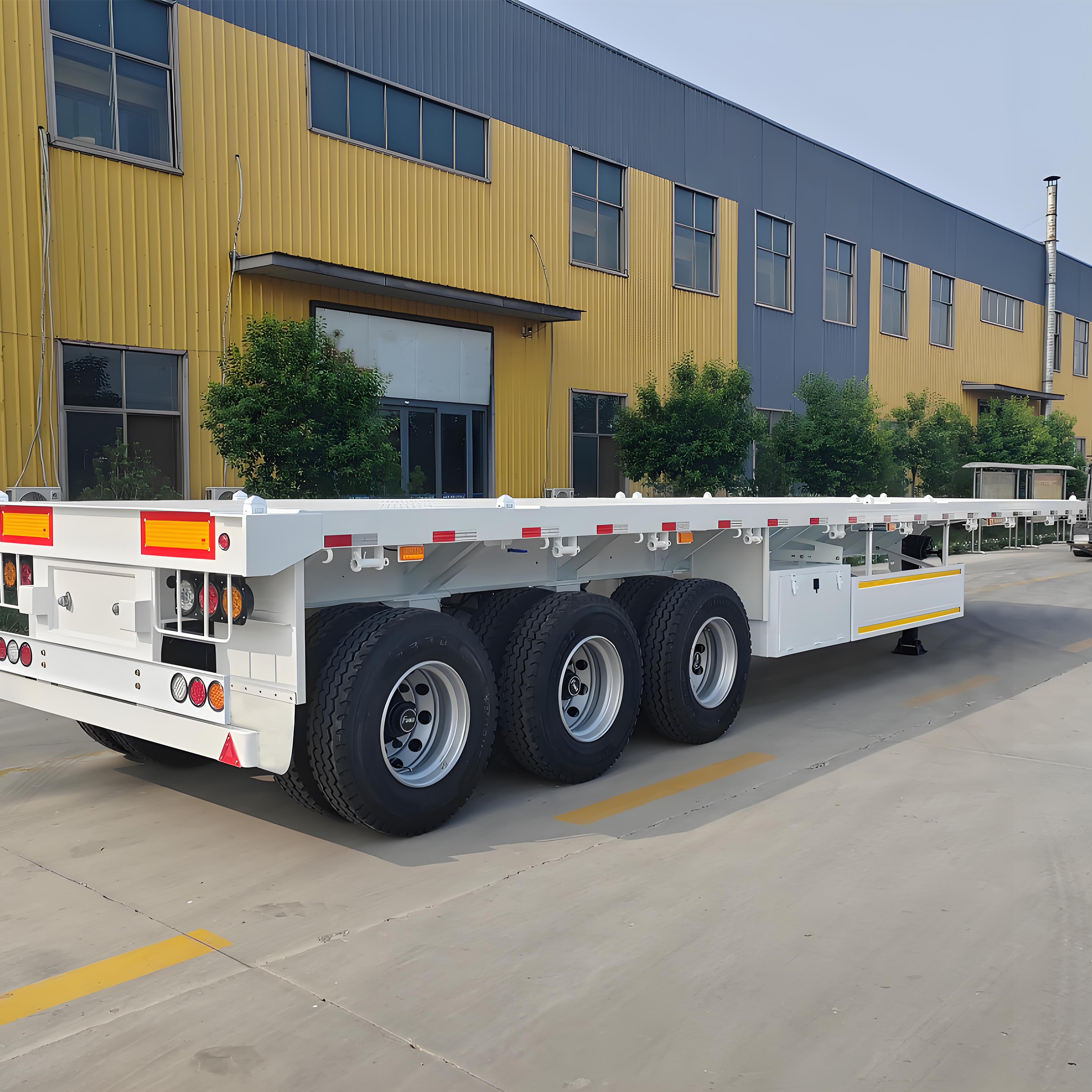
3 axle flatbed semi trailer (standard)
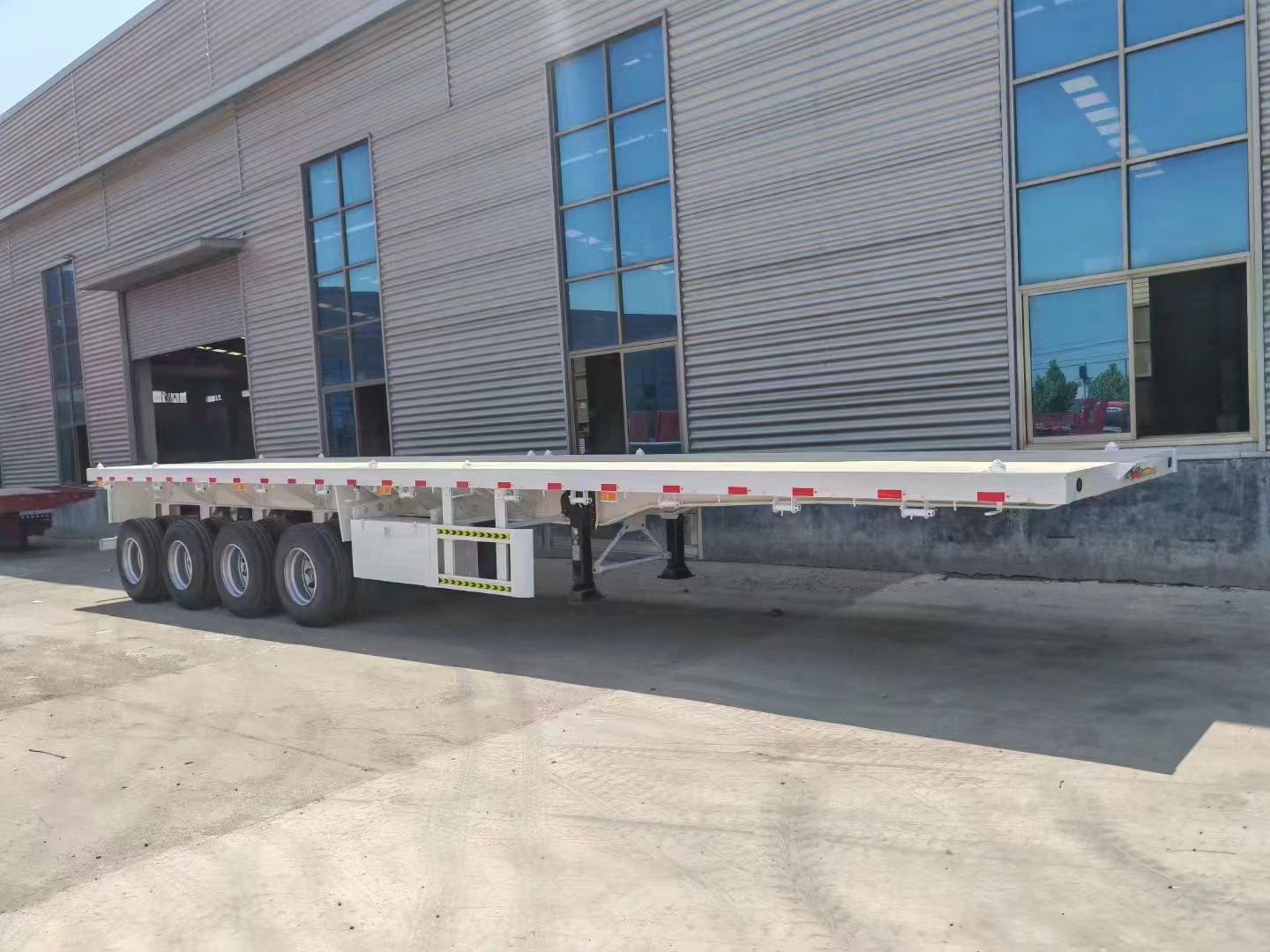
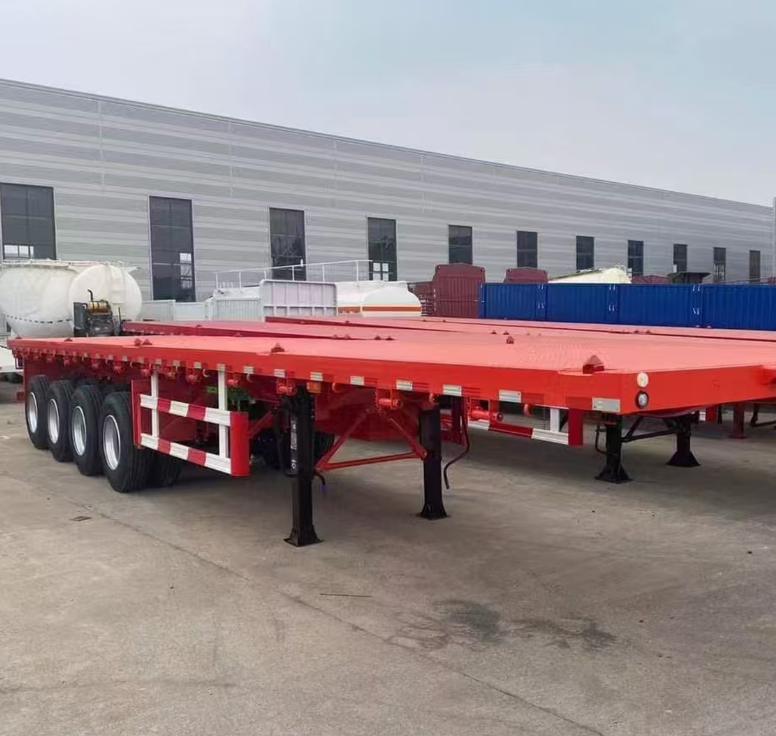
4 axle flatbed semi trailer (heavy-duty)
Suspension options:
- Mechanical suspension: robust, economical, suitable for rough terrain
- Air suspension: smoother ride, better cargo protection, and fuel savings
- Bogie suspension: extremely robust for heavy mining applications
Premium axle brands include: BPW, FUWA, York, and local heavy-duty axles.
6. Braking System
The china heavy duty flatbed semi trailer uses a dual-line pneumatic braking system for fast and reliable braking. Upgrades include:
- Waboka/Knorr-Bremse electronic braking system
- Automatic brake clearance adjuster
- Emergency relay valve
The electronic braking system reduces tire slippage and improves vehicle handling during emergency braking.
Flatbed Semi Trailer Specifications
The following configuration is a common reference for export flatbed semi trailer projects. Final specifications can be adjusted according to cargo type, axle load rules, local road conditions, and customer requirements.
| Category | Specifications |
| Model | 2 Axle / 3 Axle / 4 Axle Flatbed Semi Trailer |
| Overall Dimension | 12500–13500 × 2500 × 1500 mm (customizable) |
| Loading Capacity | 30–80 Tons |
| Main Beam | Q345B / T700 high-strength steel; Upper Flange 14mm, Middle 8mm, Lower 16mm |
| Side Beam | 16# Channel Steel / Reinforced Structure |
| Cross Beams | 100 × 50 mm, spacing 400 mm |
| Floor / Deck Material | 3mm–5mm Checkered Plate / Hardwood / Aluminum (optional) |
| King Pin | 2-inch or 3.5-inch JOST brand |
| Axles | 2/3/4 Axle, 13T or 14T Axles (BPW, FUWA, Local Premium Brand) |
| Suspension | Mechanical Spring Suspension / Air Suspension / Bogie Suspension |
| Leaf Springs | 90(W)×13(Thick)×10 Pcs (standard) |
| Brake System | Dual-line air brake; WABCO ABS optional |
| Tyres | 12R22.5, 315/80R22.5, or 385/65R22.5 (Triangle, Linglong, Double Coin) |
| Rims | 8.0/8.5/9.0 × 22.5 Steel or Aluminum Alloy |
| Landing Gear | 28T/35T JOST or China Standard Landing Gear |
| Twist Locks | 4 or 8 pcs (optional for container transport) |
| Lights | LED Tail Lamps + Reflective Tape (ECE/DOT Standard) |
| Electrical System | 24V, 7-core socket |
| Spare Tire Carrier | 1–2 pcs |
| Tool Box | 1 × Steel Tool Box |
| Paint | Sandblasting + Anti-rust primer + Polyurethane topcoat |
| Welding Technique | CO2 automatic welding + Robotic welding (optional) |
| Accessories | Lashing rings, rope hooks, side protection, rear bumper |
| Optional Configurations | Air suspension, front wall, aluminum rims, reinforced beam, super heavy-duty structure |
This variation allows customization according to customer requirements.
Advantages of Flatbed Semi Trailer for sale
A flatbed semi trailer for sale is usually chosen by buyers who want one trailer to cover more than one transport scenario. It is not limited to a single cargo type, which makes it practical for contractors, freight companies, port operators, and industrial suppliers.
For example, if your fleet often moves containers from port to warehouse, but also needs to transport steel materials, pallets, and machinery for construction jobs, a heavy duty flatbed trailer can improve fleet flexibility. Instead of buying several different trailers, you can configure one flatbed model to handle the most common transport tasks.
1. Maximum Loading Flexibility
The open frame structure eliminates height and width limitations, allowing the flatbed container trailer to accommodate:
- Extremely long materials
- Extra-tall equipment
- Extra-wide panels or steel structures
Loading can be done from any direction, reducing time and increasing efficiency in busy work sites.
2. Capable of Transporting Oversized and Non-Standard Cargo
Flat bed semi trailers are specifically designed for cargo that cannot fit into enclosed trailers. Examples include:
- Beams 12 to 25 meters long
- Wind turbine blades
- Concrete beams
- Large storage tanks and industrial components
This flexibility makes flatbed trailers an essential tool for heavy manufacturing and infrastructure transportation.
3. High Load Capacity and Robust Structural Design
High-strength steel beams can support weights from 30 to over 80 tons (depending on axle configuration). Benefits include:
- Better bending resistance
- Longer service life
- Lower maintenance costs
- Reinforced I-beam structure and optimized crossbeam spacing help improve stress distribution.
4. Cost-Effective Transportation Solution
China flatbed semi trailer typically have lower maintenance costs due to their features:
- No sidewalls, No enclosed roof, Fewer mechanical parts
- This reduces annual maintenance costs and increases long-term operational value.
5. Versatile for Multiple Industries
Flatbed trailers are suitable for numerous industries:
- Construction, Mining, Agriculture, Manufacturing
- Energy & Oilfield Operations, Port Logistics
- Their versatile design helps businesses maximize fleet utilization and ROI.
6. Improved Loading and Unloading Efficiency
Using forklifts, cranes, side-dump loaders, or top-dump loaders enables fast and flexible loading and unloading of goods. This saves manpower, reduces operating costs, and shortens turnaround time.
7. Customized Options for Different Road Conditions
Customers can choose from:
- Mechanical or air suspension
- Extra axles (2, 3, 4, or more)
- Heavy-duty crossbeams
- Aluminum or steel flatbeds
- This ensures the trailer performs well on highways, rough terrain, desert roads, or mountainous areas.
How to Choose the Right Flatbed Semi Trailer
Before ordering a flatbed semi trailer, buyers should confirm the real working condition instead of choosing only by size. A trailer used mainly for containers may need different twist lock positions from a trailer used for heavy machinery. A trailer used on rough mining roads may need a stronger suspension and frame than one used mostly on highways.
Choose 20ft, 40ft or 45ft according to container and cargo length; choose 3 axle or 4 axle based on loading demand and road regulation; confirm whether twist locks are needed for container transport; check the main beam and cross beam design for heavy cargo; match suspension and tire options with local road conditions.
Boca Flatbed Semi Trailer for Container and Bulk Cargo Transport
Boca Auto supplies flatbed semi trailer solutions for container logistics, construction material transport, machinery movement, and general cargo projects. Whether you need a 40 foot flatbed semi trailer, a 3 axle flatbed semi trailer, or a customized heavy duty flatbed trailer for export, our team can help match the trailer structure to your actual cargo and road conditions.
If you are comparing trailer sizes, axle options, loading capacity, and export configuration, send your cargo details and destination country to Boca Auto. We can recommend a practical flatbed semi trailer configuration based on your working scenario.
When you plan to choice the flatbed semi-trailer, loading capacity are very important to consider.
Flatbed Semi Trailer Load Capacity by Axle Configuration
| Axle Configuration | Typical Load Capacity (Tons) | Application |
| 2 Axle Flatbed Trailer | 30 Ton or 40 Ton | Light to medium cargo, short-distance transport |
| 3 Axle Flatbed Trailer | 50 Ton or 60 Ton | Standard container transport (20 foot / 40 foot) |
| 4 Axle Flatbed Trailer | 70 Tons or 80 Tons | Heavy-duty cargo, long-distance transport |
Loading capacity can be customized based on axle brand, suspension type, and local road regulations.
- Common axle brands: BPW / FUWA
- Suspension options: Mechanical / Air suspension
- Higher axle count = better load distribution and stability
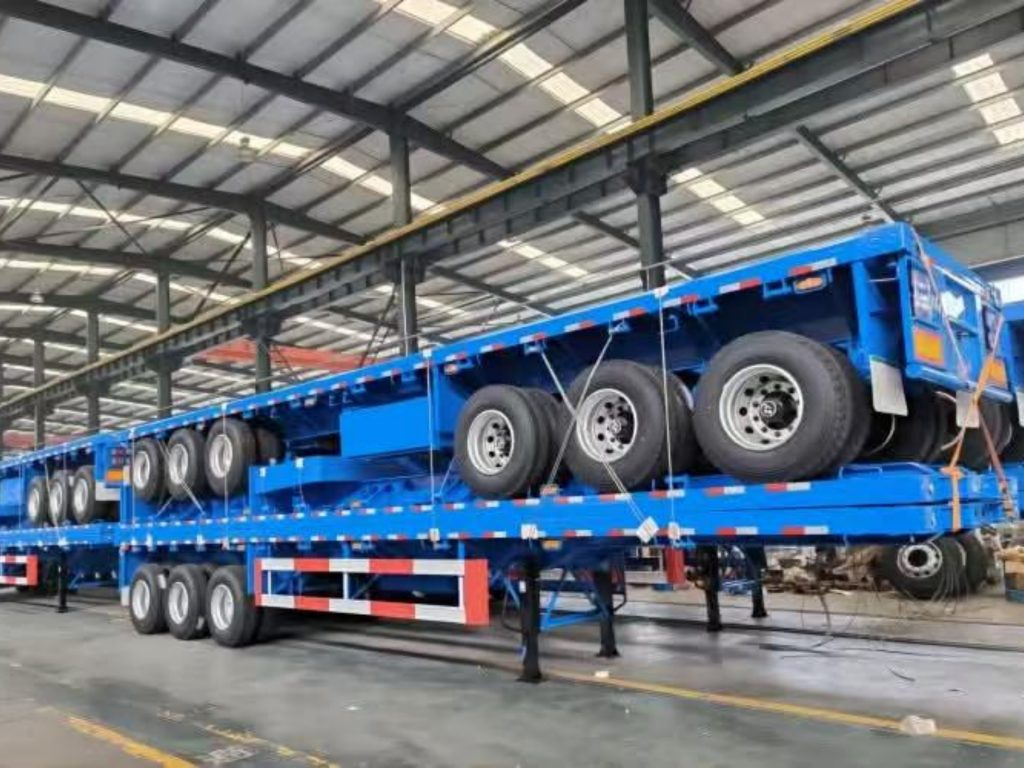
Container flatbed semi trailer