
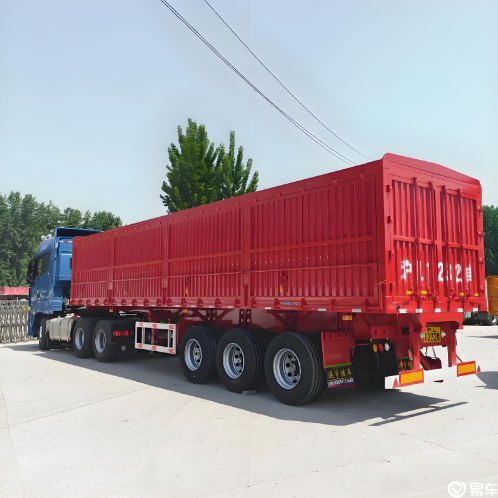
Side Dump Trailer vs Rear Dump: Which Is Safer for Your Jobsite?

On a clean brochure page, side dump and rear dump can look like a simple product split. In real working life, however, the difference feels far more physical. A trailer may arrive before sunrise on a quarry road, wait beside loaders, cross rutted ground, and unload where yesterday’s dry surface now feels softer after traffic or weather. In that setting, safety is not decided by a long parameter list alone. It is decided by how calmly the trailer behaves when the load shifts, how naturally the material leaves the body, and how well the unloading style matches the site itself.
That is why this comparison matters. On one route, a side dump feels composed because the body stays lower and the discharge is easier to trust on imperfect ground. On another, a rear dump still proves to be the better working answer because the task calls for a straight pile behind the trailer and the unloading pad remains level day after day. So the safer answer is rarely abstract. It usually comes from a close look at the route, the material, the site rhythm, and the unloading moment that crews deal with every shift.
For a broader product overview, the current dump semi trailer on Boca Vehicle already shows how the category is split across side dump, rear dump, end dump, and heavier axle layouts. Meanwhile, the semi trailer manufacturer page is the useful place to review factory background, export support, and customisation direction before final configuration planning begins.
Why this choice feels bigger on a real site than it does on a product page
Most crews do not judge a dump trailer by a technical table first. Instead, they remember how it feels at the unloading point. A stable lift, a predictable body movement, and a clean material release matter more than a long list of isolated claims. If the surface is slightly off-level, if the shoulder edge looks weak, or if wet material starts to cling, the tipping moment becomes the part of the cycle that everyone watches most closely.
Because of that, the comparison between side dump and rear dump is really a comparison between two unloading styles. Side dump sends material out laterally. Rear dump sends it out behind the trailer. That one design difference changes body height during tipping, the shape of the pile, the way the site must be organised, and the level of calm or tension around the dump point.
- How stable the trailer feels at the tipping moment
- How likely the material is to hang, bridge, or release unevenly
- How level the ground stays through the working day
- Whether the site needs a rear pile or side placement
- How much daily rhythm depends on quick unloading and smooth reset
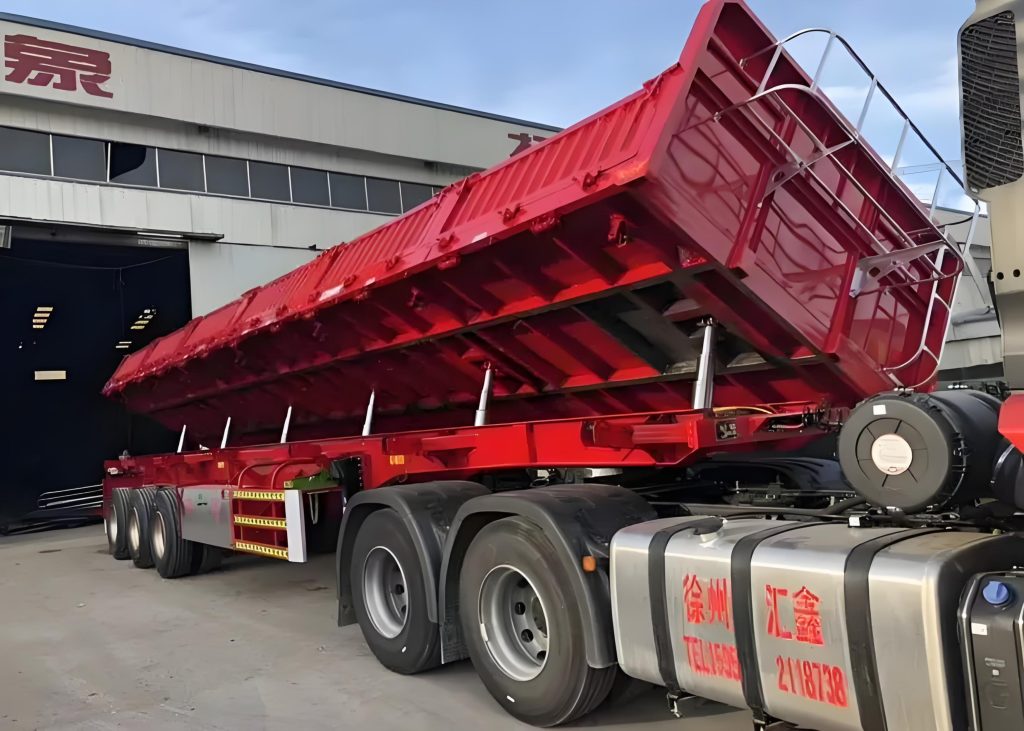 View 3 Axle Side Dump Trailer
A side dump becomes easier to appreciate when the unloading point changes character through the day. This product page is the closest fit for that part of the discussion.
Why side dump often feels calmer when ground conditions are not perfect
On a mixed jobsite, side dump often earns attention because the unloading motion feels lower, shorter, and easier to trust. The body tips to one side instead of climbing high into a tall rear-lift position. As a result, the whole unloading event can feel less dramatic. That difference matters most when the route looks tidy from a distance but turns messy around the exact point where the load must leave the trailer.
Think about a route that begins on pavement, turns onto a rough haul lane, then ends on a stockpile edge that has already seen repeated passes. In that kind of environment, a lower and more controlled unloading motion often gives crews more confidence. The trailer does not ask as much from the ground beneath it, and the material usually leaves with less of the sudden hesitation that can make a raised body feel nervous.
Where side dump usually makes the most sense
Side dump tends to suit working environments that change faster than paperwork does. Quarry routes, shoulder-side discharge, earthmoving programs, and temporary unloading areas all fall into that category. In those settings, the site may still be productive, yet it may never stay perfectly prepared for long. Therefore, the trailer that feels safer is often the one that asks for fewer ideal conditions at the dump point.
- Quarry and mining haul roads that become uneven after repeated traffic
- Roadwork and shoulder work where side placement supports the site flow
- Bulk gravel, sand, soil, and mixed material routes where discharge speed matters
- Operations that need a faster unload-reset rhythm across many cycles
- Sites where a lower lift inspires more trust than a tall rear raise
What experienced teams usually notice first
The first thing many experienced operators notice is not nominal capacity. It is body behaviour. Does the trailer rise in a calm, readable way? Does the material move out cleanly, or does it cling and then drop late? Does the unloading point still feel controlled when the ground is no longer at its best? Those are practical questions, and they often separate a smooth day from an expensive interruption.
Just as importantly, side dump can help site rhythm. When a busy route depends on quick turnaround, long hesitation at the dump point creates congestion. If the discharge happens promptly and the trailer returns to travel position without fuss, the entire working line feels easier to manage. Therefore, side dump is often chosen not only because it looks safer, but because it helps the whole route feel calmer.
A few practical field checks before side dump is approved
Even so, side dump should not be treated like a magic answer. Lateral discharge needs the right working space. The site still needs enough side clearance, and the dumping path still needs to be reviewed with real traffic flow in mind. Moreover, if the load is badly centred before travel, no trailer design will feel as stable as it should.
- Check side clearance at the true unloading point, not only on the site plan
- Review whether the site wants side windrows or a concentrated rear pile
- Observe how wet material sits in the body after rain or washing
- Make sure the daily route really benefits from faster cycle rhythm
Why rear dump still has an important and practical place
Rear dump should not be treated as an outdated option. On the contrary, it remains a strong working choice where the site is properly prepared and the task clearly needs straight-back discharge. A well-levelled unloading pad, a stable traffic pattern, and a route built around rear piling can make rear dump the cleaner operational fit. In those cases, the question is not which trailer looks more modern. The real question is which one matches the way the job is actually organised.
That matters because many jobsites are arranged around rear placement. Aggregate yards, transfer points, stockpile building, and some bulk-handling routines work more naturally when the material lands in a defined zone behind the trailer. If that is the daily pattern, rear dump may still be the better answer even if side dump holds the stronger stability story on rougher ground.
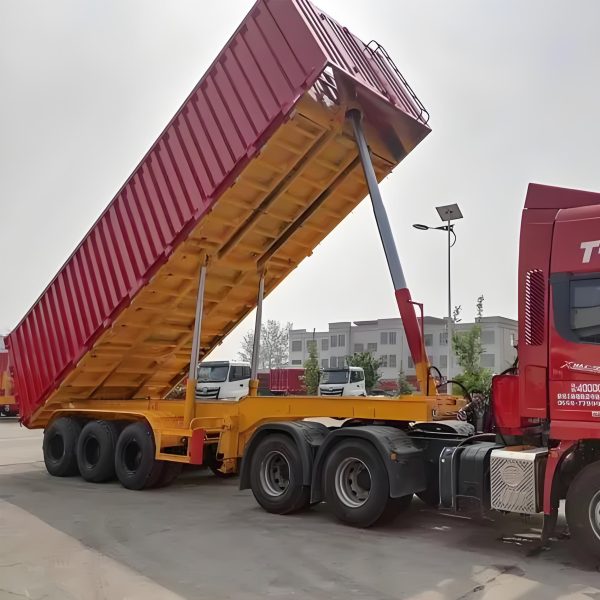 View Rear Dump Product
Rear dump still suits routes that are built around clear rear discharge and a prepared unloading pad.
When rear dump remains the better fit
Rear dump often works best where the unloading zone stays firm, level, and consistent. In that situation, the trailer’s straight discharge style supports stockpile control and direct placement. The method is also familiar across many fleets, which can help maintenance routines, body checks, and daily operating habits stay consistent over time.
- Firm unloading pads that stay level through repeated use
- Jobs that need a concentrated pile behind the trailer
- Site layouts with limited side-discharge clearance
- Operations already structured around rear tipping routines
- Free-flowing material that leaves the body predictably
What makes rear dump feel right rather than risky
Rear dump becomes a strong solution when it is paired with the right site discipline. The unloading pad needs to be checked at its worst, not just at its best. The load needs to be centred. Sticky material needs to be treated as a warning sign rather than a minor inconvenience. If the site is organised well and the route truly wants rear placement, rear dump can remain both efficient and dependable.
In other words, rear dump does not fail because it is rear dump. It fails when the route quietly asks too much from a tall rear lift or when crews assume the unloading point is fine because it looked acceptable once. Good planning turns rear dump into a very practical tool. Weak planning makes it feel worse than it really is.
The material changes the whole safety story
A trailer never works alone. The material inside it changes the unloading event from the first lift. Dry gravel, wet clay, crushed stone, coal, mixed soil, and demolition debris do not leave the body in the same way. Some materials flow cleanly. Others cling, bridge, or release in a way that changes the balance of the trailer at the exact moment when calm matters most.
Because of that, the same trailer can feel excellent with one material and much less reassuring with another. That is why the selection discussion should begin with material behaviour as much as with body design. A route carrying free-flowing aggregate on a prepared site may keep rear dump in the lead. A route handling damp soil, mixed fines, or changing moisture conditions may push the decision toward side dump very quickly.
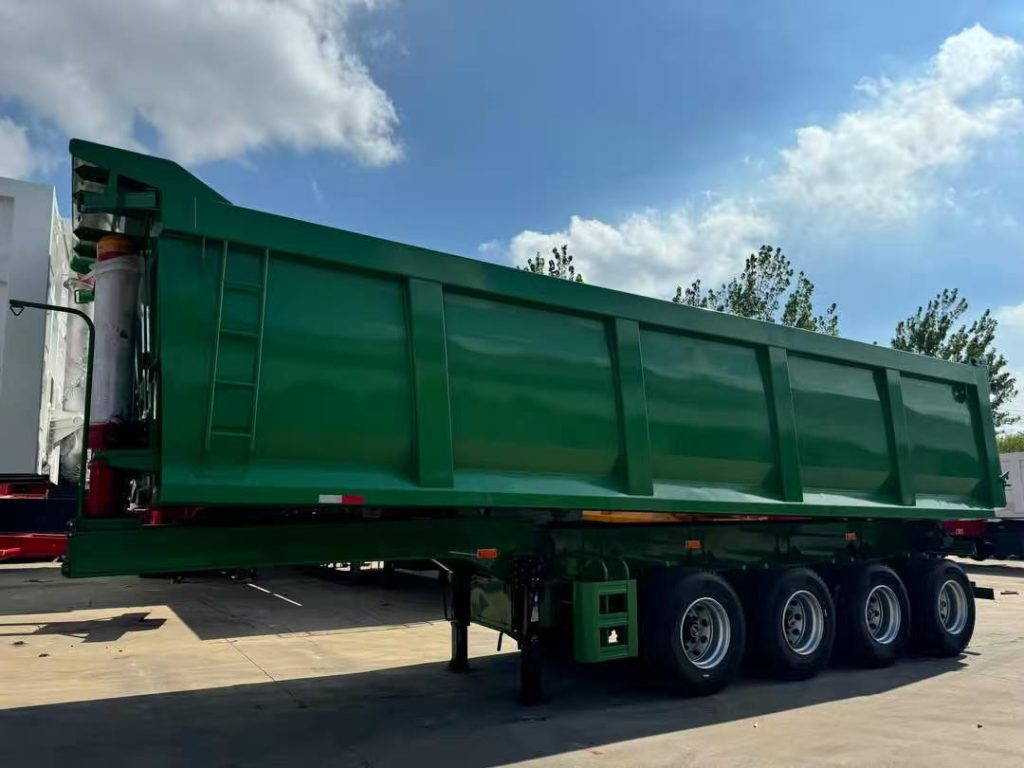 View 4 Axle Rear Dump Trailer
Heavier rear-dump layouts often belong in the conversation when payload, route structure, and bulk material density all move upward together.
Materials that often push the decision toward side dump
- Wet soil and sticky clay that may cling to the body
- Fine sand after moisture changes
- Mixed debris that may shift unevenly as it releases
- Ore and quarry material on mixed ground conditions
- Fast-cycle routes where clean discharge matters every trip
Materials that can still suit rear dump very well
- Free-flowing aggregate on a prepared pad
- Crushed stone that leaves the body consistently
- Bulk construction material unloaded into a defined rear pile
- Routes with stable loading, stable surfaces, and repeatable discharge habits
Seen from that angle, the trailer choice becomes more practical and less emotional. Instead of asking which design sounds safer in theory, a better question appears: which design creates fewer unstable moments with the material that will be carried most often? That question leads to better buying decisions because it connects the trailer to the job rather than treating it like an isolated product category.
How to choose without drowning in parameters
Many articles get lost in raw specification lists. In practice, selection becomes clearer when each specification is tied to a use case. Axle count affects weight distribution and running stability. Body size affects how the material sits and how the trailer moves through tight spaces. Suspension affects ride quality, structural stress, and long-term maintenance rhythm. Hydraulics affect how smooth the lifting action feels when the trailer is under real load rather than sitting empty in a yard.
Therefore, the useful way to review specification is simple. Start with route. Add material. Then build the trailer around what those two things demand most often. That approach keeps the conversation grounded. It also prevents over-buying one feature while under-valuing another that matters more on the actual job.
Axle count
A tri-axle trailer often feels like the balanced answer for mixed regional work. It can suit quarry routes, aggregate transport, and general site work without turning the configuration into something heavier than the route really needs. A 4 axle layout becomes more attractive when payload planning, weight distribution, and heavy-duty operating rhythm justify the added structure. Otherwise, extra hardware can become more burden than advantage.
Body size and volume
Bigger is not automatically better. Dense material reaches weight limits sooner. Lighter material reaches volume limits sooner. So the right body size depends on which limit arrives first on the real route. That sounds obvious, yet many poor trailer decisions still begin with a large box and only later discover that the material does not justify it.
Suspension and hydraulics
Suspension shapes how the trailer lives on rough approaches, paved roads, and repeated loading cycles. Hydraulics shape the confidence of the dump event itself. A smooth, predictable lifting action often matters more than a long row of marketing language. If the hydraulic movement feels abrupt or inconsistent, the operator notices immediately. That is why a sound dump trailer review should always include route conditions, maintenance habits, and service support, not only purchase price.
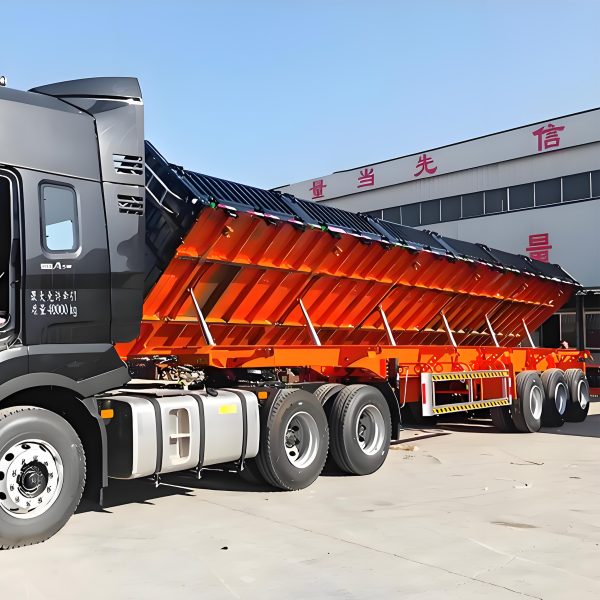 View 4 Axle Side Dump Trailer
When the route becomes more demanding and the body needs to stay composed under heavier work, a stronger side-dump configuration becomes part of the selection discussion.
A simple decision framework that works better than broad claims
A practical buying meeting often becomes easier when it follows a short sequence. First, review where unloading actually happens. Second, review what the material does when conditions are dry and when they are not. Third, check whether the site wants side placement or a rear pile. Finally, choose the trailer style that creates fewer unstable moments on the route that matters most, not the rare exception that only appears occasionally.
- Choose side dump when imperfect ground and faster lateral discharge define the work
- Choose rear dump when prepared ground and straight-back unloading define the work
- Pause and review the route again when both answers seem partly right
- Finalise axle, suspension, and body details only after the use case is clear
Everyday habits that make either trailer safer and easier to live with
Even the right trailer can feel wrong when daily habits are careless. Safe unloading begins before the body rises. The load should sit as evenly as possible. The dump point should be checked before each cycle, especially after rain, grading work, or repeated heavy passes. In the same way, drivers and site supervisors should treat the unloading moment as a planned action rather than a routine shortcut.
Small checks matter more than they seem. A rough cylinder action, a tired hinge, a tailgate that no longer behaves cleanly, or a suspension condition that was ignored for too long can all change how calm a trailer feels. Therefore, good use is not only about choosing the correct style. It is also about keeping that style honest through maintenance and disciplined site habits.
- Check the unloading area before every tipping cycle
- Avoid soft edges, newly filled ground, and rushed assumptions
- Watch how wet material sits in the body before lifting
- Keep hydraulic oil, cylinders, hinges, and locks in good condition
- Treat unusual body movement as a warning, not as normal behaviour
- Match travel speed and site approach to the condition of the route
Final verdict
Side dump usually holds the stronger safety argument on mixed or imperfect jobsites. Its lower unloading motion, easier lateral discharge, and reduced sensitivity to rough or changing ground conditions often create a calmer tipping event. For quarry routes, shoulder work, earthmoving programs, and variable unloading zones, that advantage can be meaningful every single day rather than only in rare situations.
Rear dump, however, still deserves a serious place in fleet planning. On prepared unloading pads, with free-flowing material and a job that clearly needs rear placement, it remains practical and efficient. So the safer answer is not decided by fashion. It is decided by the route, the material, the unloading direction, and the daily rhythm that the work demands most often.
In short, the best selection logic stays simple. Study the route at its worst. Study the material when it is hardest to manage. Then choose the trailer style that creates the fewest unstable moments. That approach usually leads to better uptime, cleaner unloading, and a working day that feels more controlled from the first trip to the last.
- Map the unloading surface quality in dry and wet conditions before final approval
- Match trailer style to material behaviour and discharge direction, not to headline numbers alone
- Review axle layout, hydraulics, suspension, and factory support together before ordering
Request a quote with the right route logic behind it
A trailer quote becomes more useful when it reflects route conditions, material type, unloading style, axle preference, and service expectations from the beginning. For current product context, it helps to review the dump semi trailer, the manufacturer page, and the Boca Vehicle homepage together before specification is finalised.
For quotation support, the contact details on the site are direct and straightforward. WhatsApp: +86-17274039217. Email: info@bocaautomobile.com or trade@bocaautomobile.com.
FAQ
Is a 40ft rear dump trailer always the better choice for bulk aggregate?
Not always. A longer body may help when volume matters, yet dense material often reaches practical weight limits first. Therefore, 40ft only becomes a genuine upgrade when material density, unloading layout, and manoeuvring space all support it.
Is a 3 axle side dump trailer for sale enough for quarry and roadwork use?
In many regional applications, yes. A tri-axle side dump can offer a strong balance of stability, payload, and operating simplicity. However, the final answer should still reflect actual material weight, cycle intensity, and route condition rather than a generic category label.
What usually changes dump trailer price the most?
Price usually shifts with axle count, body structure, hydraulic specification, suspension choice, steel grade, and customisation level. Freight planning and parts strategy can also move the real landed cost more than many first quotes suggest.
Does higher capacity always mean a safer trailer?
No. Higher capacity only helps when the route, the unloading surface, and the structure all support it. Otherwise, more size can add compromise instead of improving performance. A well-matched trailer usually feels safer than a larger trailer that the route never truly needed.
Where can current dump trailer models and factory information be reviewed?
The best starting points are the current dump semi trailer category page, the manufacturer page, and the main homepage. Reviewing those together usually gives a clearer picture than looking at one product page in isolation.