
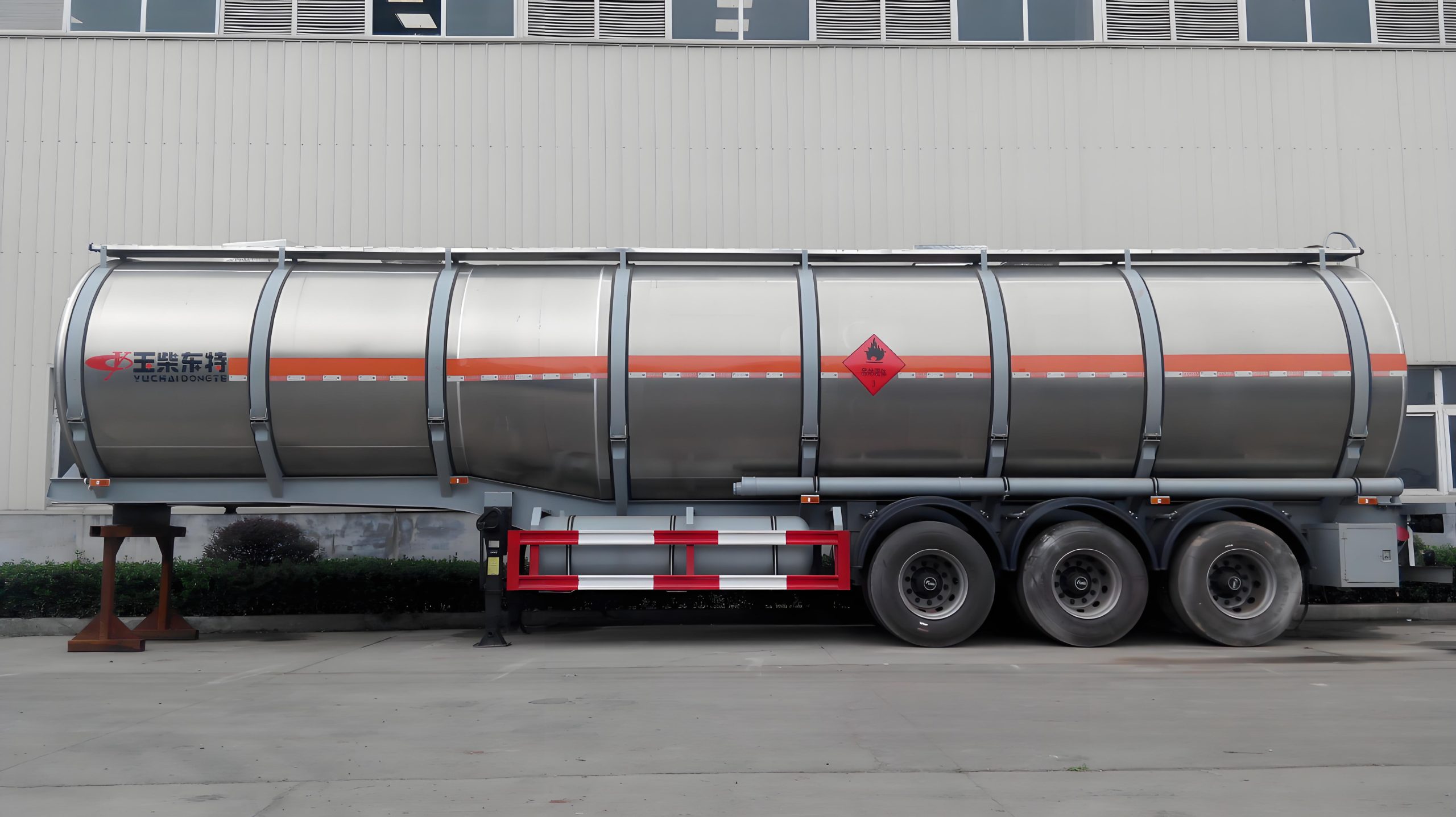
How Semi Tank Trailer Improve Safety in Liquid Transportation

Overview
Transporting liquid products such as fuels, chemicals, ethanol, edible oils, and industrial liquids presents significant safety challenges. Liquid cargoes are unstable, highly fluid, and often flammable or corrosive. Well-designed semi tank trailer significantly reduce transport risks through advanced design, robust structural engineering, and stringent safety technologies.
This article details how semi tank trailer enhance safety at every stage of liquid transport—covering tank structure, braking systems, surge protection engineering, materials, pressure control, and industry regulations. Specification tables are also included for quick reference.
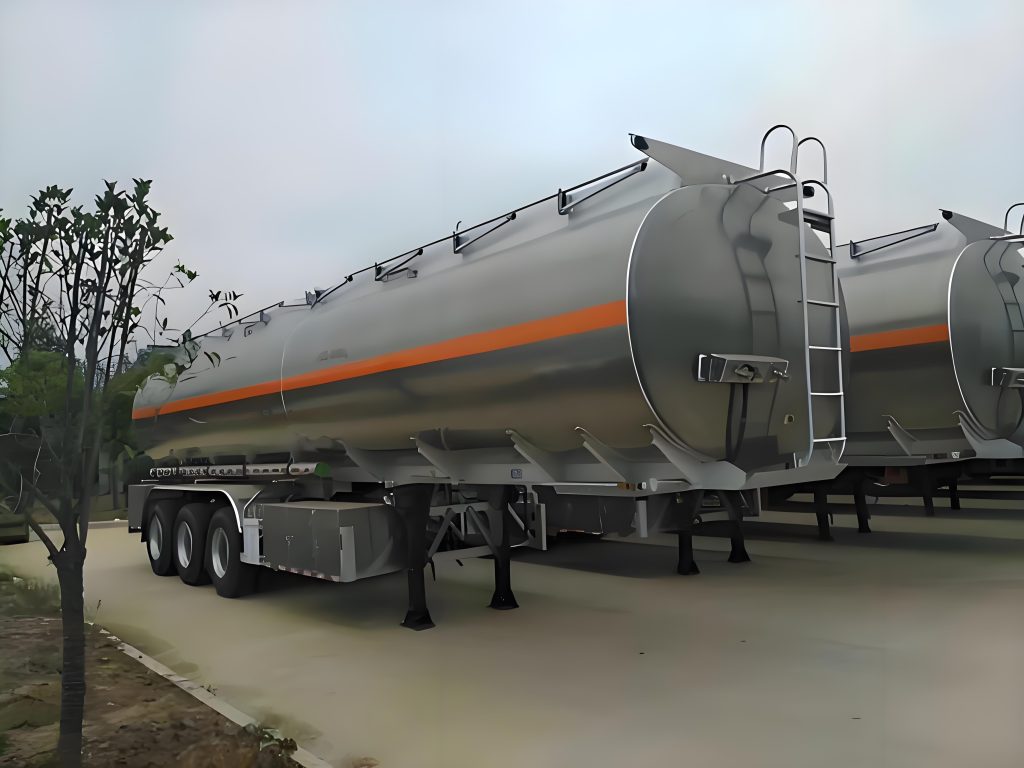
Surge Protection Engineering: Reducing Liquid Flow Inside the Tank
Unlike solid cargoes, liquids continuously move during braking, acceleration, or turning. This generates impact forces that can cause vehicle rollovers or loss of driver control.
Semi tank trailer employ several structural design features to address this issue:
1.1 Internal Baffles
Installed every 1 to 1.5 meters
Laser-cut using pressure equalization holes
Completely welded internal tank structure
Function: Reduces liquid sloshing by up to 70%, improving stability on slopes and sharp turns.
1.2 Multi-Compartment Tank Design
A fuel tanker semi trailer typically has 3 to 7 fuel tank compartments.
Benefits:
Restricts liquid flow
Enables safe transport of different liquids
Prevents cross-contamination
1.3 Low Center of Gravity Design
Tank design features:
Low tank height
High-strength beams
Balanced axle layout
This minimizes the risk of rollover, especially for heavy liquids like diesel tanker semi trailer or chemical tanker semi trailer
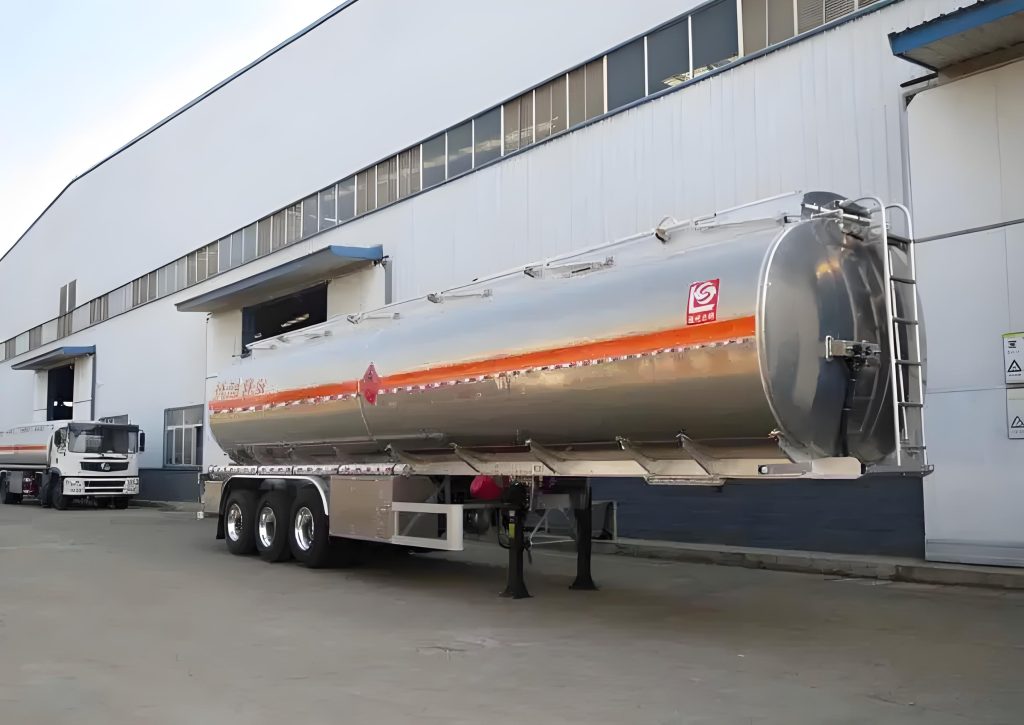
High-strength materials with explosion and corrosion resistance.
The materials used in a tank directly affect its long-term safety. stainless steel tank trailer manufacturers select materials based on the type of cargo being transported:
2.1 Carbon steel semi tank trailer (Q345B / Q235)
Strong
Suitable for diesel and gasoline
Economical and efficient
2.2 Aluminum semi tank trailer (5083/5454 grade)
Excellent corrosion resistance
Lighter by 20% – 30% (shorter braking distance)
Reduces the likelihood of ignition risks
2.3 Stainless steel tank semi trailer (304/316L)
Best suited for high-purity chemical applications
Rust-resistant
Suitable for acidic substances, ethanol, and edible oils
2.4 Anti-corrosion coating
All tanks undergo:
Sandblasting
Epoxy primer
Polyurethane topcoat
Optional food-grade polishing
These processes protect the tank from damage by chemicals or moisture.
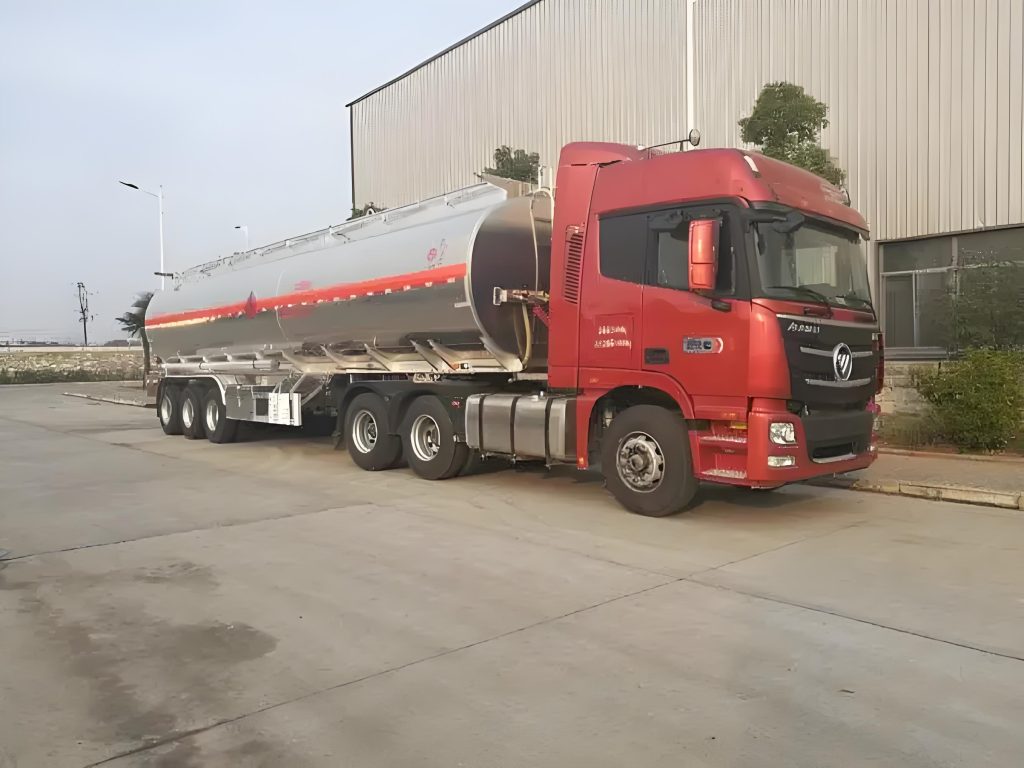
Leak-proof emergency valve system semi tank trailer
One of the core safety systems of a tank semi trailer is the bottom emergency shut-off valve.
3.1 Bottom Valve (Emergency Shut-off Valve)
Features:
Automatically shuts off in case of pipe rupture.
Fire-resistant aluminum body
Complies with ADR/DOT standards
Purpose: To prevent large-scale leaks in the event of an accident.
3.2 Inspection Well with semi tank trailer Pressure Relief Valve
Prevents tank overpressure
Safely releases steam
Prevents tank deformation
Overpressure can cause explosions—this system avoids such risks.
3.3 Steam Recovery System
Used in tank trucks:
Reduces emissions of flammable vapors
Prevents environmental pollution
Semi tank trailer advanced Braking and Stability Systems
Safety during transport also depends on vehicle handling.Modern tank semi trailer employ advanced braking and stability control systems:
4.1 Anti-lock Braking System (ABS)
The function of the ABS is:
Wheel locking
Loss of control
Slippage; slippage (of vehicles, etc.)
Especially important for wet, slippery surfaces.
4.2 Electronic Braking System (EBS)
Compared to ABS:
Faster braking response time
Load-sensing control
Shorter braking distance
4.3 Roll Stability Control (RSS)
This system detects:
Sudden steering
Cornering speed
Uneven load
Automatically applies brakes to prevent vehicle rollover.
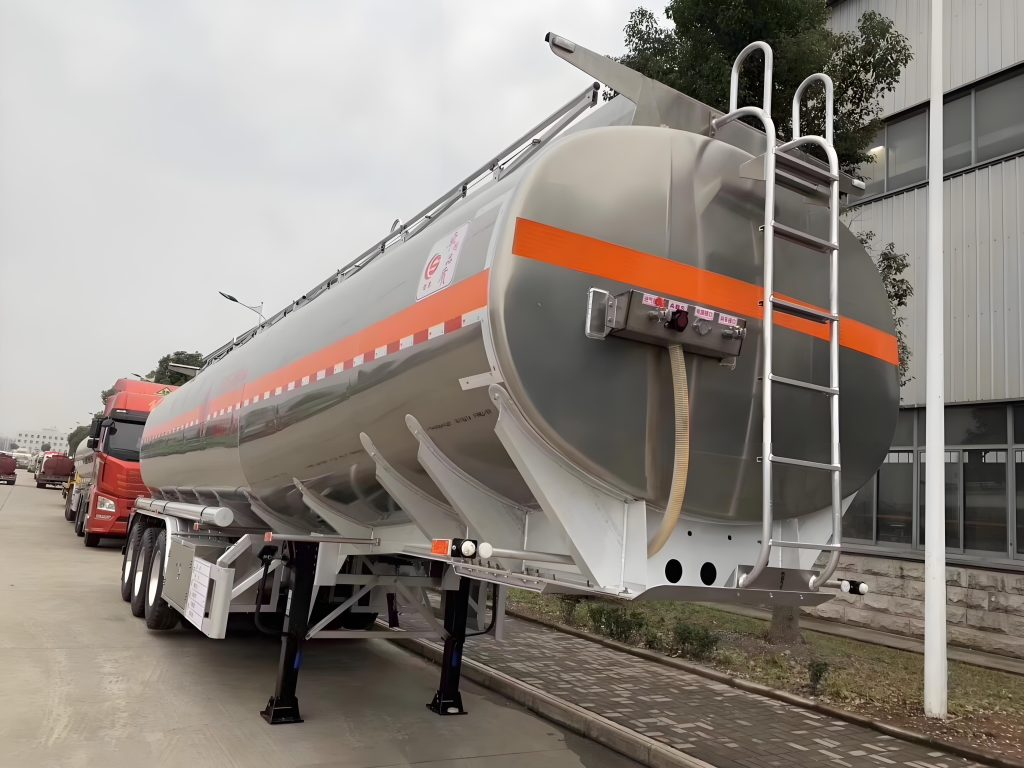
Fire and Explosion-Proof Safety Features
Tanks transporting flammable goods must be fire-protected through the following methods:
5.1 Anti-static Grounding Cables
Preventing static electricity generation during loading and unloading.
5.2 Explosion-proof Inspection Holes and Ventilation Openings
Regulating steam pressure and preventing flame spread.
5.3 Fire Extinguisher Boxes
Mandatory requirement:
Fuel
Liquefied Petroleum Gas
Hazardous Liquids
5.4 Aluminum Walkways and Anti-slip Platforms
Preventing accidents for operators during inspections.
Leak-proof Piping and Fittings
Every piping system must meet the following requirements:
Pressure Testing
Watertight Testing
Components include:
Fuel Discharge Valve
Bottom-mounted Connector
Aluminum Pipes
Explosion-proof Hoses
High-quality fittings = zero leakage risk.
Intelligent Monitoring Systems for Safer Operations
The 2025 model semi tank trailer will be equipped with a digital safety system:
7.1 Real-time Pressure Sensors
Monitoring tank pressure to avoid explosion risks.
7.2 Temperature Sensor
Especially for:
Asphalt
Chemicals
Food-grade liquids
7.3 GPS Fleet Tracking
Helps companies monitor:
Speed
Route
Driving behavior
Reduces operational risks and ensures regulatory compliance.
Compliance with International Safety Standards
Tank semi trailers must meet one or more of the following certification standards:
| Standard | Region | Focus |
| ADR | Europe | Hazardous liquid transport safety |
| DOT/ASME | USA | Material & pressure requirements |
| CCC | China | Road transport compliance |
| ISO 3834 | Global | Welding quality |
| EN13094 | EU | Fuel tanker manufacturing |
Semi tank trailer Technical Specifications Table (Sample Configuration)
| Item | Specification |
| Tank Material | 5083 Aluminum Alloy / Carbon Steel / Stainless Steel |
| Capacity | 30,000–60,000 Liters |
| Compartments | 3–7 |
| Manholes | 16” or 20” standard |
| Bottom Valve | ADR-certified emergency cut-off |
| Braking System | ABS / EBS / RSS (optional) |
| Suspension | Mechanical or Air Suspension |
| Axles | 2–4 axles, 13–16 ton |
| Safety Systems | Fire extinguisher, anti-static cable, vapor recovery |
| Testing | Hydrostatic test, pneumatic test, NDT weld inspection |
How These Technologies Reduce Actual Accidents
Tumble-over accidents reduced by 65%
Thanks to the low center of gravity design and RSS system.
Electrical leakage accidents reduced by 80%
Thanks to emergency valves and reinforced piping.
Fire risk reduced by 40%
Thanks to anti-static and vapor recovery systems.
Braking distance reduced by 20% – 30%
Equipped with EBS and advanced braking systems.
These improvements make semi tank trailer one of the safest solutions for liquid transport in modern logistics.
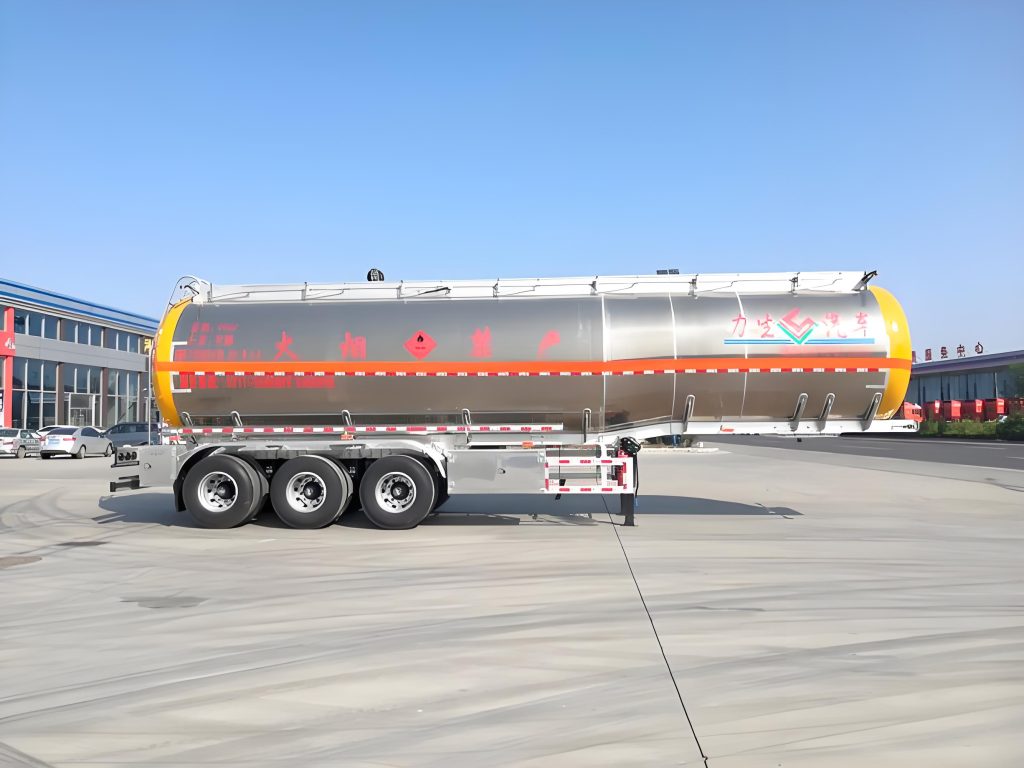
Semi tank trailer Conclusion
Tanker semi trailers significantly improve safety in liquid transport through:
Surge-resistant interior design
High-strength tank materials
Emergency valve system
Advanced braking and stability control system
Fire and explosion-proof features
Intelligent monitoring technology
Strict global certification standards
For fuels, chemicals, edible oils, and industrial liquids, a well-designed semi tanker trailer reduces risk, protects operators, and ensures the integrity of goods from origin to destination.