
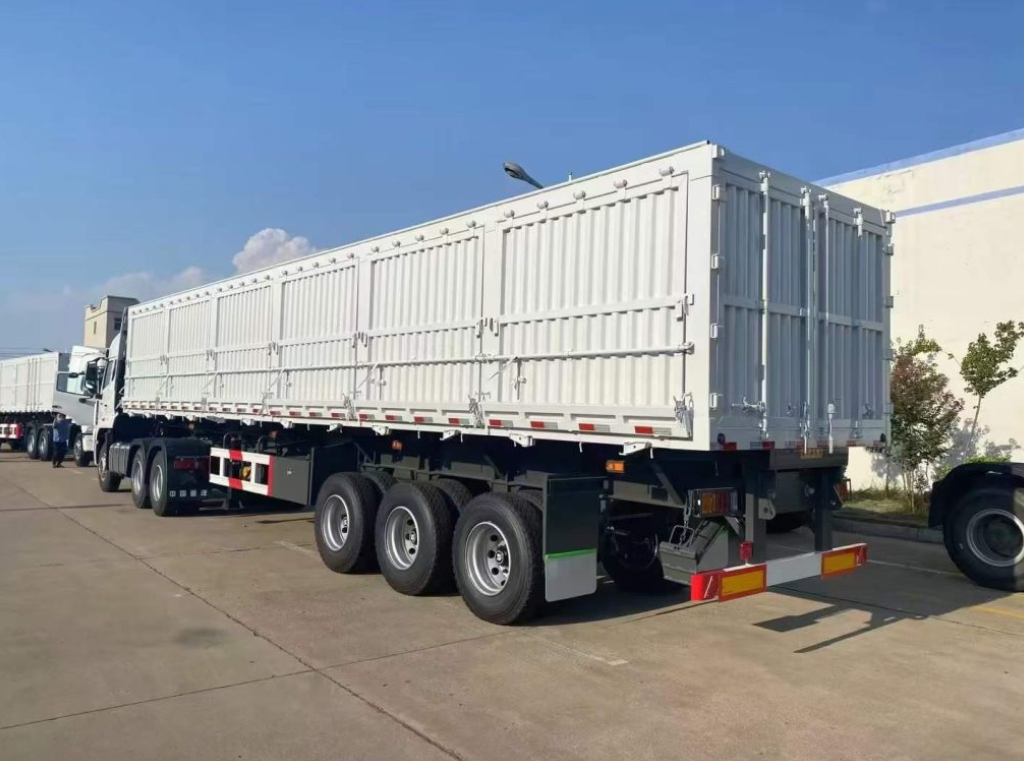
Sidewall Cargo Semi Trailer: Drop Side vs Fence Trailer Comparison

Some trailer choices look simple on a product page but feel much more complicated in real transport. The difference usually appears in the yard, on rough roads, during weather changes, and especially when the return cargo does not match the outbound plan. This guide compares drop side, fence, and side-wall cargo semi trailers in a more practical way, focusing on route fit, cargo behavior, and daily usability rather than empty specification stacking.
Why this comparison matters more than it seems
At first glance, drop-side trailers and fence trailers can look closely related. Both belong to the open cargo body family. Both support flexible loading. Both are widely used in freight operations that need practical, durable transport equipment. But once the trailer enters real service, the differences become much more obvious. One body style feels more controlled with dense goods. Another feels more open and breathable. One handles mixed daily freight more confidently, while another becomes especially useful in agricultural or seasonal logistics.
That is why a useful comparison should not stay at the catalog level. A trailer should not be judged only by photos, dimension tables, or broad marketing language. It should be judged by what happens after hard braking, under wet conditions, in crowded yards, and on routes where loading methods and backhaul patterns change from week to week.
For buyers comparing options inside one product family, Boca’s bulk cargo semi trailer range is a practical place to start because it brings several body styles into one category instead of forcing the comparison across unrelated pages.
Drop-side trailer: a practical choice for dense everyday freight
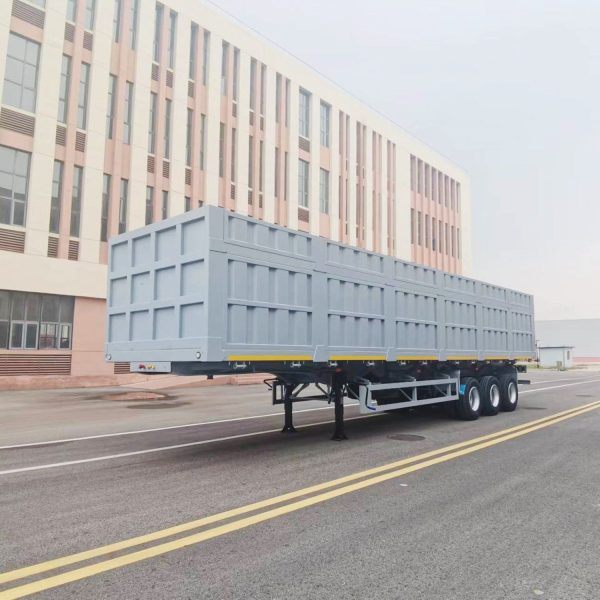
A drop-side trailer often becomes the easier answer when the route is examined honestly. Think about bagged fertilizer, palletized feed, cement sacks, timber, or mixed construction materials that need cleaner side control during transit. In those situations, the cargo does not necessarily require a fully enclosed box body, but it does benefit from a body that helps guide and stabilize the load. That is exactly where drop-side trailers usually perform well.
This is one reason they are often seen as highly practical rather than highly specialized. They support side loading, top loading, and tarp use without giving up the useful openness of a cargo body. For dense and repeat freight programs, that balance can reduce a lot of small daily friction.
 Shop this product
When drop-side trailers usually feel right
- Bagged cement, fertilizer, feed, flour, and similar packaged freight
- Bricks, blocks, timber, pipes, and other construction materials
- Palletized industrial cargo that still needs side support on longer routes
- Mixed working schedules where one trailer must stay useful across changing loads
What buyers often like most about drop-side bodies
Most buyers are not only asking whether the trailer can physically carry the cargo. They want to know whether it will keep daily work efficient. Drop-side bodies often feel easier to live with because they help the load sit more neatly, make tarp use more natural, and create a more controlled experience for freight that can become messy or unstable when the trailer is too open.
A quick judgment trick
Picture the load immediately after one hard brake. If the cargo looks like it would become too loose, too exposed, or too untidy, the route is probably asking for stronger side definition. That is often where drop-side trailers begin to look like the safer and more practical everyday solution.
Fence trailer: more open, more breathable, more route-specific
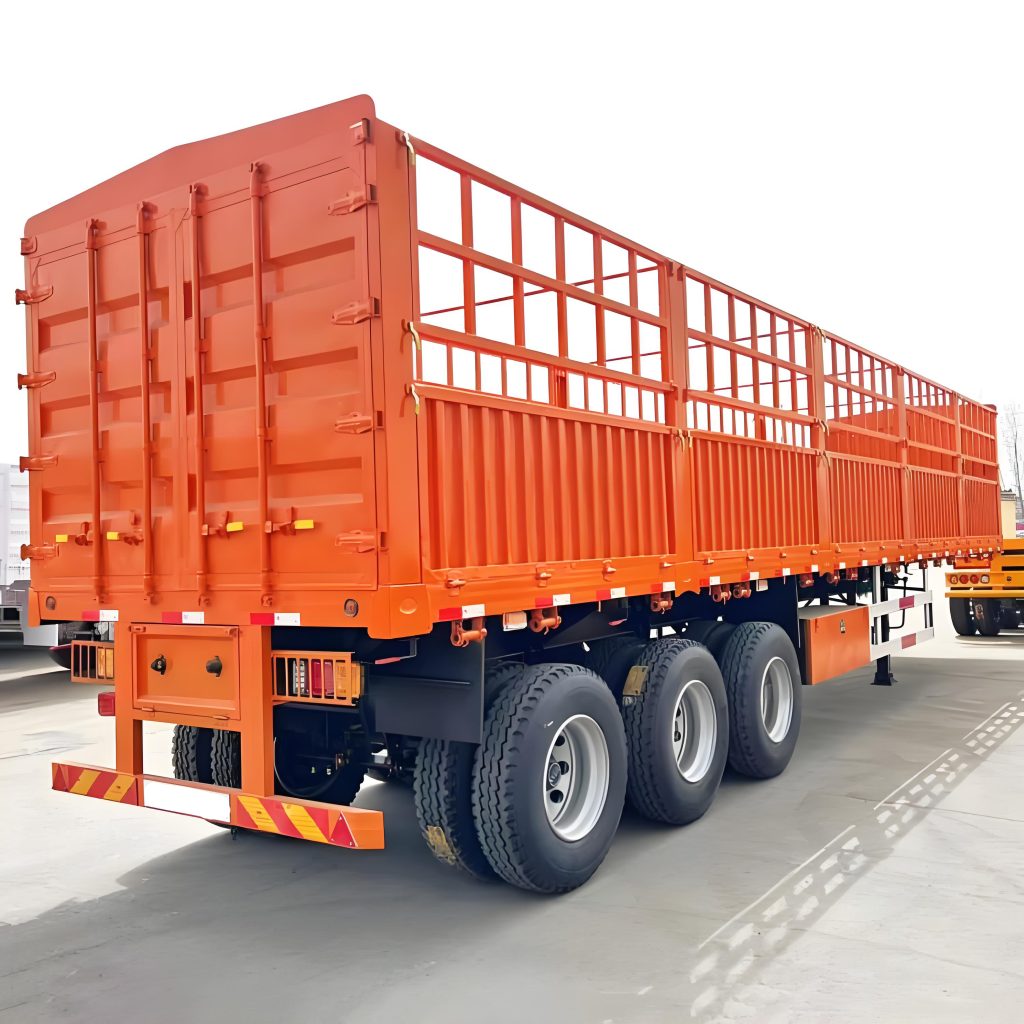
A fence trailer creates a different working style. It is more open by nature, which can be a real advantage when the cargo wants airflow, easier visibility, and simpler side access. This matters especially in agricultural and rural transport, where freight may be lighter, bulkier, more seasonal, or handled under less standardized loading conditions.
In these situations, the openness is not a weakness. It is the reason the trailer works. Produce, hay, agricultural cargo, and other loads that benefit from ventilation often feel much more natural on fence bodies than on denser sidewall designs.
 Shop this product
Where fence trailers usually work best
- Produce, hay, and agricultural cargo that benefits from airflow
- Light but bulky goods that value volume and openness
- Routes where manual or semi-manual loading still happens frequently
- Transport operations where visual access to the load is part of everyday handling confidence
What buyers should think about more carefully
Fence trailers are not only about ventilation. They are also about route rhythm. They often fit best where the load profile genuinely rewards openness. If the cargo is dense, weather-sensitive, or likely to shift in a messy way, the extra openness may become a disadvantage rather than a benefit.
A useful judgment trick
Imagine the cargo parked under midday heat, not under studio lighting. If the load seems like it wants breathing room, easier visibility, and less side restriction, the fence layout deserves serious consideration. If it looks like it would suffer from weather, splash, or unstable movement, another body style may serve the route better.
Side-wall trailer: the long-term middle ground
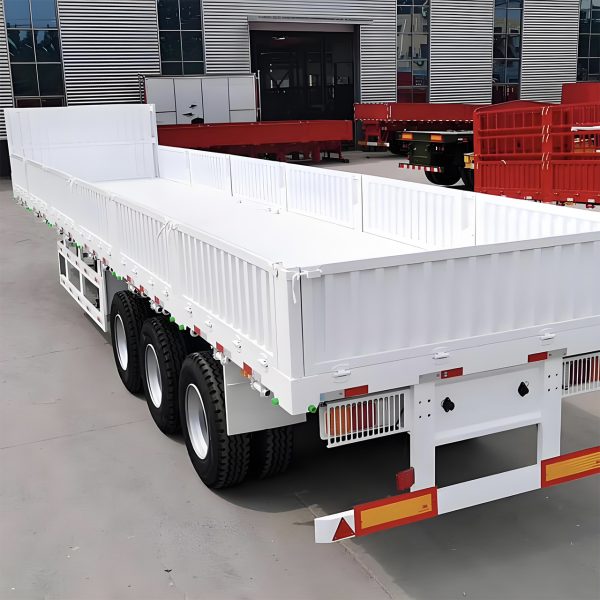
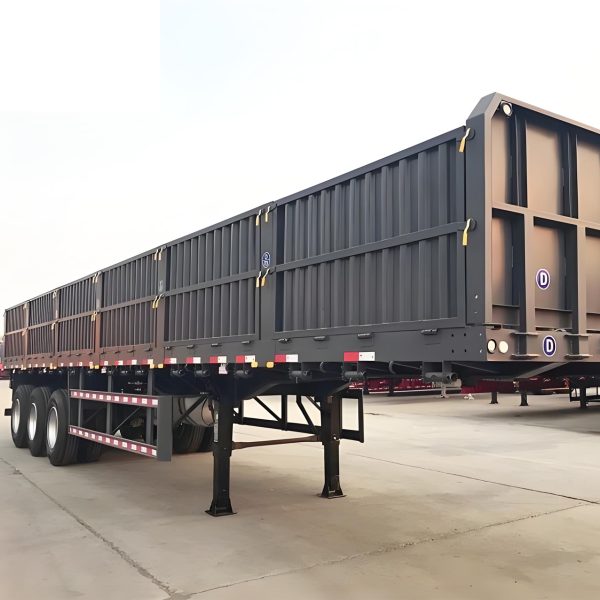
Some of the best trailer choices are not the most dramatic. They are the ones that stay useful longest. That is why side-wall trailers remain popular. They provide more side protection than fence trailers while still keeping the openness and loading freedom that many operators want from a cargo semi trailer.
This becomes especially valuable on routes that do not stay consistent. One week may involve bagged feed, the next may involve industrial freight, and the return leg may bring a different cargo shape again. In that kind of operating reality, side-wall trailers often feel easier to keep productive across the full month rather than just on one ideal trip.
 Shop this product
When a side-wall trailer often becomes the smarter answer
- When outbound and return cargo differ, but the same trailer must stay useful on both trips
- When routes alternate between bagged goods, general cargo, and industrial materials
- When the operation wants stronger side guidance without choosing a box trailer
- When long-term versatility matters more than optimizing around one idealized load
One helpful way to judge it
Ask a slightly inconvenient question: which trailer would still feel useful on the least convenient backhaul of the month? Buyers who ask that question early often find the side-wall option easier to justify, because it shifts the decision toward year-round usefulness instead of one best-case scenario.
Quick comparison: how the working day changes with each body
| Point | Drop side | Fence trailer | Side-wall trailer |
|---|---|---|---|
| Everyday feel | Controlled and more stable with dense freight | Open, breathable, easy to inspect visually | Balanced and versatile across changing routes |
| Best cargo tendency | Bagged, palletized, construction, industrial | Produce, hay, agricultural, light bulky freight | Mixed cargo and repeat logistics work |
| Weather handling | Usually stronger with tarp support | Needs more planning in wet or dusty conditions | More protective than fence while staying flexible |
| Main reason it gets chosen | Daily order and load control | Airflow and openness | Long-term practicality |
How to judge the right trailer before comparing quotes
Weak trailer decisions often begin with price alone. Better ones begin with a route description. Before looking too closely at axle counts, wall heights, or accessories, it helps to judge the actual work the trailer will do. That habit usually improves the final choice more than another page of parameters.
- Start with the loading method. Forklifts, cranes, and manual loading reward different body layouts.
- Picture the load after braking. Dense freight that hates movement usually wants stronger side support.
- Imagine the worst weather day. Rain, splash, dust, and heat reveal what the body really needs to protect.
- Check the return leg honestly. Backhaul usefulness often shapes long-term value more than the outbound load.
- Be realistic about the road. Rough roads affect how beams, floors, suspension, and hardware age in service.
Once those questions are answered clearly, the trailer discussion becomes much easier. Side height, floor strength, tarp needs, and body style all start to make more practical sense.
Use habits that keep the trailer efficient after delivery
Choosing the correct body is only the beginning. The rest depends on how the trailer is used in daily work. Even a good trailer can feel inefficient when side height is mismatched, tarps are treated as an afterthought, or loading methods work against the body design.
For drop-side bodies, it helps to keep hardware maintenance regular and to match floor strength with actual freight habits. For fence trailers, stack stability and weather planning matter more than many buyers expect. For side-wall trailers, the key is often to size the body around the most common load rather than the rare exception.
 Shop this product
What people really want to know about cost
Most readers do not actually want a random price list. They want to understand why one quotation sits above another, and whether the added cost solves a real transport problem or simply adds specification without improving route fit.
In practice, quotations are usually influenced by structure, axle layout, wall or fence height, floor configuration, suspension choice, tire standard, corrosion protection, and accessory details. But those features only become valuable when they match the real working conditions. A lower starting number can still become the more expensive decision if the trailer handles poorly, exposes cargo unnecessarily, or creates recurring friction on the return trip.
Extended reading
FAQ
Is a drop-side trailer usually better for building materials?
When does a fence trailer become the better option?
Why do many buyers choose side-wall trailers in the end?
What matters more than headline specifications?
What should be prepared before asking for a final quote?
Final thought
The right trailer usually becomes clearer once the route is described honestly. Dense and compact freight often rewards stronger side control. Agricultural and breathable loads often benefit from fence bodies. Mixed year-round logistics frequently points toward side-wall practicality. The goal is not to choose the most dramatic trailer on paper. It is to choose the one that keeps real daily transport efficient.