
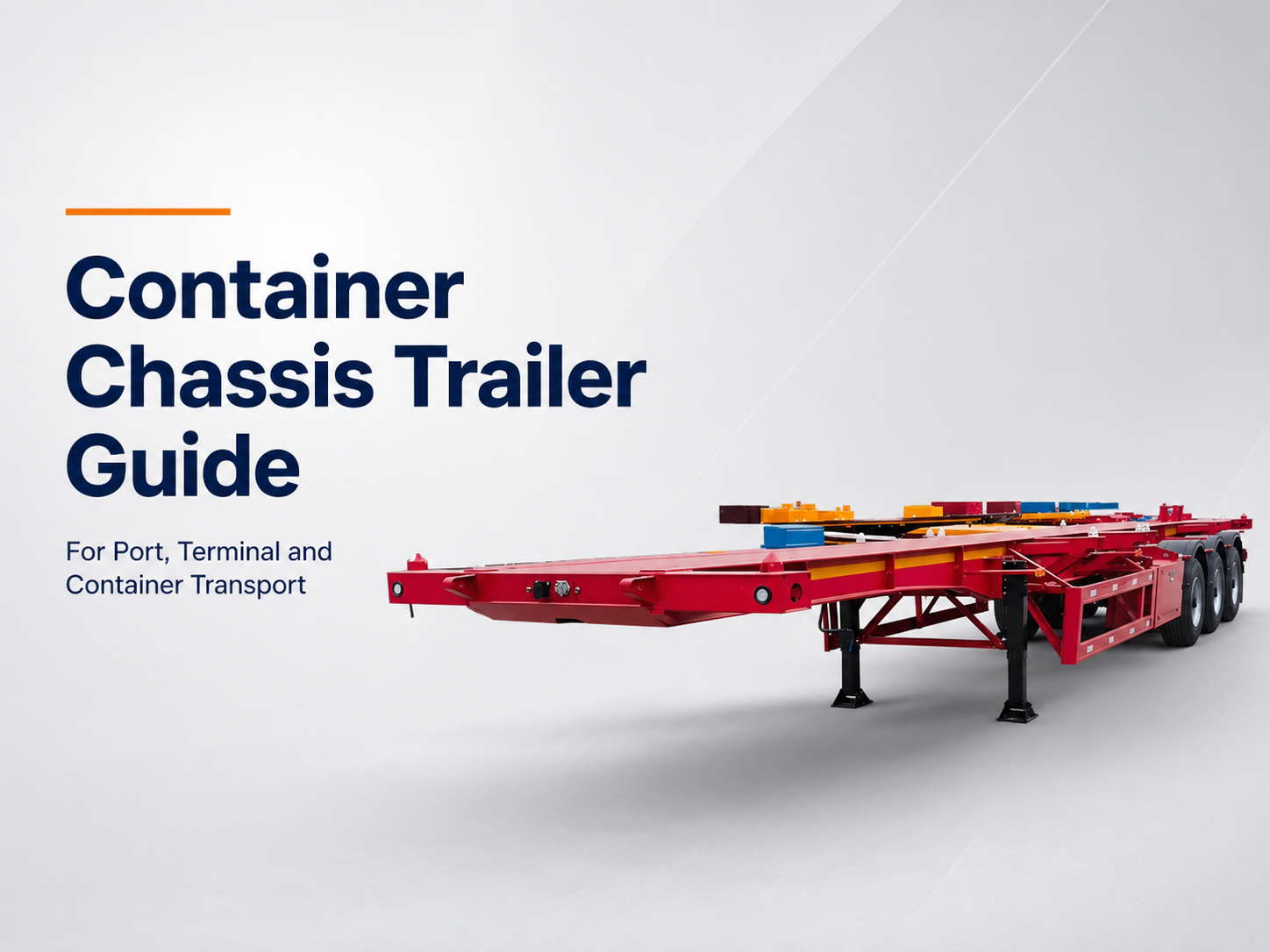
Container Chassis Trailer Guide for Port and Container Transport
A practical guide to choosing a container chassis trailer for port, terminal, warehouse and cross-border container transport, covering 20ft, 40ft, 45ft options, twist locks, axle layout, suspension and inquiry details.

A container chassis trailer is built for moving ISO containers between ports, terminals, warehouses, inland depots, rail yards and cross-border logistics routes. The right specification should not be chosen by trailer length alone. It also needs to match container size, twist lock layout, frame strength, axle quantity, suspension type, tractor compatibility and local road conditions. For export projects involving 20ft, 40ft or 45ft container transport, this container chassis trailer category is the main reference page for structure, model selection and inquiry planning.
What Is a Container Chassis Trailer?
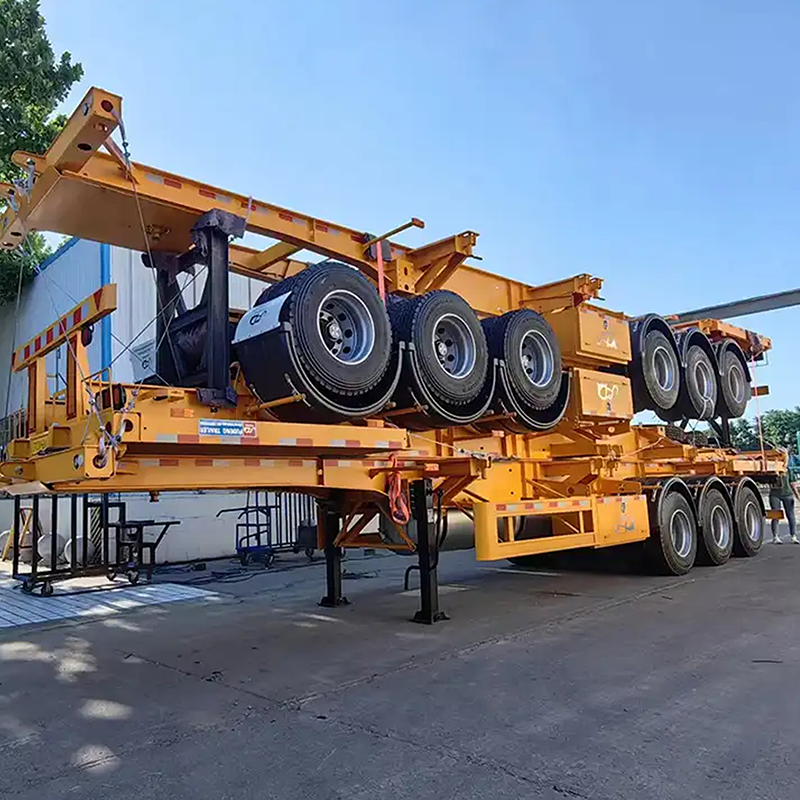
A container chassis trailer is a skeletal semi-trailer designed to carry shipping containers. Instead of using a full deck, it supports the container through a steel frame, cross members and twist lock positions.
This structure helps reduce unnecessary tare weight while keeping container loading and unloading efficient. At the same time, the frame must still handle bending force, braking load, vibration and repeated loaded transport.
Main Uses in Port and Container Logistics
Port transfer is one of the most common applications. A chassis can move containers between the vessel area, container yard, customs inspection point and loading lane. In this setting, fast loading, simple locking and easy inspection matter most.
Warehouse delivery adds more road requirements. The route may include terminal roads, public highways and industrial park entrances. Therefore, axle layout, brake performance, tire specification and turning radius become important selection points.
Inland depot and cross-border logistics often handle mixed container tasks. A route may carry a 20ft container in the morning and a 40ft container later. For this reason, adjustable or multi-position twist lock layouts can improve equipment utilization.
Port Transfer
Short-distance movement between container yards, gates, inspection areas and terminal loading lanes.
Warehouse Delivery
Stable container transport from port areas to warehouses, factories and bonded logistics parks.
Cross-Border Routes
Reinforced configuration for mixed roads, longer distance, axle checks and customs waiting areas.
20ft, 40ft and 45ft Container Chassis Options
A 20ft container chassis suits fixed 20ft container work, short-distance drayage and routes where operators need fast loading and stable locking. Frame support still matters because a short container can carry dense and heavy cargo.
A 40ft container chassis is a common choice for port-to-warehouse routes and inland transport. It can support standard 40ft container tasks, and some layouts can also carry 20ft containers when the twist lock positions are planned correctly.
For 45ft container transport, overall length and turning space need extra review. Local road rules may also affect total vehicle length, rear overhang and axle load. Therefore, a 45ft chassis should be confirmed together with the destination country and route conditions.
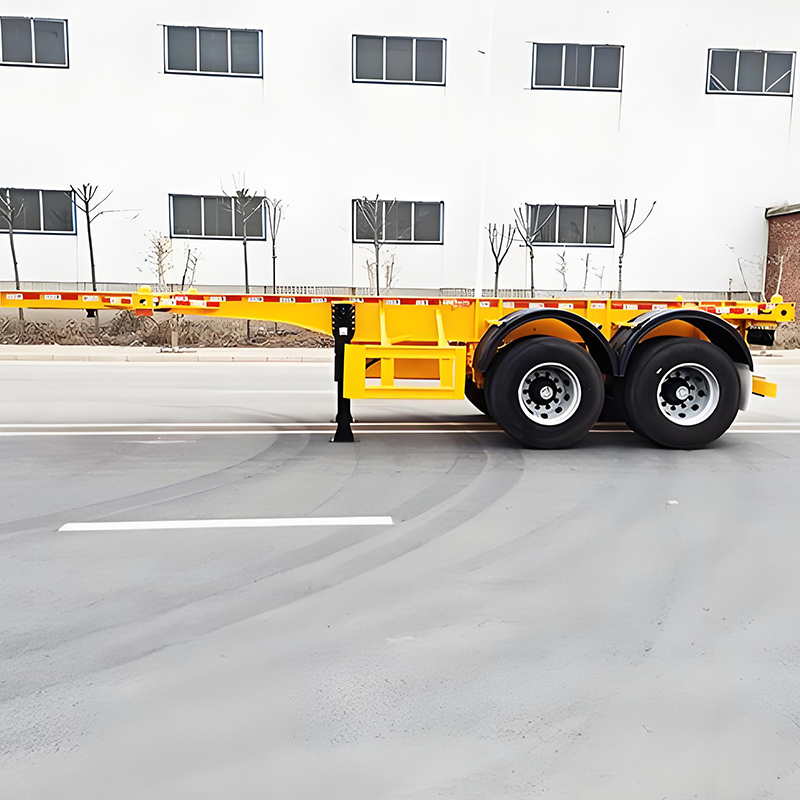
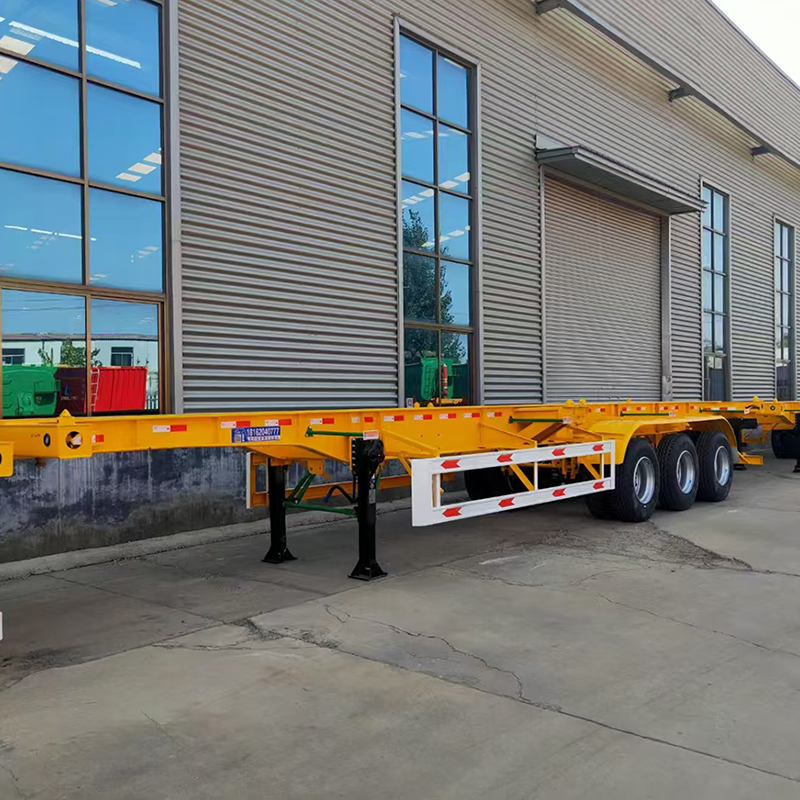
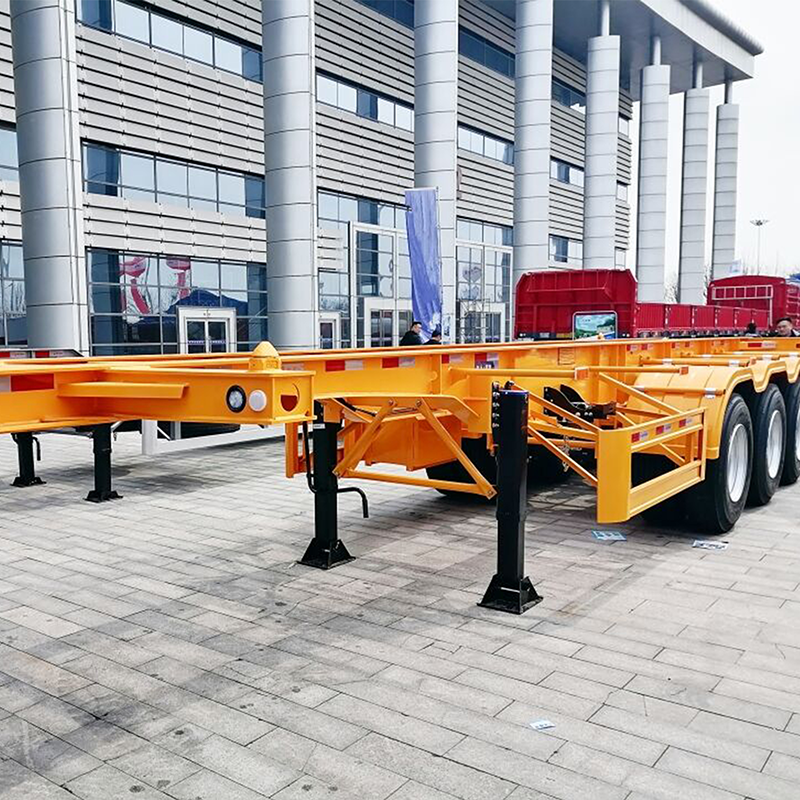
Twist Lock Layout: Fixed, Sliding or Adjustable
Twist locks secure the container corner castings to the chassis frame. Although the part looks small, it directly affects transport safety. Lock position, welding support and daily inspection access should be checked before production.
A fixed twist lock layout is simple and durable. It suits repeated work with the same container size, especially in port transfer and terminal operation. Because there are fewer moving parts, maintenance stays easier.
Sliding or adjustable twist locks offer better flexibility. They suit mixed routes that may handle 20ft, 40ft and 45ft containers. In that case, the sliding rail or prepared lock points must remain easy to operate, clean and inspect.
For safe intermodal handling and cargo securing awareness, the IMO/ILO/UNECE CTU Code is a useful authority reference. It explains why container condition, load distribution and securing practices matter across road, rail and sea transport.
Quick Twist Lock Planning Rule
First, confirm the container sizes. Next, confirm whether 20ft containers sit at the front, center or rear position. Finally, make sure every lock point is supported by the frame structure.
- Fixed locks suit repeated container size routes.
- Adjustable locks suit mixed container transport.
- Clear position markings reduce loading mistakes in busy yards.
Frame Strength, Axles and Suspension
A skeletal frame saves weight, but it must still resist road stress. The main beam, cross members, gooseneck area, rear structure and twist lock supports should work together. Otherwise, heavy containers and rough roads can increase fatigue risk.
For stable port roads, a lighter chassis may improve efficiency. However, rough regional roads, mountain routes and border transport often need reinforced beams and stronger cross members. This balance between weight and strength is one of the most important selection points.
Axle quantity also affects stability and legal loading. A 2-axle chassis may suit lighter short routes, while a 3-axle chassis is more common for loaded 40ft container transport. Mechanical suspension offers simple durability, while air suspension provides smoother running on long highway routes.
Key Specifications to Compare
A strong chassis quotation should include more than a model name. It should clearly describe container size, maximum loading weight, axle quantity, suspension type, twist lock layout, brake system and tractor matching details.
| Specification | What to Confirm | Why It Matters |
|---|---|---|
| Container size | 20ft, 40ft, 45ft or mixed use | It decides frame length and lock position. |
| Twist locks | Fixed, sliding, adjustable or multi-position | It affects loading flexibility and container safety. |
| Axles | 2-axle, 3-axle or special local requirement | It affects load distribution and tire wear. |
| Suspension | Mechanical or air suspension | It affects maintenance and ride stability. |
| Brake system | Air brake parts, ABS option and line connection | It supports safer loaded container movement. |
| Tractor match | Fifth wheel height, kingpin size and electrical plug | It prevents connection and clearance problems. |
How to Choose the Right Configuration
First, define the container task. A route that only moves 20ft containers should not use the same logic as a route handling 40ft and 45ft containers. Container size should be confirmed before discussing optional parts.
Second, check the real loading weight. Container length does not always show cargo density. For example, a 20ft container loaded with dense cargo may create more concentrated stress than a longer box with light goods.
Third, review the main road condition. Smooth port roads can support a more weight-efficient chassis. Rough regional roads, long highway routes and border checkpoints usually need stronger frame support, practical tires and reliable brakes.
Finally, confirm local regulations before production. Axle load, overall length, lighting, side protection, brake requirements and inspection habits may differ by market. Early confirmation reduces revision risk and avoids configuration mismatch after delivery.
Configuration Checklist Before Inquiry
- Container size: 20ft, 40ft, 45ft or mixed operation.
- Maximum loading weight and common cargo type.
- Route condition: port road, highway, warehouse yard, rural road or border route.
- Twist lock layout: fixed, sliding, adjustable or multi-position.
- Running gear: axle quantity, suspension type, tire size and brake system.
- Tractor match: fifth wheel height, kingpin size, air line and electrical plug.
- Export details: destination country, arrival port and shipping method.
Container Chassis or Flatbed Trailer?
A dedicated chassis is the better choice for regular container transport. It has a lighter skeletal structure and a clear locking system for ISO boxes. Therefore, it fits port transfer, depot use and repeated container logistics.
A flatbed semi trailer is more flexible for mixed cargo. It can transport containers, steel, machinery, pipes and construction materials. In exchange, it usually has a heavier full-deck structure.
Fleet planning should follow the real cargo mix. Dedicated container routes usually need more skeletal chassis units. Mixed industrial cargo routes may need flatbed support as well.
For mixed container and general-cargo operations, compare container chassis vs flatbed trailer options.
Boca Vehicle Solution for Export Projects
Boca Vehicle helps buyers configure trailers for container logistics, port transfer, warehouse delivery and full tractor-trailer planning. Instead of only matching a model name, the specification can be reviewed according to container size, route condition, axle rules and shipment plan.
For remote order review, photos and videos can help confirm the frame, twist locks, suspension, axles, tires, landing gear, lights and paint finish. Clear communication before production also helps reduce mistakes around lock position and loading requirements.
For a faster quotation, the inquiry should include cargo type, container size, loading weight, axle quantity, road condition, destination country and preferred shipping method. With these details, the chassis plan can be checked more accurately.
Prepare These Details Before Quotation
A clear inquiry helps reduce back-and-forth communication. The following information should be prepared before final configuration review.
- Container size and cargo type.
- Maximum loading capacity and route distance.
- Axle quantity, suspension preference and road condition.
- Destination country, arrival port and shipment method.
Further Reading and Related Pages
Container Chassis Semi Trailer
Compare 20ft, 40ft, 45ft and multi-axle chassis options for container transport.
Flatbed Semi Trailer
Review open-deck trailer options for containers, steel, machinery and pipe transport.
Used Tractor Truck
Match pulling power, fifth wheel height, braking connection and chassis compatibility.
FAQ
What is a container chassis trailer?
It is a skeletal semi-trailer designed to carry ISO shipping containers. The frame supports the container, while twist locks secure the corner castings during road transport.
How many twist locks are needed?
Most standard container transport uses four active locking points for one container. Additional prepared positions may be added for mixed 20ft, 40ft and 45ft use.
Fixed or sliding chassis: which is better?
A fixed chassis is stronger and simpler for repeated container sizes. A sliding or adjustable chassis is better for mixed container routes, but it needs more inspection.
Can twist lock position be customized?
Yes. Twist lock position can be planned according to 20ft, 40ft or 45ft container use. Every lock point should also match proper frame support.
Is mechanical suspension or air suspension better?
Mechanical suspension is simple and durable for rough roads. Air suspension gives smoother running and better ride control on long highway routes.
Final Selection Advice
In summary, a chassis should be selected according to real container work, not only trailer length or appearance. The best starting point is container size, maximum loading weight, route condition and destination regulation.
After that, twist lock layout, frame reinforcement, axle quantity, suspension type and tractor match can be confirmed. This process helps create a safer and more practical chassis for port, terminal, warehouse and cross-border container transport.
- First, confirm 20ft, 40ft, 45ft or mixed container use.
- Second, match axle quantity and suspension with road condition and local rules.
- Finally, review twist lock layout, tractor compatibility and shipment details before production.
Need a Container Chassis Trailer for Export?
Send your container size, loading weight, route condition, axle requirement, destination country and shipping plan. Boca Vehicle can help review whether a 20ft, 40ft, 45ft or 3-axle chassis configuration is more suitable for your project.
Request a Chassis Quotation