
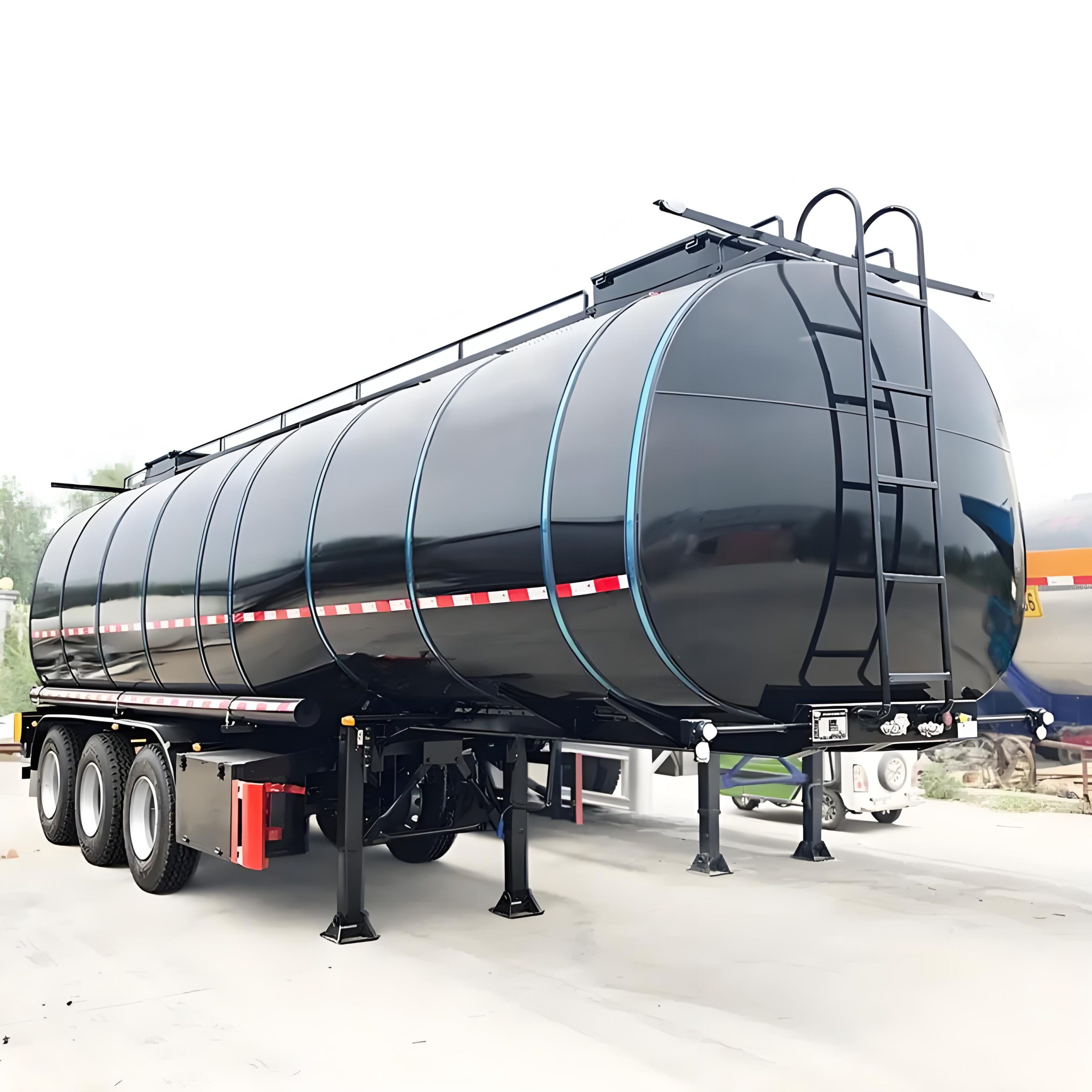
What Is an Asphalt Tank Trailer? Full Guidance

Overview
Asphalt tank trailer—also known as asphalt transport semi trailer,are specialized vehicles designed for transporting hot, liquid asphalt, tar, and other high-viscosity petroleum products. Unlike traditional oil tankers, asphalt tanker trailer must maintain extremely high temperatures (150 to 200 degrees Celsius) during loading, transport, and unloading to prevent solidification.
With the development of global infrastructure and the increase in road paving projects, asphalt tanker semi trailers have become indispensable equipment for construction companies, asphalt suppliers, and highway contractors. This guide will introduce their structure, heating systems, capacity range, safety features, and practical applications.
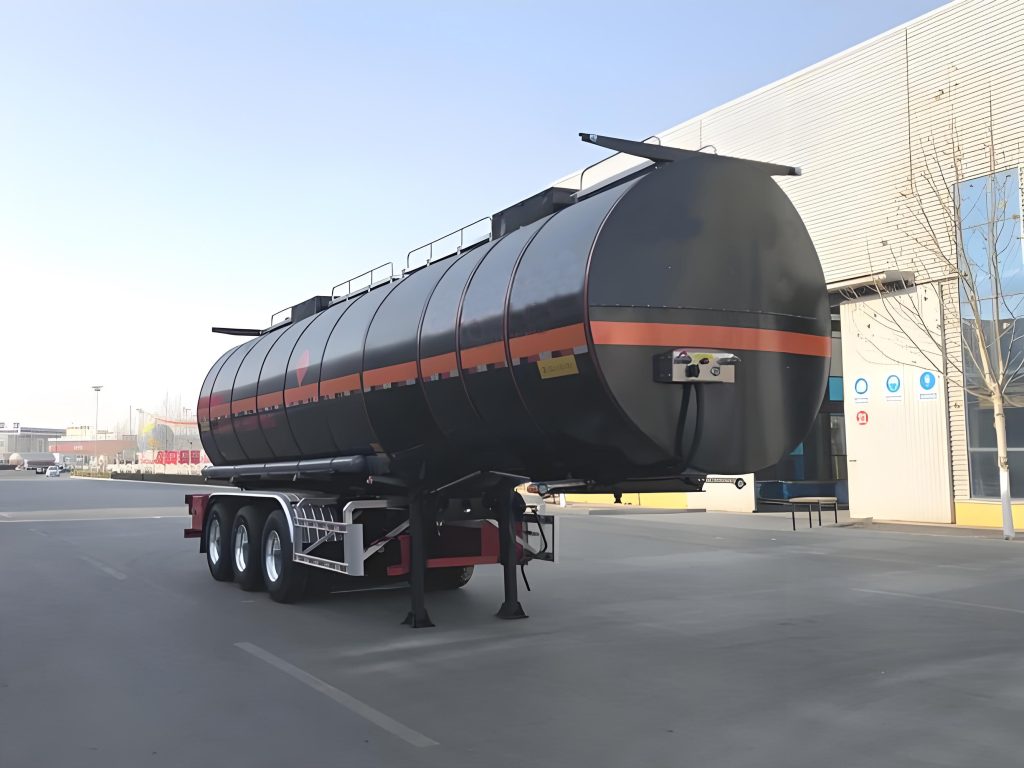
What is an Asphalt Tank Trailer?
An asphalt tanker semi trailer is a tanker semi-trailer equipped with an insulated tank, heating system, temperature control device, and pressure protection device. Its functions are:
Maintaining the heat and fluidity of the asphalt during transport
Preventing heat loss during long-distance transport
Ensuring safe loading and unloading
Protecting operators from burns, pressure risks, and leaks. These asphalt tank trailer are specially designed to withstand high temperatures and remain stable even when transporting viscous, heavy materials.
Main Structure of Asphalt Tanker Trailers
A standard asphalt tanker semi trailer consists of several integrated systems. The following is a breakdown of its key structural components:
2.1 Tank Body
The tank body is constructed from Q345R boiler steel or stainless steel, offering excellent heat resistance and mechanical strength.
Key Tank Structural Features:
Thickness: 5 to 8 mm
Type: Cylindrical or elliptical
Shape: Designed to reduce swaying
Insulation: Rock wool or polyurethane lining
High-temperature paint coating
2.2 Insulation System
A robust insulation layer is crucial for maintaining asphalt temperatures above 140 degrees Celsius.
Typical asphalt tank trailer Insulation Materials:
| Component | Material | Function |
| Inner layer | Q345R high-strength steel | Direct contact with asphalt |
| Insulation layer | 80–120 mm rockwool / PU foam | Minimizes heat loss |
| Outer protective layer | Aluminum sheet or steel plate | Protects insulation from weather |
Thanks to the use of advanced insulation materials, heat loss is as low as 3 to 5 degrees Celsius per hour.
2.3 Asphalt tanker trailer Heating System
The heating system is the core of the asphalt tanker semi trailer.
Common heating options include:
Diesel burner heating
Installed on the lower fuel tank
Automatic ignition and temperature control
The most common heating method
(2) Thermal oil heating
Internal thermal oil circulation
Provides uniform heat
Favored by high-end manufacturers
(3) External heating (station heating)
Asphalt loaded at high temperatures
Relies on insulation to retain heat
2.4 Chassis and Suspension
Asphalt tank trailer stable chassis improves safety when bearing high-viscosity loads.
Axles from reputable brands: FUWA, BPW
Suspension: Mechanical or air suspension
Tires: 12R22.5 or 385/65R22.5
Brakes: Optional Anti-lock Braking System (ABS) / Electronic Braking System (EBS)
2.5 Pumping and Unloading System
The unloading system includes:
Gear pump or centrifugal pump
High-temperature piping and valves
Emergency shut-off system
Optional flow meter
This ensures safe and efficient unloading.
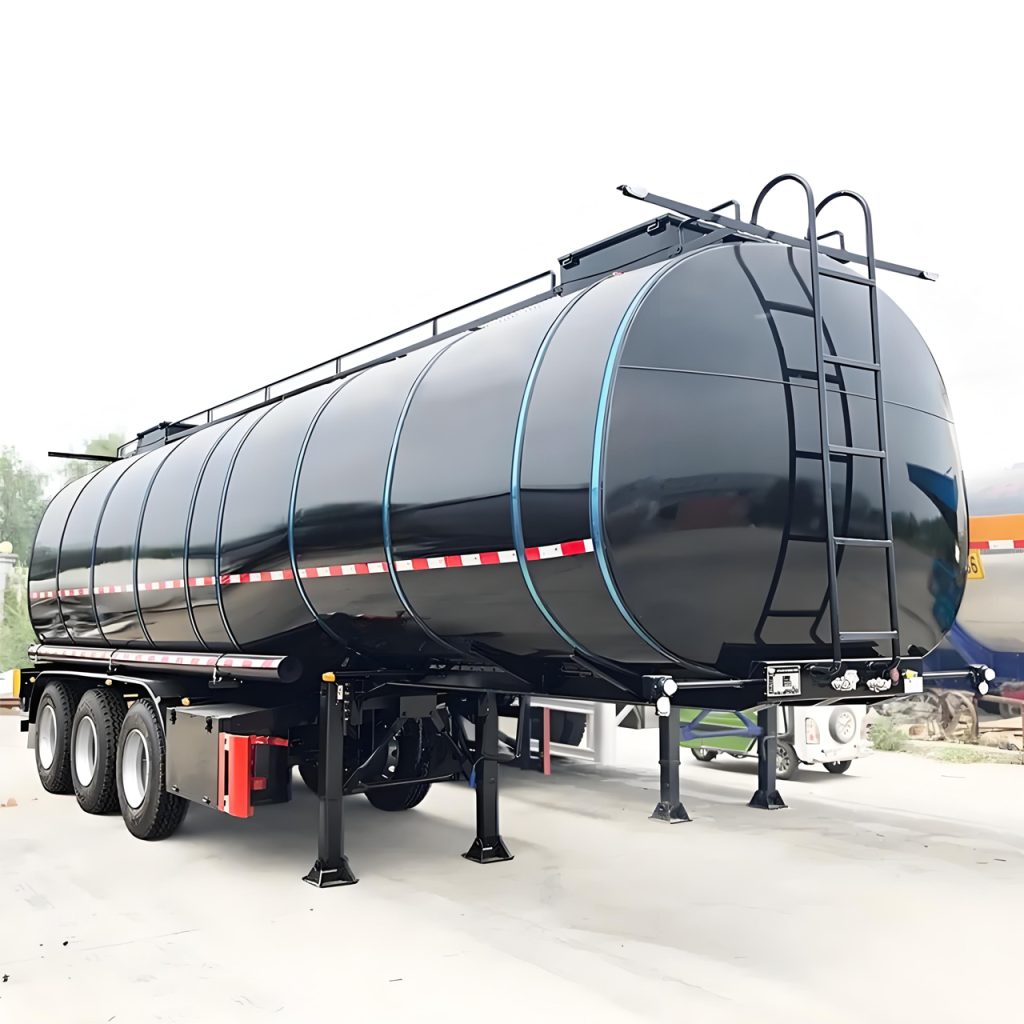
Asphalt Tank Trailer Capacity and Specifications
The following is a typical specification table suitable for global buyers to compare models.
Table: Asphalt Tanker semi Trailer Technical Specifications
| Item | Specification |
| Tank capacity | 20,000–45,000 liters |
| Material | Q345R / Stainless steel |
| Tank thickness | 5–8 mm |
| Insulation thickness | 80–120 mm |
| Temperature loss | 3–5°C per hour |
| Heating method | Diesel burner / Thermal oil |
| Compartments | Single compartment |
| Axles | 2/3 axles (FUWA/BPW) |
| Suspension | Mechanical / Air |
| Tires | 12R22.5 or 385/65R22.5 |
| Braking system | ABS/EBS optional |
| Discharging system | Gear pump / thermal oil pump |
| Manhole | 1–2 units |
| Temperature gauge | Digital or analog |
Types of Asphalt Tank Semi Trailers
4.1 Standard Asphalt Tanker Semi Trailer
Single tank
Diesel burner heating
Suitable for regional distribution
4.2 Hot Oil Asphalt Tank trailer
Higher energy efficiency
Ideal for long-haul transportation
4.3 Asphalt Spreader Tanker Trailer
Includes asphalt spraying system
Directly used for road construction
4.4 Multi-functional Asphalt Transport Semi Trailer
Can transport asphalt emulsion, heavy oil, and tar
Multiple heating options
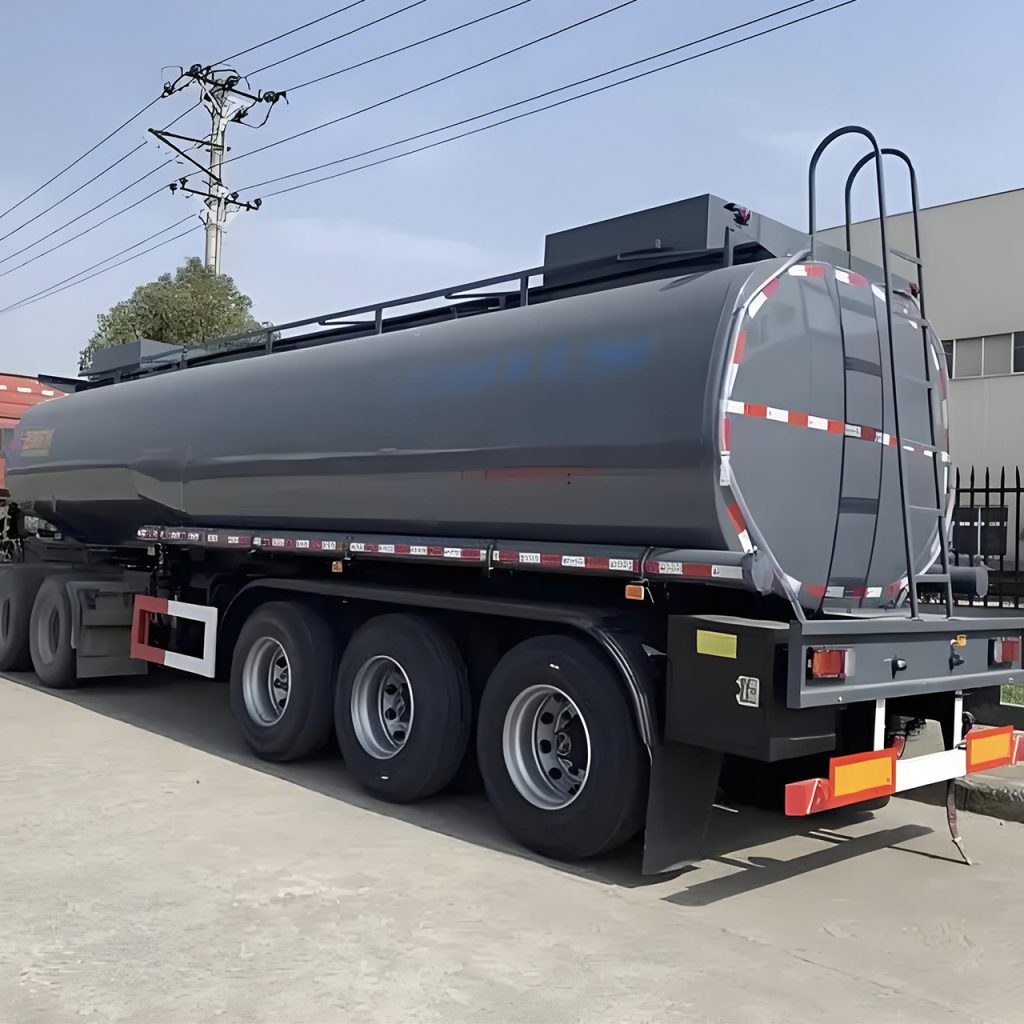
Key Features for Improving Asphalt Transportation Efficiency
5.1 High Thermal Performance for the asphalt tank trailer
Superior insulation materials
Reduced fuel consumption during reheating
5.2 Strong and Tough Steel
Pressure and high temperature resistance
5.3 Corrosion-Resistant Inner Layer
Extended tank lifespan
5.4 Intelligent Temperature Control
Automatic adjustment
Prevents overheating
5.5 Safety Valves and Fire-Resistant Components
Reduce risks during transportation
Applications of asphalt tank trailer in Practice
Asphalt tank semi trailers play a crucial role in the following areas:
(1) Road construction projects
Hot asphalt transportation
Road repaving
(2) Asphalt mixing plants
Supplying hot asphalt to batching equipment
(3) Petrochemical industry
Transporting heavy oil
(4) Infrastructure expansion
Airports
Highways
Bridges
Urban maintenance
How to Choose a Suitable Asphalt Tank Semi Trailer
7.1 Determine the capacity
20 to 45 cubic meters, depending on the project scale.
7.2 Choose the heating technology
Diesel burner → Cost-effective
Heat transfer oil → High quality and stable
7.3 Check the steel quality
Ensure the use of Q345R steel or certified steel.
7.4 Confirm safety features
Emergency valve
Pressure protection
Heat-resistant hose
7.5 Check insulation performance
A good refrigerated asphalt tank trailer should not experience a temperature rise exceeding 5 degrees Celsius per hour. 7.6 Choosing a Reliable asphalt tank trailer Manufacturer
Looking for:
ISO and CE Certification
Automatic Welding
CNC Molding
Strict Quality Inspection
Benefits of Using Asphalt Tanker Semi Trailers
1. High-Temperature Stability
Maintains uniform asphalt temperature.
2. Increased Efficiency
Quick loading and unloading saves project time.
3. Reduced Operating Costs
Better insulation = less reheating.
4. Safer Transportation
Emergency valve + stable chassis.
5. Long Service Life
High-grade steel and corrosion-resistant system.
Conclusion
Asphalt tank trailer are indispensable vehicles in modern road construction and the oil industry. With advanced insulation technology, high-performance heating systems, and safety-optimized designs, these trailers ensure efficient, stable, and safe asphalt transportation.
Whether you operate an asphalt mixing plant, a road paving company, or an oil logistics business, investing in a high-quality asphalt tank trailer will significantly improve operational efficiency and long-term reliability.