
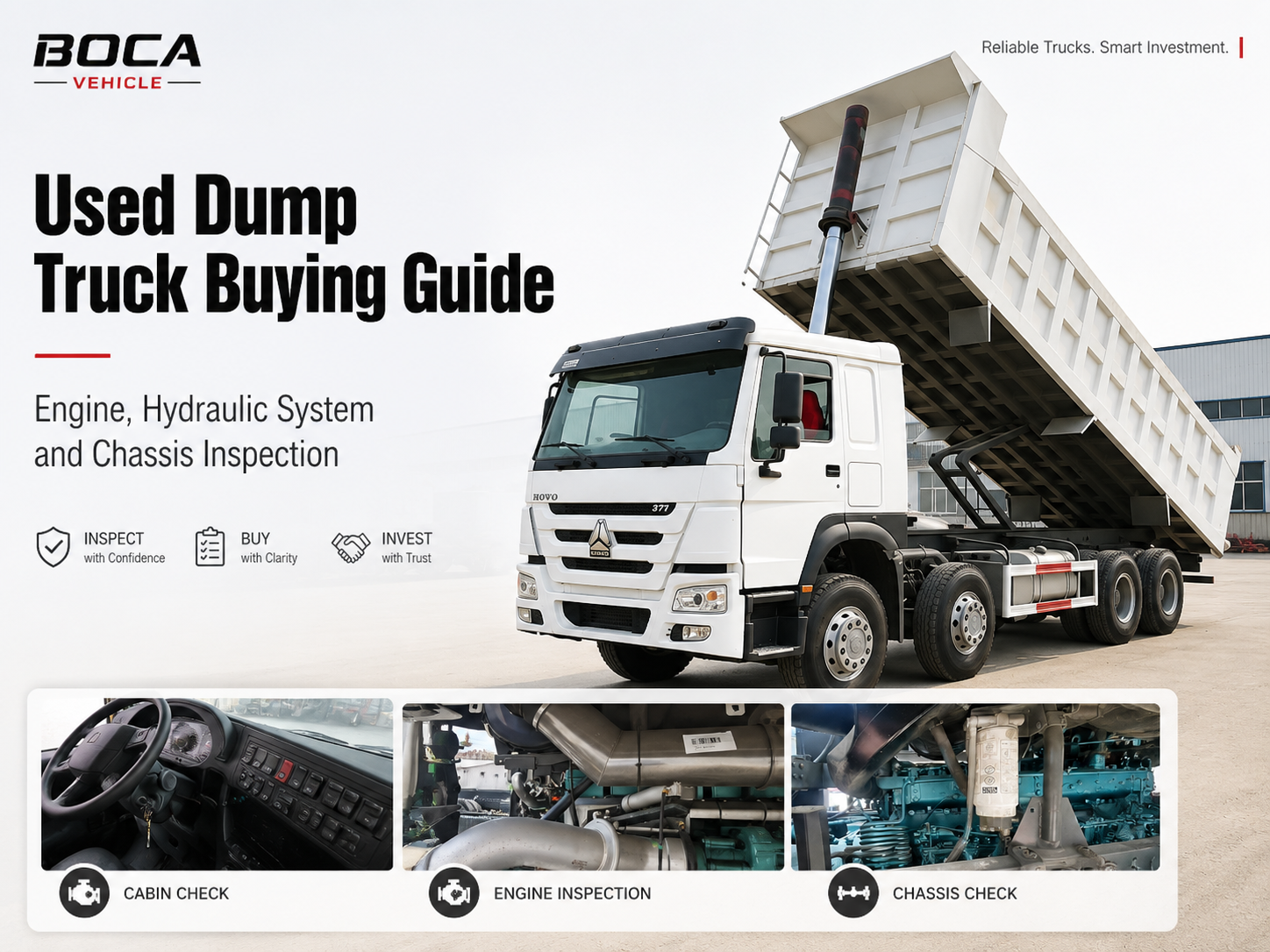
Used Dump Truck Buying Guide: Engine, Hydraulic System and Chassis Inspection
Used HOWO dump truck inspection guide covering engine, gearbox, hydraulic system, chassis, tires, refurbishment, pre-shipment videos and export quotation details for mining, construction and logistics projects.

For mining, quarry, construction, port, and logistics projects, a used dump truck is not only a cheaper vehicle choice. It is a working machine that must be checked carefully before shipment. Therefore, engine starting, oil pressure, turbocharger response, gearbox condition, hydraulic lifting performance, chassis strength, axle health, tire condition, and cabin function all need a clear inspection process.
In many export projects, second-hand HOWO 6×4 and 8×4 tipper trucks are used for sand, gravel, soil, stone, coal, ore, and construction material transport. However, the right model depends on cargo weight, road condition, unloading frequency, destination country, and service plan. For available inspected and refurbished options, review Boca Vehicle’s used dump truck category before comparing individual vehicles.
What Is a Used Dump Truck Used For?
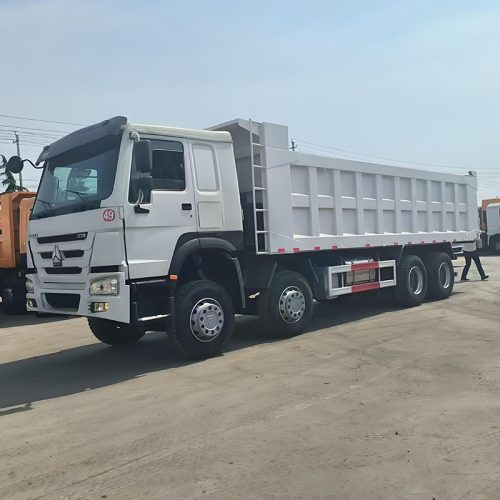
A second-hand dump truck is a pre-owned tipper truck for loading, hauling, and unloading loose bulk materials. The cargo box lifts through a hydraulic system, so materials can discharge from the rear. As a result, this truck is common in construction sites, quarry yards, mining support routes, earthmoving work, road building, and port material handling.
However, each jobsite uses the truck differently. A used HOWO 6×4 dump truck often fits mixed roads, shorter haul cycles, and flexible site movement. Meanwhile, a used HOWO 8×4 dump truck may suit larger routes where road width, turning space, and local registration rules allow a bigger vehicle layout.
Key Specifications to Review Before Ordering
First, axle configuration affects traction, stability, turning radius, tire wear, and road suitability. A 6×4 drive layout usually balances power and flexibility. In contrast, an 8×4 layout can support larger hauling work when the road, bridge, and site access conditions allow it.
Second, the cargo body must match the material. Wet soil, rock, ore, coal, gravel, and demolition waste place different pressure on the floor, side panels, rear gate, chassis, and lifting frame. Therefore, the specification review should start from real cargo, not only from the model name.
| Inspection Area | Main Check Points | Why It Matters |
| Engine | Cold start, idle stability, oil pressure, smoke, leakage, turbocharger sound | Shows power condition and possible repair risk |
| Gearbox and Clutch | Gear shifting, reverse gear, clutch bite point, abnormal noise | Affects climbing, loaded movement, and site reliability |
| Hydraulic System | Cylinder, oil tank, pump, hoses, seals, control valve, lifting speed | Controls unloading efficiency and working safety |
| Frame and Axles | Frame straightness, cracks, repair marks, axle leakage, hub condition | Supports long-term heavy-duty operation |
| Suspension and Tires | Leaf springs, brackets, U-bolts, tire wear, air brake response | Improves stability on rough roads and loaded cycles |
Engine and Gearbox Inspection
At the start, the engine should be checked with a cold start video. This video shows how the engine reacts before it warms up. During the test, smoke color, idle vibration, oil pressure response, and knocking noise should all be recorded.
Next, oil leakage deserves close review. Important areas include the cylinder head, oil pan, turbocharger, fuel pump, radiator pipes, air compressor, and connecting joints. Small old stains may appear on working vehicles. However, fresh leakage should be marked clearly before shipment planning continues.
Meanwhile, turbocharger condition affects loaded climbing and acceleration. The turbocharger should not create sharp abnormal noise or heavy smoke under throttle. In addition, the cooling system should be checked through the radiator, fan, coolant traces, and water pipes.
For the gearbox, shifting should feel clear and stable. The inspection should include low gears, high gears, reverse gear, clutch engagement, and drivetrain response. If gear engagement feels rough, the issue may come from the clutch plate, synchronizer, linkage, or internal wear.
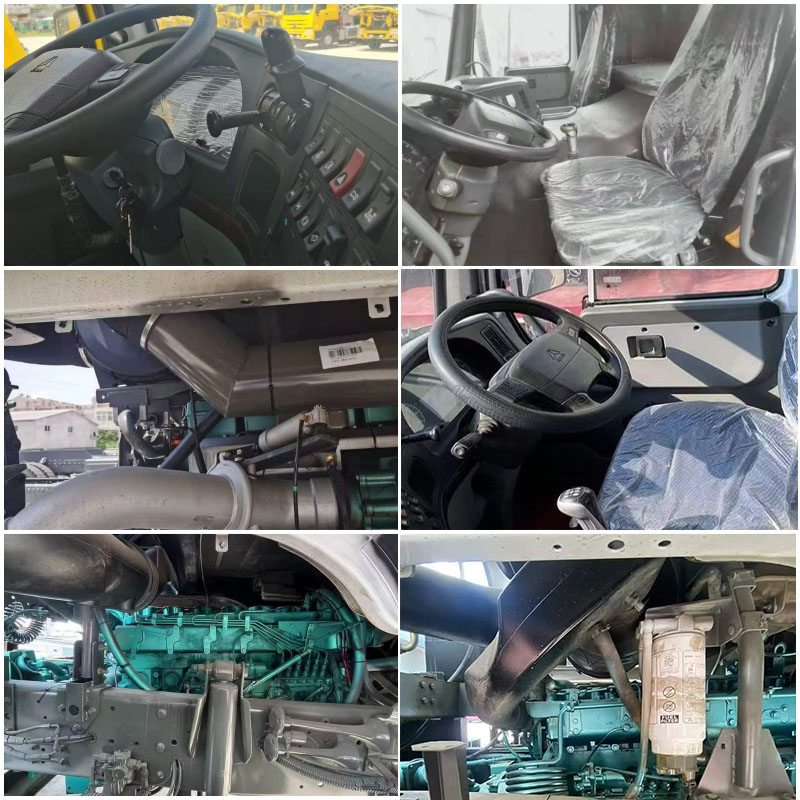
Product Photos Should Show More Than the Exterior
Moreover, engine bay photos, chassis underside photos, cabin photos, tire photos, and hydraulic lifting videos help confirm real condition. A clean repaint can improve presentation, but mechanical evidence carries more value before export loading.
View Used HOWO 6×4 Dump TruckHydraulic Lifting System Check
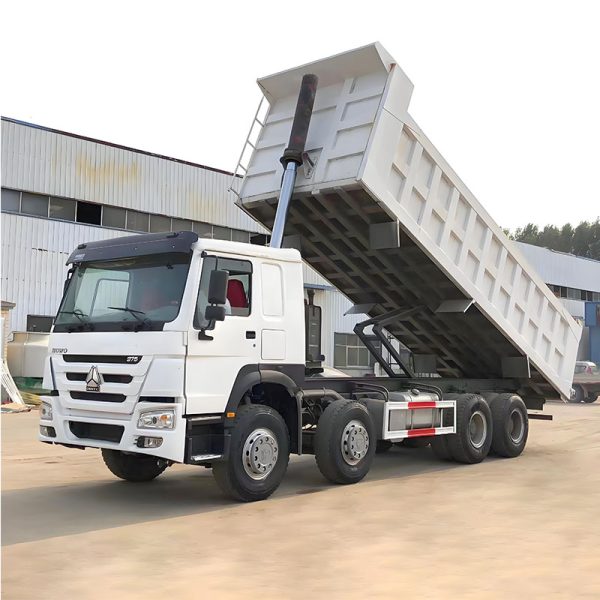
For a dump body, the hydraulic lifting system is the main working function. Therefore, the cylinder, oil tank, hydraulic pump, hoses, control valve, lifting frame, body hinge, and rear tailgate should be checked together. A strong engine cannot solve a weak lifting system.
During inspection, the cargo box should rise smoothly without strong shaking, sudden stopping, or uneven movement. Then, the lowering process should remain controlled. If the body drops too fast or tilts unevenly, the control valve, cylinder seal, hinge point, or lifting frame may need further review.
Additionally, the cylinder surface should look clean and straight. Deep scratches may affect sealing performance. Hoses should also be checked for cracks, aging, oil stains, swelling, and loose joints. A hose can be replaced easily, yet a failed hose can stop unloading work on site.
Finally, the dump body should match the cargo. Rock, ore, and demolition waste need stronger body condition than light soil or loose coal. As a result, bottom plate condition, side wall strength, rear gate operation, and reinforcing ribs should be reviewed with the intended cargo in mind.
Frame, Axle, Suspension and Tire Condition
Meanwhile, the chassis frame carries repeated impact from loading, braking, turning, and rough road movement. The inspection should check straightness, cracks, corrosion, welding marks, crossmembers, and body mounting points. Paint should not cover structural problems.
Also, axle and drivetrain condition need close attention. Rear axle leakage, hub oil marks, propeller shaft wear, universal joint looseness, and abnormal road-test noise can suggest repair work. Therefore, a chassis underside photo set is useful before order confirmation.
Suspension condition affects stability, tire wear, and daily operation. Leaf springs should not show serious cracks, missing plates, or poor alignment. Brackets, bushings, bolts, and U-bolts should also remain firm.
Tires tell another part of the operating history. Uneven wear may suggest axle alignment problems, long-term overload, or poor road use. However, tire plans can differ by vehicle. For this reason, the final quotation should clarify current tires, optional replacement, and spare tire requirements.
Best For / Not For
Best For
- Mining support routes carrying ore, coal, stone, and earthwork materials.
- Quarry and construction projects that need practical hauling capacity.
- Port yards, road projects, and infrastructure work with repeated loading cycles.
- Fleet expansion plans that need inspected vehicles and pre-shipment photos.
Not For
- Projects that require brand-new vehicle condition with no second-hand wear.
- Routes where local import rules do not allow the selected vehicle condition.
- Operations that cannot accept normal second-hand maintenance planning.
- Procurement plans without clear cargo, route, quantity, and inspection details.
How to Choose the Right Configuration
First, cargo type should guide the body and power review. Sand and soil often need frequent short haul cycles. Ore, rock, and demolition waste require stronger structural checks. Meanwhile, coal and loose bulk materials may need better volume planning and smoother unloading.
Second, road condition changes the selection. Smooth port roads, paved highways, quarry tracks, mining slopes, and muddy construction routes place different pressure on tires, suspension, cooling, drivetrain, and brake components. Therefore, configuration should follow the route instead of only the model badge.
Third, destination market requirements should be confirmed early. Import documents, steering preference, registration rules, emission expectations, and inspection requirements may differ by country. Since these rules can change, the safest approach is to confirm local requirements before final order planning.
Finally, budget should include service planning. Purchase cost, replacement parts, tires, inland transport, ocean freight, port handling, and local registration may all affect total project cost. In other words, the lowest starting price is not always the best operating choice.
For axle-layout selection, compare used HOWO dump truck 6×4 vs 8×4 configurations.
A Practical Inspection Mindset
For general commercial vehicle inspection thinking, the Commercial Vehicle Safety Alliance lists inspection areas such as brakes, driveline, frames, suspension, tires, wheels, rims, hubs, lighting, steering, and related vehicle items. Although export projects may follow different local rules, these areas show why a dump truck inspection should go beyond paint and cabin appearance.
Additionally, the UNECE vehicle regulations page explains that vehicle regulatory work relates to safer and more environmentally sound vehicles. Therefore, destination market requirements should be checked before shipment, especially when registration, emission expectations, or road approval rules are strict.
Recommended Product Paths
Boca Vehicle Solution for Export Projects
As a semi trailer manufacturer and used vehicle supplier, Boca Vehicle supports construction transport, mining supply, quarry hauling, logistics yards, and port operation projects. The support focuses on configuration discussion, pre-shipment inspection materials, and export quotation communication.
For fleets that also need towing equipment, the used tractor truck category can support flatbed, lowbed, tanker, cargo, and chassis trailer work. Meanwhile, bulk material projects can compare truck tipping needs with the dump semi trailer category when larger trailer transport is required.
Before shipment, available inspection support may include exterior photos, cabin photos, engine bay photos, chassis underside photos, tire photos, engine starting videos, hydraulic lifting videos, and loading photos. However, every second-hand unit should be judged by actual condition, inspection details, and agreed refurbishment scope.
Boca Vehicle Inspection Before Shipment
Before export loading, inspection materials should create a clear record. First, each vehicle should show exterior condition, cabin condition, engine bay, chassis bottom, tires, hydraulic cylinder, cargo box, and rear gate. Then, videos should show engine start, idle, basic movement, and body lifting.
Additionally, refurbishment details should remain transparent. Paint, cleaning, oil change, filter change, hose replacement, tire replacement, battery replacement, and selected spare parts can improve readiness. However, these steps should not suggest that a second-hand vehicle equals a brand-new truck.
Finally, a clear quotation request should include cargo type, loading capacity target, axle quantity, road condition, destination country, quantity, and inspection requirement. With these details, Boca Vehicle can discuss a more practical configuration and inspection plan.
FAQ
Extended Reading
Side Dump Trailer vs Rear Dump: Which Is Safer for Jobsite Use?
This related guide helps compare unloading stability, jobsite space, bulk material type, and route risk when a project also considers dump trailer equipment.
Read GuideWhat Is a Dump Semi Trailer?
This article explains dump trailer structure, hydraulic lifting, bulk material use, and trailer selection logic for construction and mining transport.
Read GuideWhat Is a Lowbed Semi Trailer?
This guide supports projects that need to move excavators, loaders, bulldozers, and heavy machines together with dump truck fleets.
Read GuideRequest a Quotation with Inspection Requirements
In summary, a second-hand tipper purchase should start with real work conditions and finish with clear inspection records. Engine starting, oil pressure, turbocharger response, gearbox shifting, clutch condition, drivetrain noise, hydraulic lifting, frame condition, axle health, suspension wear, tire condition, cabin function, and refurbishment scope should all be reviewed before shipment.
For a suitable used dump truck plan, send cargo type, loading capacity, axle quantity, road condition, destination country, quantity, and inspection requirement to Boca Vehicle.
- First: confirm cargo type, route condition, preferred 6×4 or 8×4 configuration, and quantity.
- Second: request engine, gearbox, chassis, tire, cabin, and lifting system photos or videos.
- Finally: confirm destination country, required refurbishment scope, and shipment inspection details before quotation.